


Table of Contents
- Why Coffee Works for Endurance: The Science in Plain Terms
- Caffeine Dosage for Endurance Athletes: Finding Your mg/kg Sweet Spot
- How to Time Pre-Workout Coffee Around Your Training Block
- How to Avoid Caffeine Jitters During Exercise
- Coffee Type and Caffeine Variance: Why Your Mug Isn't a Fixed Dose
- A Clean Pre Workout Coffee Alternative to Synthetic Supplements
- Caffeine Cycling, Tapering, and Hydration for Long Events
- Conclusion: Build Your Own Pre-Workout Coffee Protocol
- Frequently Asked Questions
Last Updated: October 3, 2026
Why Coffee Works for Endurance: The Science in Plain Terms
Caffeine is one of the most studied performance aids in sports, and coffee is the most practical way to get it. Timing pre-workout coffee for endurance comes down to one idea: caffeine blocks adenosine, the compound that makes you feel tired.
Adenosine builds through the day, attaches to adenosine receptors, and signals fatigue. Caffeine fits those same receptors and blocks the signal, lifting alertness and focus.
Adenosine, Alertness, and Perceived Exertion
The biggest endurance benefit isn't more energy, it's that hard efforts feel easier. Caffeine lowers perceived exertion, so the same pace feels less draining, and boosts central nervous system stimulation, aiding muscular endurance and fatigue reduction.
Some research suggests caffeine may support fat oxidation and glycogen sparing, though results vary between people. For a plain-language overview, see the FDA guidance on caffeine and health.
Caffeine Dosage for Endurance Athletes: Finding Your mg/kg Sweet Spot
The standard starting range for caffeine dosage for endurance athletes is about 3 to 6 milligrams per kilogram of body mass, for a 70 kg athlete, 210 mg to 420 mg, or roughly two to four cups of drip coffee. Start at the low end; many athletes get the full benefit at 3 mg/kg with fewer side effects.
Starting Points by Body Weight
Use this as a rough map, then adjust:
| Body Weight | Low Dose (3 mg/kg) | High Dose (6 mg/kg) |
|---|---|---|
| 55 kg | 165 mg | 330 mg |
| 70 kg | 210 mg | 420 mg |
| 85 kg | 255 mg | 510 mg |
| 100 kg | 300 mg | 600 mg |
Doses above 6 mg/kg rarely help more. They mostly add caffeine sensitivity problems like a racing heart or stomach upset. For context on safe daily intake, check the CDC information on caffeine.
How to Time Pre-Workout Coffee Around Your Training Block
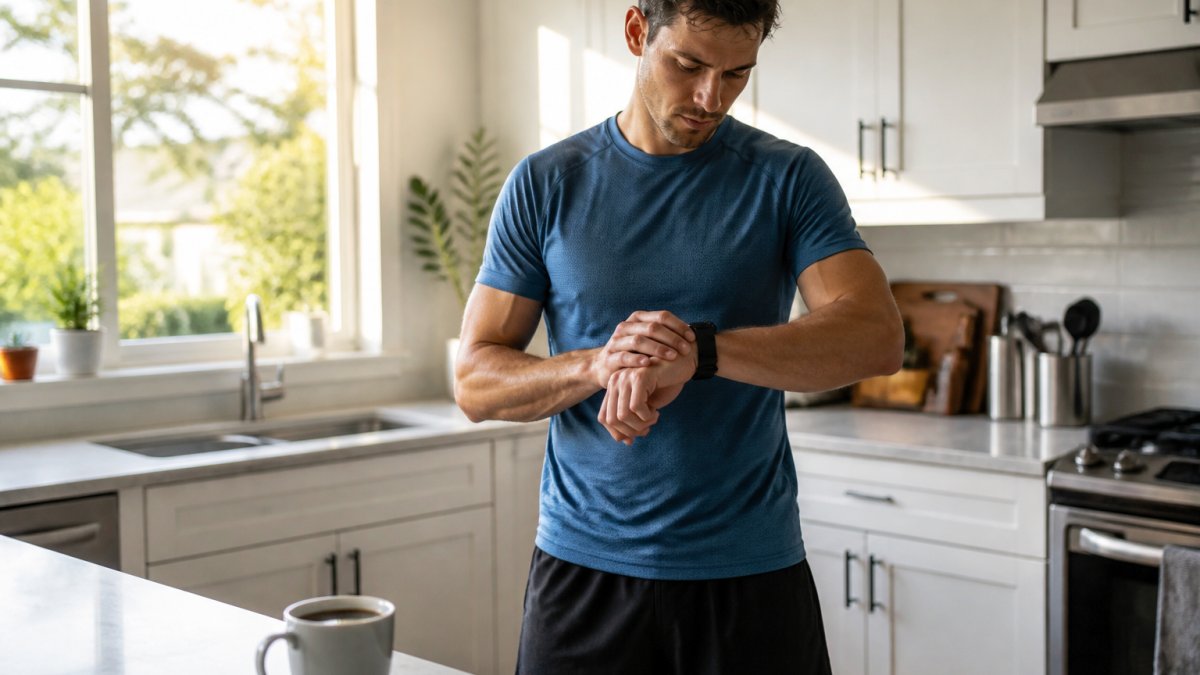
Drink your coffee 45 to 60 minutes before you start, the window when peak blood concentration hits. Sip right before you run and you miss the early benefit.
The 45-60 Minute Window and Why It Works
Caffeine absorbs through your gut into the bloodstream; blood plasma levels climb for roughly 45 minutes, then hold steady. Drink too early and the effect fades mid-session; too late and you're still waiting when the gun goes off.
A simple pre-exercise window routine:
- Drink your coffee 60 minutes out for long events.
- Drink it 45 minutes out for short, hard sessions.
- Sip water alongside it to support hydration status.
- Skip the coffee if you've never tested it before race day.
How to Avoid Caffeine Jitters During Exercise
The fix for jittery hands and a pounding heart is smaller doses and slower intake, jitters come from too much caffeine too fast, not from coffee itself. How to avoid caffeine jitters during exercise starts with cutting your dose by a third.
A few habits help:
- Split your dose: half an hour before, half 15 minutes later.
- Eat something small so caffeine absorbs more slowly.
- Choose a medium roast over a high-caffeine blend on hard days.
Coffee Type and Caffeine Variance: Why Your Mug Isn't a Fixed Dose
Two cups of coffee are rarely the same strength, the biggest reason a planned mg/kg dose drifts off target. Coffee type and caffeine variance is the gap most guides skip: bean species, roast level, grind, and brewing method each move the final caffeine number, sometimes by over 100 mg per serving.
Bean Species: Robusta vs. Arabica
Caffeine is a natural pesticide the coffee plant produces, so the hardier species carries more. Robusta beans hold roughly twice the caffeine of Arabica, about 2.2% versus 1.2% by weight, so two 12 oz cups can differ by 100 mg or more.
Most grocery-store blends are Arabica. Many espresso blends and budget "extra kick" coffees cut in Robusta to raise caffeine and add crema. If your bag doesn't state the species, assume Arabica unless the label advertises strength.
Roast Level: The Counterintuitive Part
Dark roast does not mean more caffeine. By weight, a dark roast can carry slightly less than a light roast of the same bean, because roasting burns off mass while the caffeine molecule stays heat-stable.
What does change with roast is how you scoop it. Darker beans are less dense, so a level scoop weighs less than the same scoop of light roast, fewer beans, less caffeine.
Brewing Method: The Biggest Variable of All
Brewing method moves caffeine more than bean choice does. Roughly, for a standard 8 oz serving:
| Brew Method | Typical Caffeine (8 oz) | Notes |
|---|---|---|
| Drip coffee | ~95-165 mg | Higher end for strong, dark-roasted drip |
| Cold brew | ~150-200 mg | Longer steep time extracts more caffeine |
| Espresso (1 oz shot) | ~60-75 mg | Concentrated, but small volume |
| Instant coffee | ~30-90 mg | Varies widely by brand and scoop size |
| Decaf | ~2-15 mg | Not zero, worth counting if you're sensitive |
Cold brew is the sleeper: steeping 12-24 hours pulls more caffeine per ounce than most drip, and it's often served in larger cups.
Espresso is the opposite trap: a single shot is modest, but a double or triple in a large latte stacks up fast, and the milk makes it easy to lose track of how many shots you drank.
Why This Breaks a Fixed mg/kg Plan
If your target is 3 mg/kg at 70 kg, you need about 210 mg, roughly two 8 oz cups of strong drip, one and a half 12 oz cold brews, or three double espressos.
The fix is boring but effective: pick one bean, roast, grind, brew method, and cup size. Weigh the grounds on a gram scale and log the result.
Caffeine Variance and GI Risk
Higher-caffeine cups tend to be more acidic and concentrated, both of which can aggravate the gut. If you're prone to gastrointestinal distress on long runs or rides, coffee type matters as much as timing. Cold brew is often reported as gentler due to lower acidity, while dark, heavily roasted drip can be harsher. Test any switch in training, not on the start line.
A Clean Pre Workout Coffee Alternative to Synthetic Supplements
A clean pre workout coffee alternative is simply real coffee, brewed and timed on purpose. Synthetic pre-workouts stack caffeine with stimulants, dyes, and added sugar, the combo that drives the crash and jitters many people blame on caffeine itself.
Coffee gives you the same ergogenic aid effect without the extras. Our MVP Pack bundles six 2 oz bags of our best-selling coffee, a ceramic mug, and a tee, so you can build a repeatable routine.

Caffeine Cycling, Tapering, and Hydration for Long Events
This is where most pre-workout coffee guides stop, and where endurance athletes get burned. Three things decide whether your race-day cup works: whether your body still responds to caffeine, whether you tapered correctly, and whether you handled hydration.
Caffeine Habituation: Why Your Daily Cup Stops Working
Caffeine blocks adenosine receptors. Hit them daily and your body builds more of them, upregulation.
The consequence: an athlete drinking three cups a day for months may feel almost nothing from a race-day dose that would floor a lighter user.
Caffeine cycling is the fix: cut daily intake for 5-14 days before a key event, down to a single small cup or off entirely, so receptors reset.
A few practical notes:
- Taper gradually. Dropping from 400 mg to zero overnight invites a withdrawal headache that can wreck a training week.
- Replace the ritual, not just the drug. Many athletes miss the warm mug and the routine more than the caffeine itself, swap in decaf or tea to keep the habit intact.
- Do not cycle during your highest-volume training block. Save the reset for a lighter week or the taper.
Race-Week Tapering: The Protocol
The goal of tapering caffeine is simple: arrive on race day with sensitive receptors and no dependence. A common race-week structure:
- 7-14 days out: Cut daily caffeine to roughly half your normal intake, or to one small cup in the morning only.
- 3-4 days out: Drop to a very small dose, or switch to decaf, to complete the reset.
- Race morning: Take your full tested dose, the same mg/kg you validated in training, 45-60 minutes before the start.
- During the event: If you use caffeine gels or chews, count them toward your total. Stacking a race-morning cup plus multiple caffeinated gels can push you well past 6 mg/kg and into jitter territory.
The most common mistake is doubling the race-day dose to "be sure." A reset body doesn't need more, it needs the same dose it responded to in training. Caffeine past about 6 mg/kg rarely improves endurance performance and reliably increases side effects.
The Diuretic Myth vs. Reality
Coffee has a mild diuretic effect, but the idea that a cup dehydrates you is overstated. For habitual drinkers, the fluid in the cup largely offsets what's lost, and moderate intake doesn't meaningfully harm hydration status.
Where the myth becomes real is during endurance events. Two factors change the math:
- You are already losing fluid fast. Sweat rates of 1-2 liters per hour are common in warm conditions, and a mild diuretic nudge on top of that is not helpful.
- Caffeine can loosen the gut. Combined with race-day nerves, that is a recipe for an unplanned stop.
The practical rule: treat your pre-workout coffee as a supplement, not as hydration. Drink your normal water or electrolyte plan alongside it, and do not count the coffee toward your fluid target.
For endurance events lasting more than 90 minutes, pair coffee with an electrolyte source rather than plain water alone, since sodium losses matter as much as fluid volume. For broader guidance on fluid replacement during exercise, see the ACSM position on exercise and fluid replacement.
Putting It Together for Long Events
For a marathon, century ride, or long trail race, the sequence looks like this:
- Two weeks out: Begin your caffeine taper.
- Race week: Keep intake low, protect sleep, and rehearse your morning routine.
- Race morning: Coffee at your tested dose, 45-60 minutes before the gun, with 8-16 oz of water.
Caffeine's half-life runs about 3-5 hours, so an afternoon cup on race eve can still be circulating at the start line and blunt your sleep, costing more performance than the extra caffeine gains. Cut caffeine after roughly 2 p.m. in the days before an event.
Conclusion: Build Your Own Pre-Workout Coffee Protocol
Timing is the whole game, and most athletes get it wrong by guessing.
That's exactly what we built Ed In Your Head for. Our coffee is roasted the day it ships, made without added sugar, and crafted for smooth, steady energy instead of a spike and crash.
FIND YOUR FUEL with Ed In Your Head and start your next session with clean, reliable energy.
Frequently Asked Questions
What is the optimal window to drink coffee before endurance exercise?
Most research points to roughly 45 to 60 minutes before you start. Caffeine reaches peak blood concentration in about 30 to 60 minutes for most people, so drinking your pre-workout coffee in that window lines up peak alertness with your first hard efforts. If you are caffeine sensitive, try 75 to 90 minutes and see how you feel. Test the timing on training days, never on race day.
How much coffee should you drink before a workout to avoid jitters?
Start at the low end of the range, around 2 to 3 mg per kg of body mass, and cap it there until you know how you respond. A 150 lb (68 kg) runner would land near 135 to 205 mg, which is roughly one to two cups of drip coffee. Going higher does not automatically improve endurance capacity and raises the odds of jitters, a racing heart, and gastrointestinal distress.
Does coffee improve endurance performance compared to synthetic pre-workouts?
Coffee delivers the same active stimulant, caffeine, plus chlorogenic acids and other compounds that come with the bean. Research on caffeine as an ergogenic aid shows benefits for endurance capacity, perceived exertion, and aerobic performance at doses around 3 to 6 mg per kg. Synthetic pre-workouts often add beta-alanine, citrulline, and sweeteners. Coffee gives you a simpler ingredient list and no added sugar, which matters if you want steady energy without a crash.
Is there a difference between drinking coffee and taking caffeine pills for endurance?
Both raise blood plasma levels of caffeine, but coffee absorbs more gradually because of the volume of liquid and other compounds in the brew. That slower curve can mean a smoother onset and less of a spike-and-crash feel. Pills give you a precise milligram dose, which helps if you are chasing a strict mg/kg target. Coffee also adds hydration, which supports hydration status during long sessions.