


Table of Contents
- What Clean Energy Actually Means for Endurance Athletes
- How Metabolic Flexibility Powers Sustained Performance
- Clean Pre-Workout Coffee as an Alternative to Energy Drinks
- Caffeine Timing for Long-Distance Athletes
- How to Avoid Energy Crashes During Endurance Training
- Nutrient Timing and Gut Health for Energy Absorption
- Building Your Clean Energy Strategy
What Clean Energy Actually Means for Endurance Athletes
Clean energy for endurance athletes is fueling your body with whole-food sources and minimally processed supplements that deliver sustained performance without the crash, jitters, or digestive distress from artificial energy drinks. It's about choosing fuel that works with your metabolism rather than against it.
Traditional energy drinks loaded with refined sugars and artificial stimulants create a spike followed by a hard drop: your blood glucose crashes, your focus evaporates, you hit the wall. Clean energy strategies, specialty coffee, strategic carbohydrate timing, and nutrient-dense whole foods, keep your performance steady throughout your event.
At Ed In Your Head, we've worked with competitive athletes tired of the energy drink cycle. They wanted peak performance without the downsides. That's where clean energy becomes the real differentiator. It's not about trends; it's about physiology. Your body processes real fuel differently than synthetic additives. Understanding that difference lets you build a fueling strategy that actually works.
How Metabolic Flexibility Powers Sustained Performance
Metabolic flexibility is your body's ability to switch between using carbohydrates and fat as fuel depending on availability and demand. Endurance athletes who develop this capacity sustain effort for hours without bonking. Those without it hit a wall when glycogen depletes.
Most endurance athletes train their aerobic system but never train their metabolism to adapt. They show up to long events fueled by sugar and caffeine, and when those run out, they're done. Building metabolic flexibility changes that equation: your body doesn't panic when carbohydrate availability drops. It accesses fat stores efficiently and maintains steady energy.
Incorporate longer, lower-intensity sessions where you deliberately fuel lightly or not at all. This teaches your body to become more efficient at fat oxidation. Over weeks and months, your mitochondrial efficiency improves and your substrate use becomes more flexible.
Clean energy sources support this adaptation. When you're not spiking blood glucose with refined sugars, your insulin sensitivity stays stable. Your body learns to read genuine hunger signals instead of chasing crash-and-spike cycles. Specialty coffee, whole grains, lean proteins, and healthy fats all support metabolic flexibility because they're processed without creating artificial urgency or crashes.
Clean Pre-Workout Coffee as an Alternative to Energy Drinks
Traditional energy drinks are engineered to create a sensation, not support performance. Most contain 150-300 milligrams of caffeine mixed with 30-60 grams of refined sugar, artificial sweeteners, and stimulants designed to trigger an immediate jolt (the FDA). Your heart rate spikes, your nervous system floods, and for 30-45 minutes you feel invincible. Then the crash comes.
Specialty coffee delivers caffeine in a completely different context. Fresh-roasted, high-quality coffee provides caffeine alongside hundreds of bioactive compounds, chlorogenic acids, polyphenols, that your body processes gradually. The energy release is steady. The crash is minimal or nonexistent. Your digestive system doesn't revolt.
An athlete drinking an energy drink 30 minutes before a race gets a spike that peaks around mile three, then fades. An athlete drinking quality coffee gets steady energy that sustains throughout the effort. No jitters. No stomach distress. No sudden energy cliff.
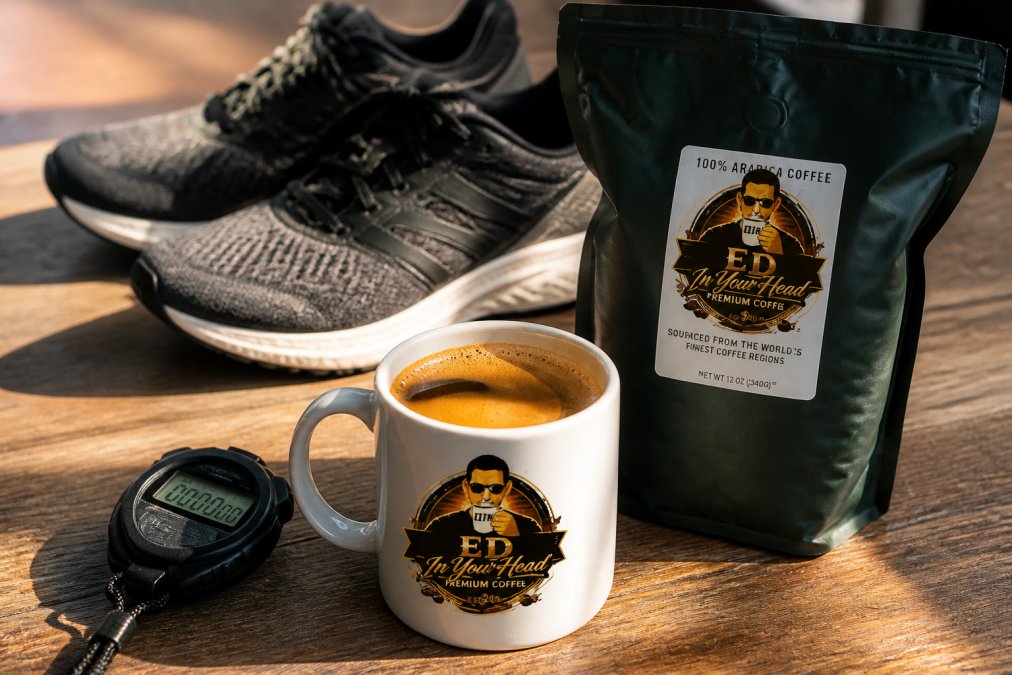
Ed In Your Head's approach centers on one principle: freshness matters. Coffee roasted weeks ago has lost volatile compounds and oxidized. Coffee roasted the day it ships is alive with flavor and bioactive compounds. That freshness translates to smoother caffeine delivery and cleaner energy. The Max Caf Blend and Breakfast Blend + (Extra Caffeine) are specifically designed for athletes who need sustained focus without the crash.

For athletes transitioning from energy drinks, the adjustment period is real. Your palate is accustomed to extreme sweetness. Real coffee tastes different. Most athletes report that within a week, they prefer the clean energy and absence of the crash.
Caffeine Timing for Long-Distance Athletes
Caffeine timing is one of the most misunderstood variables in endurance sports. Most athletes think the answer is simple: drink caffeine right before your event. That's only partially true.
For events under 90 minutes, caffeine consumed 30-45 minutes before start time is ideal (peer-reviewed research). For longer events, marathons, ultramarathons, or multi-hour training sessions, a single pre-event dose wears off around the two-hour mark, leaving you with hours ahead with no fuel.
The solution is distributed caffeine intake. Consume your initial dose 30-45 minutes before start, then plan for additional caffeine every 90-120 minutes during the event. This might be another cup of coffee at an aid station, a caffeine tablet, or a caffeinated sports drink. The key is maintaining steady levels rather than chasing a single spike.
Specialty coffee works better for distributed intake than energy drinks. You can carry a thermos or have a cup at an aid station without dealing with artificial ingredients and crash cycles. The caffeine stays in your system longer and your energy remains stable.
Timing also depends on individual caffeine sensitivity. Some athletes metabolize caffeine quickly and need more frequent doses; others are sensitive and need less. Experiment during training, never during a race.
How to Avoid Energy Crashes During Endurance Training
Energy crashes happen for three reasons: you're not eating enough total calories, you're eating the wrong type of calories at the wrong time, or you're not managing blood glucose properly.
Long endurance sessions burn significant calories. If you're not consuming enough to replace what you're burning, your body runs out of fuel. Your power output drops and your mental focus evaporates. Most endurance athletes underestimate their actual caloric needs during long training sessions.
Consuming a massive meal right before training guarantees digestive distress. Instead, eat a small, easily digestible meal 2-3 hours before training, then consume carbohydrates and some protein during the session if it's longer than 90 minutes. This keeps blood glucose stable without overwhelming your digestive system.
Refined sugars and simple carbohydrates spike blood glucose quickly, triggering an insulin response that crashes below baseline. Complex carbohydrates, whole grains, oats, sweet potatoes, release energy gradually, keeping blood glucose stable.
Clean energy strategies prevent crashes by eliminating the artificial spike-and-crash cycle. When you fuel with whole foods and quality caffeine sources instead of refined sugars and artificial stimulants, your body maintains a steady state.
Nutrient Timing and Gut Health for Energy Absorption
Your gut is where digestion and nutrient absorption happen, where your immune system is trained, and where your microbiome influences your energy levels, mood, and performance. When your gut isn't healthy, even clean energy sources don't get absorbed efficiently.
Nutrient timing is consuming specific nutrients at specific times to maximize absorption and performance. The most important window is within 30-60 minutes after hard training (peer-reviewed research). Your muscles are primed to accept nutrients and your digestive system is ready to absorb. Consuming carbohydrates and protein during this window accelerates recovery and replenishes glycogen stores.
But timing alone doesn't guarantee absorption. Your gut health determines how much of what you eat actually gets used. A damaged gut lining means nutrients pass through without being absorbed. Dysbiosis means your bacteria aren't helping you break down and absorb nutrients efficiently.
Clean energy sources support gut health because they don't fight your system. Whole foods, quality proteins, healthy fats, and complex carbohydrates don't trigger the inflammatory response that refined sugars and artificial additives do. Your gut lining stays intact, your microbiome stays balanced, and nutrient absorption improves.
Many endurance athletes find that switching to clean energy sources improves digestive comfort during training and racing: less bloating, less cramping, fewer urgent bathroom breaks. Your gut is responding to fuel it can actually process efficiently.
Building Your Clean Energy Strategy
A clean energy strategy is a system of choices that work together: pre-training nutrition, intra-workout fueling, post-training recovery, and daily dietary habits. Most endurance athletes build this through trial and error. You can accelerate the process by being intentional.
Start with your baseline. How many hours per week are you training? How intense is that training? How long are your longest sessions? These answers determine your total caloric needs and fueling requirements.
Next, audit your current fueling. What are you eating before training? What are you consuming during long sessions? What's your post-training recovery like? Most athletes discover they're either under-fueling, over-fueling with wrong foods, or not recovering adequately.

The transition to clean energy happens in phases. Phase one: replace energy drinks with specialty coffee for pre-training and daily caffeine needs. Phase two: optimize intra-workout fueling with real carbohydrate sources and electrolyte solutions. Phase three: build a post-training recovery protocol with protein, carbohydrates, and micronutrients. Phase four: manage daily nutrition to support training volume and recovery.
Ed In Your Head's MVP Pack is designed for this transition. It gives you six servings of our best-selling blends, a ceramic mug for consistency, and a reminder of why you're making the switch. Most athletes who start with the MVP Pack continue ordering because they feel the difference.

| Strategy Element | Timing | Focus | Expected Outcome |
|---|---|---|---|
| Pre-training fuel | 2-3 hours before | Whole foods, easily digestible | Steady energy, no digestive distress |
| Pre-training caffeine | 30-45 minutes before | Quality coffee or caffeine | Alert nervous system at start |
| Intra-workout fuel | Every 60-90 minutes for sessions over 90 minutes | Real carbohydrates, electrolytes | Sustained blood glucose, no crashes |
| Post-training recovery | Within 30-60 minutes | Protein + carbohydrates | Glycogen replenishment, muscle repair |
| Daily nutrition | Throughout day | Whole foods, micronutrient density | Baseline energy, gut health |
The strategy works because it's based on how your body actually works. Your metabolism responds to real fuel. Your gut absorbs nutrients from whole foods more efficiently. Your energy stays stable when you're not chasing artificial spikes and crashes.
Most athletes report that building a clean energy strategy takes 4-6 weeks to feel normal and 8-12 weeks to feel optimal. Your body needs time to adapt, your palate needs time to adjust, and your training performance needs time to respond.
Clean energy for endurance athletes isn't a trend. It's a return to fueling your body with what it actually needs to perform. Start with one change: switch your pre-training caffeine to quality specialty coffee. Feel the difference. Build from there. With Ed In Your Head's fresh-roasted blends, you're getting clean caffeine designed specifically for athletes who demand sustained performance. Find your fuel and experience what real energy feels like.
Frequently Asked Questions
Q: How does clean energy for endurance athletes differ from regular energy drinks?
A: Clean energy sources like specialty coffee deliver sustained caffeine without the blood sugar spike and crash of sugary energy drinks. Traditional energy drinks contain added sugars and synthetic ingredients that cause jittery feelings and energy crashes. Fresh-roasted coffee provides steady metabolic support through natural caffeine, allowing your body to maintain consistent glucose levels and performance throughout long-duration events without the gastrointestinal distress common with artificial additives.
Q: What is the best timing for caffeine intake before long-distance training?
A: Consume caffeine 30-60 minutes before your endurance session to allow absorption and peak blood levels during your workout. For events lasting over 90 minutes, take a second dose at the midpoint to sustain energy and delay fatigue. Avoid caffeine within 6 hours of sleep to prevent sleep disruption. Timing matters because caffeine takes 15-45 minutes to reach peak concentration, and its effects last 3-5 hours, critical for maintaining performance during sustained efforts.
Q: How can I avoid energy crashes during long endurance training sessions?
A: Prevent crashes by combining clean caffeine with complex carbohydrates and adequate hydration. Start with a balanced pre-workout meal 2-3 hours before training containing protein and complex carbs. During training lasting over 90 minutes, consume 30-60 grams of carbohydrates per hour along with electrolyte replenishment. Choose whole-food sources or sports drinks without artificial sweeteners. Fresh-roasted coffee without added sugars provides steady caffeine without the insulin spike that leads to crashes, supporting metabolic flexibility and sustained energy release.
Q: Why does fresh-roasted coffee work better for endurance performance than stale coffee?
A: Fresh-roasted coffee retains higher concentrations of beneficial compounds including caffeine and polyphenols that support metabolic efficiency and mitochondrial function. Within days of roasting, coffee begins losing volatile compounds and oxidizing, reducing its bioavailability and performance benefits. Coffee roasted the day it ships ensures maximum potency and smoother energy delivery without the jittery side effects common in older beans. This freshness directly impacts your ability to maintain glycemic index stability and sustained energy release during training.
This article was written using GrandRanker