


Table of Contents
- Why Healthy Alternatives to Energy Drinks Actually Work Better
- Signs of Caffeine Dependency You Shouldn't Ignore
- Natural Caffeine Sources That Deliver Without the Crash
- Hydration-Based Energy Boosters and Electrolyte Drinks
- Nutrient-Dense Foods and Stimulant-Free Options for Sustained Alertness
- How to Stop Drinking Energy Drinks Without the Withdrawal Misery
- The Best Healthy Alternatives to Energy Drinks: Quick Comparison
- Conclusion
Last Updated: August 16, 2026
Most people reach for an energy drink out of habit, not necessity. The can is cold, the marketing is loud, and the short-term jolt feels like it's working. But the crash that follows, the headache, brain fog, the second can to fix the first, signals something is broken. This guide covers the best healthy alternatives to energy drinks, why they work better long-term, and how to make the switch without withdrawal headaches.
The core argument is simple: the energy drink habit is a symptom of poor energy management, not a solution. Fix the root cause, and you won't need the can.
Why Healthy Alternatives to Energy Drinks Actually Work Better
The problem with most energy drinks isn't caffeine, it's the delivery system. High doses of synthetic caffeine stacked with sugar and artificial additives spike your system fast and drop it just as hard. Healthy alternatives work better because they deliver energy through mechanisms the body recognizes.
Natural caffeine sources paired with amino acids like L-theanine produce "smooth alertness," focused energy without spike-and-crash patterns. Whole food energy sources stabilize blood sugar, which directly controls fatigue. Proper hydration and electrolyte balance restore the cellular conditions that make mental clarity possible.
The difference between drinking synthetic stimulants and a properly brewed cup of specialty coffee or coconut water is the difference between borrowing energy and generating it.
The Science of the Energy Crash
The caffeine crash occurs when adenosine receptors rebound after caffeine temporarily blocks them. Your body compensates by producing more adenosine receptors, so when caffeine clears, you feel amplified tiredness.
Energy drinks compound this with sugar. A rapid blood sugar spike triggers insulin release that overshoots, driving glucose below baseline. The result is a double crash, adenosine rebound plus hypoglycemic fatigue, hitting roughly 60-90 minutes after consumption.
According to National Institutes of Health overview on caffeine and adenosine, regular high-dose caffeine consumption raises baseline cortisol levels, disrupting circadian rhythm and making natural waking energy progressively harder to access.
Signs of Caffeine Dependency You Shouldn't Ignore
Signs of caffeine dependency include withdrawal headaches when you skip your usual dose, needing caffeine before you can function, and feeling anxious or jittery after consumption but unable to stop. These markers indicate your intake has crossed from preference into physiological reliance.
Other signals worth noting:
- Headaches appearing 12-24 hours after your last energy drink
- Difficulty concentrating without caffeine, even after adequate sleep
- Heart palpitations or elevated anxiety during consumption
- Tolerance buildup requiring larger doses for the same effect
- Fatigue that doesn't respond to sleep
Caffeine sensitivity varies significantly between individuals. If you experience jitters, anxiety, and sleep disruption from moderate amounts, switching to lower-caffeine or stimulant-free alternatives is necessary for functional daily performance.
Natural Caffeine Sources That Deliver Without the Crash
Natural caffeine sources work better than synthetic ones because they come packaged with compounds that modulate caffeine behavior. L-theanine in tea slows absorption and smooths the curve. Antioxidants in specialty coffee reduce oxidative stress. The result is sustained alertness rather than a spike.
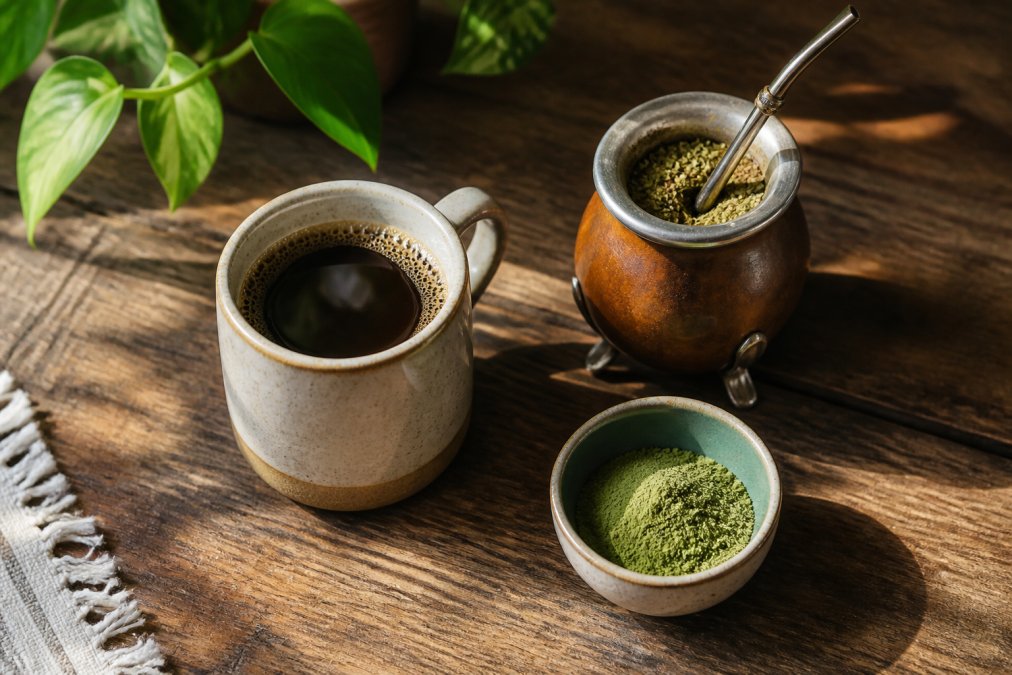
Fresh-Roasted Specialty Coffee
Ed In Your Head is the top pick because every order is roasted the day it ships. Fresh-roasted coffee retains more natural compounds, including chlorogenic acids that support metabolic health and blood sugar regulation. The athletic trainer-owned brand was built specifically to replace energy drinks for athletes and gamers who need clean caffeine without jitters or sugar crashes. Zero added sugar, no artificial additives, and a roast profile calibrated for smooth, steady energy.
Freshness directly affects how caffeine is delivered. Freshly roasted beans produce more complete extraction, meaning more consistent caffeine content per cup and fewer stale compounds that contribute to bitterness and digestive discomfort.
Best for: Athletes, gamers, and professionals who want clean caffeine with maximum freshness and no crash.
Matcha and Green Tea
Matcha is ground whole green tea leaf, meaning you consume the entire plant rather than just a water extraction. This dramatically increases L-theanine bioavailability. The combination of caffeine and L-theanine is one of the most studied jitter-free energy combinations in nutritional science.
MatchaBar Ceremonial Grade Matcha, sourced from Nishio, Japan, provides roughly half the caffeine of coffee alongside meaningful antioxidant content.
Pros: Rich in antioxidants, smooth energy curve, versatile in lattes or traditional preparation. Cons: Higher price point; requires whisking for proper preparation.
Yerba Mate
Yerba mate sits between coffee and tea on the energy spectrum. ECOTEAS Organic Yerba Mate provides around 70-80mg of caffeine per serving alongside B vitamins and antioxidants. For people who find coffee too intense but want more than green tea delivers, yerba mate is a practical middle ground.
Pros: Sustained energy, rich antioxidants, hot or cold preparation. Cons: Requires brewing equipment; taste requires adjustment.
Hydration-Based Energy Boosters and Electrolyte Drinks
Dehydration is one of the most underdiagnosed causes of afternoon fatigue. A fluid deficit of even 1-2% of body weight measurably impairs cognitive function and physical performance, according to American College of Sports Medicine hydration guidelines. Most people reaching for an energy drink at 2pm are actually dehydrated, not caffeine-deficient.
Hydration-based options address the root cause directly. These are stimulant-free, sugar-free in many cases, and restore the electrolyte balance that powers cellular energy production.
Electrolyte Tablets
Nuun Sport Electrolyte Tablets dissolve in water to deliver sodium, potassium, magnesium, chloride, and calcium, the five electrolytes most depleted during exercise or high-stress work. At just 1g of sugar and 15 calories per serving, they're genuinely sugar-free.
The portability is a real advantage. A tube of 10 tablets fits in a gym bag, desk drawer, or backpack. Drop one in a water bottle and you have a functional electrolyte drink in 60 seconds.
Pros: Affordable, portable, full electrolyte profile, non-GMO, vegan, gluten-free. Cons: No caffeine, so won't satisfy those specifically seeking a stimulant effect.
Coconut Water
Vita Coco Coconut Water delivers natural electrolytes without manufacturing. The potassium content per serving exceeds what you'd get from a banana. At 60 calories per bottle with no artificial ingredients, it's one of the cleanest ready-to-drink options available.
Pros: Natural electrolytes, no artificial ingredients, refreshing flavor. Cons: Higher natural sugar than plain water.
Kombucha
Health-Ade Kombucha adds gut health to the hydration conversation. The fermentation process produces live probiotics and organic acids that support digestive function, which directly affects how well you absorb micronutrients that support energy metabolism.
The energy lift from kombucha is gentle. Small amounts of naturally occurring caffeine from the tea base, plus B vitamins from fermentation, produce mild alertness without stimulant intensity.
Pros: Probiotic support, organic ingredients, natural and flavorful. Cons: Can be higher in sugar than other alternatives; fermented taste isn't universal.
Nutrient-Dense Foods and Stimulant-Free Options for Sustained Alertness
The most overlooked healthy alternatives to energy drinks aren't drinks at all. Nutrient-dense whole foods stabilize blood sugar, provide sustained release energy, and support cognitive function without stimulants. Many people experience afternoon fatigue that isn't about caffeine, it's about poor glycemic management earlier in the day.
Foods that support sustained alertness:
- Almonds and walnuts: Healthy fats and protein slow glucose absorption.
- Eggs: Complete protein with B vitamins that support neurological function.
- Oats: Low glycemic index carbohydrate providing steady fuel without blood sugar spikes.
- Dark leafy greens: Magnesium-rich foods that support ATP production.
- Bananas: Potassium and natural sugars with fiber for moderated absorption.
The thermogenic effect of whole foods, the energy your body expends digesting them, also contributes to mild alertness that processed drinks can't replicate.
For those with caffeine sensitivity, adaptogens like ashwagandha and rhodiola rosea support the body's stress response system, reducing cortisol spikes that drain energy during high-pressure periods.
How to Stop Drinking Energy Drinks Without the Withdrawal Misery
Stopping energy drinks cold turkey reliably produces the worst outcomes: three days of headaches, brain fog, and irritability that sends most people back to the can. A structured taper gives your adenosine receptors time to recalibrate.

Managing Caffeine Withdrawal Step by Step
Caffeine withdrawal symptoms are documented. According to Johns Hopkins Medicine overview of caffeine dependence, withdrawal can include headaches, fatigue, difficulty concentrating, irritability, and flu-like symptoms, peaking at 20-51 hours after the last dose and typically resolving within a week.
Here's a practical taper protocol:
- Week 1: Replace one energy drink per day with a lower-caffeine alternative (matcha, green tea, or lighter coffee). Maintain total caffeine intake.
- Week 2: Reduce total caffeine intake by 25% by diluting coffee with water or switching to half-caf options.
- Week 3: Cut another 25%. Introduce hydration-based options in the afternoon slot.
- Week 4: Move to a single morning caffeine source only. Cut all afternoon caffeine.
- Week 5+: Maintain single-source caffeine. Evaluate whether to continue reducing or stabilize.
Headaches during the taper respond well to hydration, magnesium supplementation, and over-the-counter pain relief.
Breaking the Behavioral Triggers Behind the Habit
The physical withdrawal is manageable. The behavioral habit is harder. Energy drink consumption is often tied to specific triggers: the 2pm slump, pre-workout ritual, gaming session startup, commute. These are conditioned responses, not physiological needs.
Breaking the habit requires replacing the ritual, not just the drink:
- Identify your trigger moments: When do you reach for an energy drink? Map them specifically.
- Design a replacement ritual: Same timing, different drink. A cup of fresh coffee or matcha latte at the same moment trains the same neural pathway with better input.
- Change the environment: Remove energy drinks from your fridge and replace with alternatives.
- Address the underlying fatigue: Many triggers are actually sleep debt. A 10-15 minute rest during the 2pm window often outperforms any drink.
The Best Healthy Alternatives to Energy Drinks: Quick Comparison
Here's a summary of the best healthy alternatives to energy drinks, organized by use case:
| Alternative | Caffeine Level | Best For | Key Benefit | Stimulant-Free? |
|---|---|---|---|---|
| Ed In Your Head Coffee | Moderate-High | Athletes, gamers, professionals | Fresh-roasted, zero sugar, no jitters | No |
| Matcha (MatchaBar) | Moderate | Long focus sessions | L-theanine + antioxidants | No |
| Yerba Mate (ECOTEAS) | Moderate | Coffee alternative seekers | Sustained release, rich nutrients | No |
| Nuun Sport Tablets | None | Post-workout, hydration | Full electrolyte replenishment | Yes |
| Vita Coco Coconut Water | None | Natural hydration | Whole-food electrolytes | Yes |
| Health-Ade Kombucha | Trace | Afternoon energy, gut health | Probiotics + gentle lift | Effectively yes |
| Whole foods (nuts, eggs, oats) | None | Sustained daily energy | Blood sugar stabilization | Yes |
The right choice depends on what you're replacing. If you need clean caffeine for performance, Ed In Your Head is the direct answer. If you want to cut stimulants entirely, electrolyte drinks and whole foods address underlying fatigue without caffeine.
Most people find a combination works best: quality morning coffee for primary caffeine, electrolyte water through the day for hydration, and whole foods for sustained afternoon energy. That stack covers everything a typical energy drink habit was trying to address, without the crash, artificial additives, or dependency cycle.
Switching away from energy drinks is straightforward once you understand what the drinks were actually doing. Ed In Your Head was built for exactly this transition: fresh-roasted specialty coffee with zero added sugar, no jitters, and a smooth, steady energy profile that holds through a long gaming session or a full workday. The roasted-the-day-it-ships model means you're getting maximum freshness and clean caffeine every time. FIND YOUR FUEL at Ed In Your Head and replace the crash with something that actually works.
Frequently Asked Questions
What is the healthiest alternative to energy drinks?
Fresh-roasted specialty coffee, ceremonial grade matcha, and yerba mate top the list for most people. Each delivers caffeine alongside compounds like L-theanine and antioxidants that smooth out the stimulant effect, reducing jitters and preventing the sharp crash that high-sugar energy drinks cause. For those who want zero caffeine, electrolyte drinks and herbal infusions support hydration and mental clarity without any stimulant load. The best pick depends on your caffeine sensitivity and daily routine.
What can I swap energy drinks for to avoid a sugar crash?
The sugar crash comes from rapid blood sugar spikes followed by a sharp drop. Swapping to zero-added-sugar options like specialty coffee, matcha lattes, or electrolyte tablets eliminates that cycle entirely. These healthy alternatives to energy drinks provide caffeine or electrolyte replenishment without spiking your glycemic index, so energy stays steadier across hours rather than peaking and collapsing within 90 minutes of drinking a standard can.
Can green tea give the same energy boost as an energy drink?
Green tea and matcha both contain caffeine alongside L-theanine, an amino acid that slows caffeine absorption and promotes calm focus. Ceremonial grade matcha delivers roughly 70 mg of caffeine per serving, compared to 150-300 mg in many energy drinks. The total caffeine is lower, but the sustained release and absence of sugar mean the usable energy window often feels longer and more productive, especially for tasks requiring concentration rather than short bursts of output.
How do electrolyte drinks compare to traditional energy drinks?
Electrolyte drinks focus on hydration and mineral replenishment rather than stimulation. They restore sodium, potassium, magnesium, and calcium lost through sweat, which directly supports cognitive function and physical performance. Traditional energy drinks combine high caffeine with sugar and artificial additives, which can spike cortisol levels and disrupt your circadian rhythm if used daily. Electrolyte options are stimulant-free and appropriate for all-day use, while energy drinks are better treated as occasional, situational tools.
What are the signs of caffeine dependency from energy drinks?
Common signs include needing an energy drink to feel baseline-normal in the morning, headaches that appear within 12-24 hours of skipping a can, irritability or difficulty concentrating without caffeine, and regularly consuming more than you intended to manage fatigue. Disrupted sleep despite feeling tired is another signal. If skipping your usual energy drink triggers noticeable physical or cognitive symptoms, your adenosine receptors have likely adapted to chronic caffeine exposure and dependency has set in.
This article was written using GrandRanker