


Table of Contents
- Does Coffee Actually Cause Sugar Crashes?
- Caffeine and Blood Sugar Levels: How the Connection Works
- The Impact of Coffee on an Empty Stomach
- How to Avoid Caffeine Crash: Timing and Food Pairing
- Healthy Alternatives to Energy Drinks for Sustained Focus
- Distinguishing Caffeine Jitters from Reactive Hypoglycemia
- Individual Variability: Genetics, Tolerance, and Microbiome
- Conclusion
Last Updated: August 20, 2026
Does Coffee Actually Cause Sugar Crashes?
Coffee doesn't directly cause sugar crashes, but it can trigger symptoms that feel remarkably similar. The confusion stems from how caffeine interacts with your body's glucose metabolism and energy regulation systems. If you're experiencing energy dips after your morning coffee, the culprit is likely the combination of caffeine, timing, and what you've eaten, not the coffee itself.
The real question isn't whether coffee causes sugar crashes. It's whether you're consuming it in a way that sets your blood glucose regulation on an unstable trajectory.
Caffeine and Blood Sugar Levels: How the Connection Works
Caffeine doesn't contain sugar, so it can't directly cause a blood glucose spike. Instead, it triggers a cascade of hormonal responses that affect glucose metabolism. When you drink coffee, caffeine blocks adenosine receptors in your brain, adenosine signals fatigue. Simultaneously, caffeine stimulates adrenaline release and activates your sympathetic nervous system.

This activation triggers cortisol release from your adrenal glands. Cortisol increases blood glucose by promoting glycogenolysis, the breakdown of stored glycogen into glucose. In essence, caffeine indirectly raises your blood glucose by signaling your body to mobilize energy stores.
The problem arises when this process is interrupted. If you consume caffeine on an empty stomach, your body mobilizes glucose aggressively. Your insulin secretion responds to elevated blood glucose, bringing levels back down. But because the glucose elevation was artificially induced by caffeine rather than food, the insulin response can overshoot, creating a reactive hypoglycemia-like state. That's when you feel the crash.
The Role of Insulin Sensitivity
Insulin sensitivity determines how efficiently your cells respond to insulin signaling. People with high insulin sensitivity experience more dramatic blood glucose fluctuations in response to caffeine compared to those with lower sensitivity. Your baseline insulin sensitivity depends on genetics, fitness level, diet composition, sleep quality, and chronic stress exposure.
Athletes and gamers often have better insulin sensitivity due to regular physical activity, which means their glucose regulatory systems are more responsive. Paradoxically, this can make them more susceptible to reactive hypoglycemia after caffeine on an empty stomach, as their cells take up glucose so efficiently that blood glucose can drop sharply once insulin is secreted.
The metabolic stability you're seeking isn't about avoiding caffeine, it's about maintaining steady insulin levels. When insulin stays relatively flat, your blood glucose remains stable. This is why food pairing with caffeine is so effective. Consuming protein and fat alongside caffeine slows glucose absorption, moderates insulin secretion, and prevents the sharp dip that creates the crash sensation.
Cortisol Response and Energy Dips
Cortisol mobilizes energy and enhances mental focus during stress. The problem isn't cortisol itself, it's cortisol dysregulation. A single dose of caffeine creates a brief, acute cortisol elevation, this is normal and usually beneficial for focus and alertness.
The energy dip people experience isn't a direct result of cortisol dropping. Rather, it's the consequence of the metabolic events cortisol triggered. Once cortisol signals your body to mobilize glucose and insulin responds to bring blood glucose back down, your energy substrate availability drops. That's the crash.
The physiological stress response from caffeine also depletes neurotransmitter precursors and increases metabolic demand. If your nutritional status is marginal, low in B vitamins, magnesium, or amino acids, this metabolic tax can feel pronounced.
The Impact of Coffee on an Empty Stomach
Consuming coffee on an empty stomach is the highest-risk scenario for experiencing a crash. Without food to moderate glucose absorption and insulin response, your body's glucose regulation system must react to the caffeine-induced cortisol spike with minimal buffering.
Here's the sequence: caffeine hits your system, cortisol rises, your liver releases glucose, insulin spikes to manage the elevation, blood glucose drops below baseline, and you experience fatigue, brain fog, or irritability. The entire cycle can unfold within 90 minutes to 3 hours depending on your caffeine metabolism speed and insulin sensitivity.
Individual variability in caffeine metabolism is substantial. Fast metabolizers experience a sharper, more acute cortisol response followed by a faster crash. Slow metabolizers experience a prolonged elevation in cortisol and adrenaline, which can feel like sustained jitters rather than a crash.
If you're drinking coffee first thing in the morning before eating, you're asking your body to manage a glucose mobilization event without any dietary substrate to stabilize blood glucose. This is particularly problematic if you're in a fasted state, as your glycogen stores may be partially depleted from overnight fasting.
How to Avoid Caffeine Crash: Timing and Food Pairing
The most effective strategy to prevent caffeine-related energy crashes is to pair your coffee with food that provides protein, fat, and fiber. These macronutrients slow gastric emptying and glucose absorption, which moderates the insulin response and prevents the sharp blood glucose dip that creates the crash sensation.

A practical approach: consume your coffee within 15-30 minutes of eating a balanced meal or snack containing at least 10-15 grams of protein, 5-10 grams of fat, and some fiber. Examples include eggs with toast and avocado, Greek yogurt with berries and nuts, or a protein-rich smoothie with nut butter and oats.
Timing matters as much as composition. Your caffeine peak occurs 30-60 minutes after consumption. If you consume caffeine with or shortly after food, the glucose from that food enters your bloodstream gradually, providing substrate that matches the energy mobilization caffeine triggers. This creates metabolic alignment.
Alternatively, eat a small snack 30-45 minutes before your coffee. This pre-loads your system with available glucose and amino acids, reducing the relative impact of caffeine-induced glucose mobilization.
The Coffee-Food Synergy Strategy
When caffeine and food are timed correctly, you get the cognitive benefits of caffeine, enhanced alertness, faster reaction time, improved executive function, without the destabilizing glucose fluctuation. Caffeine increases sympathetic nervous system activity and enhances adrenaline signaling, which sharpens focus. Food provides the substrate your brain and muscles need to sustain that heightened state. Together, they create clean, stable energy.
This is why athletes and gamers often report better performance when they consume caffeine with a balanced meal compared to caffeine alone. The energy is more sustained, mental clarity is sharper, and the post-caffeine dip is either eliminated or significantly blunted.

Spacing Out Your Caffeine
Caffeine has a half-life of 5-6 hours in most people. Consuming caffeine every 3-4 hours keeps circulating caffeine levels elevated and prevents your adenosine receptors from recovering. When adenosine receptors remain blocked throughout the day, your body's natural fatigue signaling is suppressed, creating an artificial sense of sustained energy that crashes hard once caffeine clears your system.
A better approach: limit caffeine consumption to a single window, ideally in the morning or early afternoon. If you need sustained focus for an extended period, consume your caffeine dose once, pair it with food, and let it work for the 4-6 hour window it's designed for.
If you do consume caffeine multiple times daily, ensure each dose is paired with food and separated by at least 4-5 hours. This allows partial recovery of adenosine receptor sensitivity between doses.
Healthy Alternatives to Energy Drinks for Sustained Focus
Traditional energy drinks create an unstable metabolic environment by combining high doses of caffeine with simple sugars. The sugar provides an immediate glucose spike, which triggers a sharp insulin response. Caffeine simultaneously triggers cortisol-mediated glucose mobilization. Together, these create a double glucose spike followed by a sharp crash.
Coffee, by contrast, is a pure caffeine delivery system with no sugar or additional stimulants. However, not all coffee is created equal. The roast level, freshness, and preparation method affect both the caffeine concentration and the presence of beneficial compounds that support metabolic stability.
Why Specialty Coffee Outperforms Traditional Energy Drinks
Specialty-grade coffee contains higher concentrations of beneficial compounds like chlorogenic acid, polyphenols, and trigonelline compared to commodity coffee. These compounds support glucose metabolism and reduce the severity of postprandial glucose spikes. They also provide antioxidant support, which may reduce the oxidative stress that caffeine creates.
Freshness is critical. Coffee oxidizes rapidly once roasted, and oxidized coffee contains more lipid peroxides, compounds that increase inflammation and metabolic stress. Fresh-roasted coffee, roasted within days of consumption, contains higher concentrations of bioactive compounds and lower levels of oxidative byproducts.
Fresh specialty coffee provides cleaner caffeine delivery with less metabolic friction. When you combine fresh specialty coffee with proper food pairing, you get sustained focus without the energy crash that energy drinks create.
Mushroom-Infused Coffee for Metabolic Stability
Mushroom-infused coffee represents a functional approach to sustained energy. Medicinal mushrooms like Lion's Mane, Cordyceps, and Reishi have been used in traditional medicine for centuries to support energy, focus, and stress resilience. Modern research suggests these compounds may support metabolic stability through different mechanisms than caffeine alone.
Cordyceps are traditionally associated with enhanced ATP production, the cellular energy currency. Lion's Mane is studied for its potential to support cognitive function. Reishi is known for its adaptogenic properties, potentially helping your nervous system regulate the stress response that caffeine triggers.
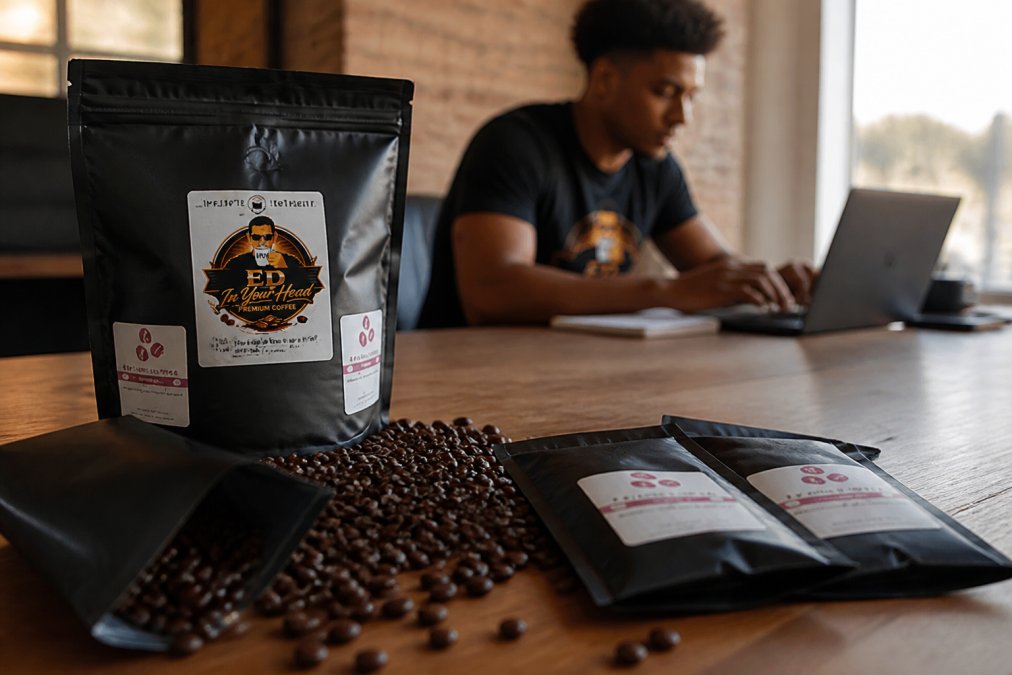
The advantage of mushroom-infused coffee is that it layers multiple support mechanisms. Caffeine provides acute alertness and focus. The mushroom compounds provide sustained energy support and may buffer the metabolic stress of caffeine. Ed In Your Head's Coffee with Mushrooms combines fresh specialty coffee with a proprietary mushroom blend to address the core issue: sustained focus without the crash.
For athletes and gamers who need 4-6 hours of sustained focus, mushroom-infused coffee can be particularly effective.
Distinguishing Caffeine Jitters from Reactive Hypoglycemia
Many people use the term "caffeine crash" to describe several different physiological states, which creates confusion about what's actually happening. Caffeine jitters and reactive hypoglycemia are distinct phenomena with different causes and different solutions.
Caffeine jitters are a direct result of excessive sympathetic nervous system activation. Symptoms include trembling, rapid heartbeat, anxiety, and restlessness. These occur when caffeine dose exceeds your individual tolerance threshold and typically peak 30-60 minutes after consumption.
Reactive hypoglycemia is a blood glucose regulation problem. Symptoms include fatigue, brain fog, irritability, difficulty concentrating, and sometimes hunger or shakiness. These occur when blood glucose drops below your individual baseline, typically 2-3 hours after caffeine consumption on an empty stomach.
The distinction matters because the solutions are different. If you experience jitters, reduce your caffeine dose or switch to a smoother coffee. If you experience a crash, pair caffeine with food or consume caffeine with a pre-loaded glucose state.
Individual Variability: Genetics, Tolerance, and Microbiome
Why does coffee affect different people so differently? The answer involves genetics, caffeine tolerance, and your gut microbiome.
Caffeine metabolism is largely determined by a gene called CYP1A2, which encodes the enzyme responsible for breaking down caffeine. Genetic variants can explain 2-3 fold variation in caffeine sensitivity between individuals.
Tolerance develops with regular caffeine consumption. Your adenosine receptors upregulate to compensate for chronic caffeine blockade, meaning regular coffee drinkers require higher doses to achieve the same effect. However, tolerance doesn't develop equally to all of caffeine's effects.
Your gut microbiome also influences caffeine metabolism. Certain bacteria produce enzymes that metabolize caffeine, and microbiome composition affects how efficiently you process it. People with diverse, healthy microbiomes tend to have more stable caffeine responses.
The practical implication: what works for your friend may not work for you. Start with a moderate dose of fresh specialty coffee paired with a balanced meal. Observe how you feel 1-3 hours later and adjust based on your response.
Coffee doesn't directly spike blood glucose, but it can trigger metabolic events that lead to reactive hypoglycemia if consumed improperly. The solution isn't to avoid coffee, it's to consume it strategically.
Pair your caffeine with protein and fat, time it with your meals, and choose fresh specialty coffee that provides clean caffeine without metabolic friction. Ed In Your Head's MVP Pack gives you six carefully roasted servings designed for sustained focus, and our Coffee with Mushrooms options add metabolic support for longer gaming sessions or work days. With the right approach, coffee becomes a tool for sustained energy rather than a source of crashes.
FIND YOUR FUEL and experience the difference that fresh roasting and strategic consumption make.
Frequently Asked Questions
What is the 2-hour coffee rule?
The 2-hour rule suggests waiting at least 2 hours after waking before consuming caffeine. This allows your body's natural cortisol levels to peak naturally, reducing reliance on caffeine and preventing an afternoon energy crash. Caffeine consumed too early can interfere with your body's natural adenosine receptors and disrupt glucose metabolism throughout the day. Pairing coffee with food also matters, consuming it on an empty stomach accelerates glucose spikes and subsequent crashes.
How does caffeine affect blood sugar levels differently than sugar itself?
Caffeine doesn't contain sugar, so it doesn't directly raise blood glucose. However, it triggers your sympathetic nervous system and increases epinephrine release, which can stimulate glycogenolysis (the breakdown of stored glucose). This creates a glucose spike similar to eating sugar, especially on an empty stomach. The key difference: coffee's effect is indirect and hormonal, while sugar is direct. When you pair coffee with food, the food slows glucose absorption and prevents the sharp spike that leads to reactive hypoglycemia.
Will switching from energy drinks to specialty coffee actually prevent crashes?
Yes, if you choose the right coffee and consume it strategically. Traditional energy drinks contain added sugars, artificial stimulants, and high caffeine doses that spike blood glucose rapidly and cause reactive crashes. Specialty coffee delivers clean caffeine without added sugars. Mushroom-infused varieties like those with Lion's Mane and Cordyceps support metabolic stability and sustained focus. Timing matters: consume coffee with protein and healthy fats, avoid empty-stomach consumption, and space doses 4-6 hours apart to maintain steady glucose tolerance and prevent energy dips.
Can caffeine tolerance affect how my body responds to coffee over time?
Yes. Regular caffeine consumption increases adenosine receptor sensitivity, meaning your body requires more caffeine to achieve the same effect. This metabolic adaptation can change your glucose response, some people experience less dramatic spikes as their bodies adjust, while others may notice dampened energy if they rely on higher doses. Cycling caffeine intake (taking breaks every 2-3 weeks) helps reset tolerance and prevents crashes from dose escalation. Individual genetics and microbiome composition also influence how quickly you develop tolerance and how your insulin secretion responds to caffeine.
This article was written using GrandRanker