


Table of Contents
- Sustained Energy Drinks vs Coffee: Quick Comparison
- Caffeine Content: How Much Are You Actually Getting?
- Natural vs Synthetic Caffeine: Does the Source Matter?
- Why Coffee Offers Sustained Energy Without the Spike
- Caffeine Crash Symptoms: Energy Drinks vs Coffee
- Healthy Alternatives to Energy Drinks That Actually Work
- How to Choose Your Fuel for Gaming, Training, and Work
- Conclusion
- Frequently Asked Questions
Last Updated: September 9, 2026
The debate between sustained energy drinks vs coffee usually misses the point: it is not about which has more caffeine, but about how each delivers that caffeine to your system. A can of energy drink hits your bloodstream fast with a sharp spike, while coffee releases caffeine more gradually, making it the superior choice for steady, all-day alertness. At Ed In Your Head, we roast specialty coffee for athletes and gamers who need clean, natural focus without the jittery side effects or sugar crashes of most energy products.
Sustained Energy Drinks vs Coffee: Quick Comparison
For most people, coffee wins the sustained energy battle because it delivers caffeine alongside natural compounds that soften the absorption curve. Energy drinks rely on a rapid-release profile that peaks quickly and fades just as fast, often leaving you reaching for another can within a couple of hours.
| Factor | Energy Drinks | Coffee | Winner |
|---|---|---|---|
| Caffeine delivery | Fast spike, quick drop | Gradual release | Coffee |
| Added sugar | Often 20-30g per can | Zero naturally | Coffee |
| Artificial ingredients | Common | None | Coffee |
| Antioxidants | Minimal | High | Coffee |
| Crash risk | High | Low | Coffee |
| Cost per serving | $2-4 | $0.50-1.50 | Coffee |
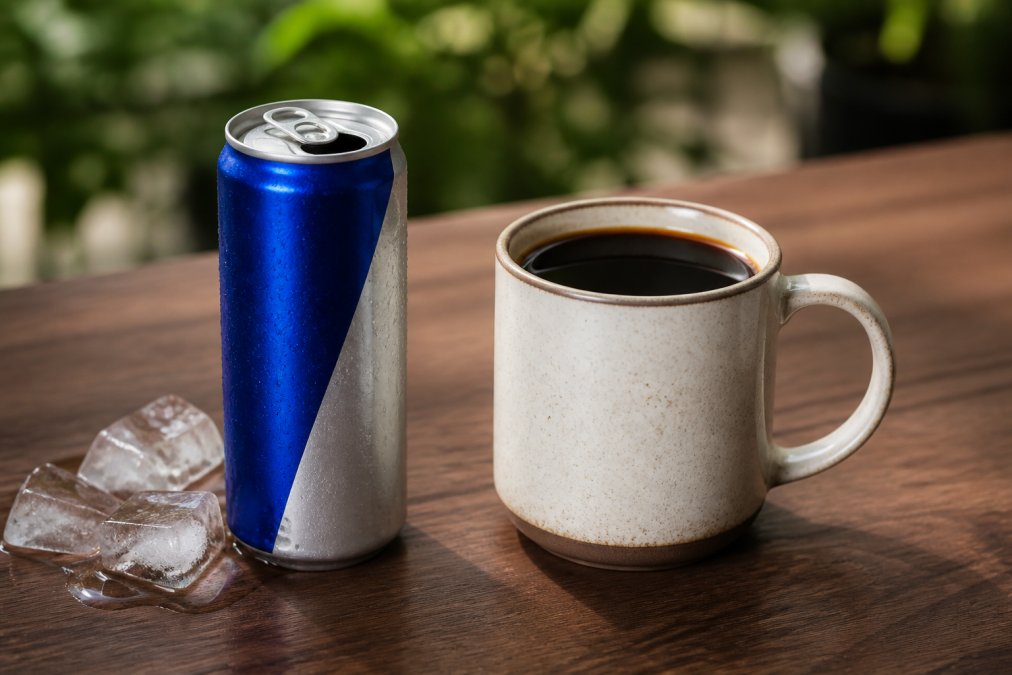
The table tells the story, but the real difference lives in how your body processes each drink, that is where the spike-and-crash versus steady energy distinction comes from.
Caffeine Content: How Much Are You Actually Getting?
A standard 8-ounce cup of brewed coffee contains roughly 80 to 100 milligrams of caffeine, while a typical 8-ounce energy drink serving delivers about 70 to 80 milligrams. The gap widens when you factor in serving size: most energy drinks come in 16-ounce cans, which can push caffeine content to 150 milligrams or more, while coffee drinkers often stop at one or two cups.
Caffeine sensitivity varies widely between individuals, and this matters more than the raw numbers. Your metabolic rate, body weight, and how often you consume caffeine all influence how long the effects last. The FDA's guidance on caffeine consumption notes that healthy adults can generally consume up to 400 milligrams per day without negative effects, but individual tolerance varies considerably.
What most labels do not tell you is that the caffeine in coffee is absorbed alongside other compounds that affect how it feels, which brings us to the source question.
Natural vs Synthetic Caffeine: Does the Source Matter?
Natural caffeine from coffee and synthetic caffeine used in most energy drinks are chemically identical molecules, so the basic stimulant effect is the same. The meaningful difference is what travels alongside the caffeine into your system.
Coffee contains hundreds of bioactive compounds, including chlorogenic acid and antioxidants, that influence absorption and add health benefits beyond alertness. Synthetic caffeine, by contrast, is often paired with artificial sweeteners, preservatives, and added vitamins that do nothing to smooth out delivery. The distinction matters less for the molecule itself and more for the full package you consume.
Research on coffee consumption consistently links it to lower risks of certain chronic conditions, benefits that energy drinks do not replicate. Research on coffee and long-term health outcomes has documented associations between regular coffee intake and reduced cardiovascular and metabolic risks, effects that stem from the whole bean, not just the caffeine.
Why Coffee Offers Sustained Energy Without the Spike
The difference between a smooth, sustained lift and a jittery spike comes down to pharmacokinetics, how a substance moves through your body, and the chemical environment it arrives in. Caffeine from coffee and caffeine from energy drinks are the same molecule, but the delivery system is not.
Absorption rate and the role of coffee's natural compounds. When you drink coffee, the caffeine is absorbed through your gastrointestinal tract alongside hundreds of bioactive compounds, including chlorogenic acid, cafestol, and kahweol. These compounds slow gastric emptying and modulate the rate at which caffeine crosses the intestinal wall into your bloodstream. The result is a gradual rise in plasma caffeine concentration that peaks around 30 to 60 minutes after consumption and then declines smoothly over the next three to five hours, matching caffeine's half-life in most adults.
Energy drinks, by contrast, deliver caffeine in a simple aqueous solution with sugar and synthetic additives. This formulation is absorbed more rapidly, producing a sharper peak in plasma caffeine concentration, often within 15 to 30 minutes, followed by a faster decline. That rapid rise and fall is what you experience as the "rush" and then the "crash."
The L-theanine factor, a gap most comparisons miss. Coffee naturally contains L-theanine, an amino acid that promotes alpha-wave activity in the brain, associated with a calm, focused mental state. When present with caffeine, L-theanine modulates its stimulant properties, reducing anxiety and jitteriness while preserving alertness. This synergy is why coffee drinkers often describe their energy as "clean" or "smooth," while energy drink consumers report feeling wired but anxious.
Why the crash is worse with energy drinks. The crash is about how quickly caffeine leaves your system. With coffee, the gradual decline gives your brain's adenosine receptors time to adapt, so the transition back to baseline is barely noticeable. With energy drinks, the rapid drop triggers a sudden rebound of adenosine binding, producing fatigue, headache, and difficulty concentrating. Add 20 to 30 grams of sugar per can, and the glucose spike layers a blood-sugar crash on top of the caffeine withdrawal, compounding the fatigue.
What the clinical data shows. A common pattern in caffeine research is that the delivery matrix matters as much as the dose. Studies comparing coffee to caffeine in water or soft drinks consistently find that coffee produces a more prolonged psychomotor performance effect with fewer reports of anxiety and nervousness, even at equivalent doses. The mechanism is the combination of slower absorption, natural L-theanine, and the absence of a sugar load.
For athletes and gamers who need focus that lasts through a full session, the pharmacokinetic profile of coffee is the decisive advantage. The gradual rise and fall of caffeine, modulated by natural compounds, delivers sustained alertness without the sharp edges that energy drinks produce.
Caffeine Crash Symptoms: Energy Drinks vs Coffee
Caffeine crash symptoms, fatigue, headache, irritability, brain fog, and a drop in motivation, appear when caffeine clears your system faster than your brain's adenosine receptors can adapt. Energy drinks produce these symptoms more intensely because their rapid absorption leads to an equally rapid withdrawal. But crash severity is not the same for everyone; the single biggest factor is your genetics.
The CYP1A2 gene: fast vs. slow metabolizers. Your liver breaks down caffeine primarily through an enzyme called cytochrome P450 1A2, which is encoded by the CYP1A2 gene. About half the population carries a variant that makes them "fast metabolizers", their bodies clear caffeine quickly, with a half-life of around two to three hours. The other half are "slow metabolizers," with a half-life that extends to five to six hours or longer.
This genetic difference changes the crash equation entirely:
- Fast metabolizers process caffeine from both coffee and energy drinks quickly. They feel the effects sooner, but they also clear the caffeine faster, which means the drop-off is more abrupt. For them, the crash from an energy drink's rapid absorption curve can be especially pronounced.
- Slow metabolizers sustain caffeine levels longer, which can mean a smoother energy curve, but it also means caffeine lingers into the evening, potentially disrupting sleep architecture and making the next morning's grogginess worse.
How the source changes the crash for each type. For fast metabolizers, coffee's gradual absorption and natural L-theanine provide a buffer that softens the inevitable drop. Energy drinks, with their rapid spike and sugar load, hit fast and fade fast, a double disadvantage for someone already clearing caffeine quickly. For slow metabolizers, coffee's longer tail can extend alertness into the afternoon, but caffeine may still circulate at bedtime, making sleep quality matter more than crash symptoms.
The sleep connection that most articles ignore. Caffeine's half-life directly affects sleep architecture. Even if you fall asleep easily, caffeine reduces slow-wave (deep) sleep and can suppress REM sleep, especially when consumed within six hours of bedtime. Energy drinks, with their rapid absorption and higher per-serving caffeine in 16-ounce cans, are more likely to push total daily caffeine past your threshold. Coffee consumed earlier in the day is less likely to interfere with sleep, but slow metabolizers who drink it after noon may still feel effects at midnight.
Practical takeaway for crash-prone drinkers. If you are prone to caffeine crashes, the first step is knowing your metabolic type. Fast metabolizers do better with smaller, more frequent doses of coffee spread across the morning, while slow metabolizers can handle one larger cup but should cut off caffeine by early afternoon. Energy drinks, regardless of metabolic type, concentrate crash risk because they deliver a high dose quickly and often pair it with sugar, creating a second, independent crash cycle.
The crash is not an inevitable cost of caffeine, it is a function of how fast your body clears it, how quickly the drink delivers it, and whether sugar is along for the ride. Coffee's gradual profile gives both metabolizer types more control over that curve, which is why it remains the more sustainable choice for all-day energy.
Healthy Alternatives to Energy Drinks That Actually Work
The healthy alternatives to energy drinks are not mysterious supplements or proprietary blends, they are high-quality coffee and strategic consumption habits. For clean, natural fuel, several options stand out:
- Fresh-roasted specialty coffee with no added sugar
- Coffee blended with functional mushrooms like Lion's Mane or Cordyceps
- Cold brew, which naturally contains slightly higher caffeine per ounce
- Green tea for a lighter, L-theanine-rich option
Coffee with functional mushrooms has gained traction among performance-focused drinkers because compounds like Lion's Mane may support cognitive function without adding stimulants. Our Coffee with Mushrooms Dark Roast pairs specialty-grade beans with Lion's Mane, Cordyceps, and Reishi for those who want the focus benefits with an adaptogenic twist.

The key is choosing coffee that is roasted fresh and consumed without added sugars or artificial creamers. Dietary guidelines on added sugar intake recommend limiting added sugars, and black coffee naturally contains zero, making it one of the cleanest caffeine sources available.
How to Choose Your Fuel for Gaming, Training, and Work
Your choice between energy drinks and coffee should match the demands of your activity and your personal caffeine sensitivity. Gamers need sustained focus over long sessions, favoring coffee's gradual release over the energy drink's quick spike. Endurance athletes benefit from coffee's performance enhancement without the gastrointestinal distress that sugary energy drinks can cause during exercise.
For a busy professional needing alertness through afternoon meetings, a single cup of fresh coffee provides steady cognitive performance without the anxiety or tachycardia that high-dose energy drinks can trigger. If prone to jitteriness, choose a medium roast with lower acid and sip it slowly.
The MVP Pack at $69.99 was built for people who want to ditch energy drinks entirely. It includes six 2-ounce bags of our best-selling coffee for clean, steady energy, plus a ceramic mug and a tee to rep the movement. For those who prefer pods, the Cowboy Blend is available in 12-pack pods with a dark and medium roast combination that is bold enough to wake you up and smooth enough to keep you going.


Conclusion
The choice between sustained energy drinks vs coffee comes down to whether you want a controlled release or a quick hit that fades. Coffee delivers caffeine alongside antioxidants and natural compounds that support steady alertness, while energy drinks trade that stability for immediate stimulation and a predictable crash. If you are tired of the spike-and-drop cycle and want fuel that lasts through your workout, gaming session, or workday, fresh-roasted coffee is the answer. Ed In Your Head roasts every order the day it ships, ensuring maximum freshness and flavor with zero added sugar and no artificial ingredients. FIND YOUR FUEL and make the switch to clean, natural energy that does not let you down.
Frequently Asked Questions
Which is healthier, energy drinks or coffee?
Coffee is generally the healthier choice for sustained energy. A standard 8 oz cup of black coffee has nearly zero calories and no added sugar, while a 16 oz energy drink often packs 200-250 calories from sugar. Coffee also contains antioxidants like chlorogenic acid that energy drinks lack. Energy drinks rely on synthetic caffeine and added stimulants, which can spike heart rate and blood pressure more noticeably. If you want clean, steady fuel without empty calories or artificial ingredients, fresh-roasted coffee is the better call.
What is the best drink for sustained energy?
The best drink for sustained energy is one with a moderate caffeine dose and no sugar crash. Coffee provides a steady release of energy because its natural compounds, including antioxidants, slow caffeine absorption compared to the rapid hit of synthetic caffeine in energy drinks. A medium roast like the Breakfast Blend + delivers around 150-200 mg of caffeine with zero added sugar, giving you hours of focus rather than a 45-minute spike followed by a slump. Pair it with water and a protein snack for the longest-lasting alertness.
Do energy drinks cause more of a crash than coffee?
Yes, energy drinks typically cause a harder crash than coffee. The crash happens when your blood sugar drops after a rapid insulin spike, and most energy drinks contain 30-50 grams of sugar per can. That sugar rush fades fast, leaving you groggy and unfocused. Coffee without added sugar avoids that blood sugar rollercoaster entirely. Caffeine crash symptoms like fatigue, headache, and brain fog are far less likely with black coffee because you are not riding a sugar wave. The result is steadier, more reliable energy.
How many coffees is an energy drink equivalent to?
A standard 16 oz energy drink contains about 160 mg of caffeine, which equals roughly two 8 oz cups of brewed coffee. But caffeine content varies widely by bean and roast. A high-caffeine blend like Max Caf, made with Robusta beans from Tanzania and India, can pack more punch per cup. The bigger difference is what else you consume: energy drinks add sugar and synthetic stimulants, while coffee adds beneficial antioxidants. Two cups of quality coffee can match the caffeine of one energy drink without the additives.