


Table of Contents
- How Coffee Affects Esports Performance
- Caffeine and Gaming Performance: What the Research Shows
- Reaction Time, Focus, and Cognitive Performance
- Coffee vs Energy Drinks for Gamers
- Caffeine Timing for Gamers: When to Drink Coffee
- Caffeine Jitters While Gaming and How to Avoid Them
- Finding Your Optimal Caffeine Dose
- Sleep, Recovery, and Next-Day Gaming Performance
- Frequently Asked Questions
Last Updated: October 6, 2026
How Coffee Affects Esports Performance
Coffee for esports has become a go-to for competitive gamers seeking clean, sustained focus without the energy-drink crash. Caffeine works on your central nervous system to increase alertness and sharpen attention, two things that matter when milliseconds decide matches.
Coffee delivers a steady rise in energy rather than a spike. Your body absorbs its caffeine gradually, so you stay sharp for hours instead of riding a wave that ends in a hard drop, which matters for sessions stretching into the afternoon or evening.
At Ed In Your Head, we've built specialty coffee blends for athletes and gamers who demand peak performance without the jitters or sugar crashes of traditional energy drinks. Our fresh-roasted beans arrive roasted the day they ship, ensuring maximum freshness and consistent caffeine delivery.

The real benefit isn't just the caffeine, it's how coffee delivers it: clean, stable, and without the artificial additives that make you feel wired and anxious.
Caffeine and Gaming Performance: What the Research Shows
Caffeine blocks adenosine, a chemical that builds up in your brain during the day and signals fatigue (Adenosine, caffeine, and sleep-wake regulation: state of the science and perspectives). With adenosine unable to reach your brain's receptors, you feel more awake, which is why coffee for esports gamers makes sense during long competitive sessions.
The effect is measurable: caffeine increases dopamine and norepinephrine, neurotransmitters that boost mood and focus (Checking your browser). For gamers, that means better decision-making and faster reaction to in-game events.
Dose and timing determine whether you get the benefit or just the jitters: too much too late and you'll be wired at midnight, too little and you won't feel anything.
A common mistake is treating all caffeine sources as equal. Energy drinks are loaded with sugar, artificial sweeteners, and extra stimulants, while black coffee gives you pure caffeine with zero added sugar, a fundamental difference in how your body processes the boost.
Reaction Time, Focus, and Cognitive Performance
Reaction time is where caffeine shows its clearest esports benefit: your brain processes information faster, so you spot enemies sooner, aim faster, and respond to in-game calls with sharper timing.
Focus and sustained attention are equally critical, since gaming sessions demand hours of concentration. Caffeine sustains that focus by keeping adenosine blocked and your central nervous system engaged, and moderate use also improves working memory.
Cognitive performance peaks at moderate doses. Too much and anxiety and overstimulation take over: your hands shake, attention scatters, and you second-guess decisions. The sweet spot varies by body weight and caffeine tolerance.
For competitive gaming, the difference between sharp focus and scattered attention often decides the outcome. Coffee for esports works because it delivers consistent, predictable cognitive enhancement without the sugar-crash.
Coffee vs Energy Drinks for Gamers
Energy drinks promise sustained energy, but most contain 80-300mg of caffeine plus 25-80 grams of sugar per serving. That sugar spike gives a quick rush followed by an inevitable crash: blood glucose spikes, insulin releases, and an hour later you're more fatigued than before.
Coffee delivers caffeine without the sugar load. Black coffee has zero grams of sugar; even with milk and a little sweetener you're at 1-5 grams versus 25-80 in a typical energy drink, so your blood glucose stays stable.
The other difference is artificial additives. Energy drinks often stack taurine, guarana, and other stimulants on top of caffeine, which can cause overstimulation, anxiety, and jitters, especially during competitive play when you're already stressed.
Coffee is simpler: caffeine plus flavor. For gamers who want clean energy without the chemical cocktail, it's the obvious choice.
Caffeine Timing for Gamers: When to Drink Coffee
Timing your coffee makes the difference between peak performance and wasted potential. Caffeine takes 30-45 minutes to reach full effect, so drinking too early means peaking before your match and too late means still ramping up when the session ends.
For competitive play, drink your coffee 30-45 minutes before you need peak performance. If your match starts at 7 PM, drink at 6:15 PM. If you have a long practice session from 2-6 PM, drink at 1:30 PM.
Duration matters too: caffeine's effects last 3-5 hours depending on metabolism and body weight, so finding your personal timing window is essential.
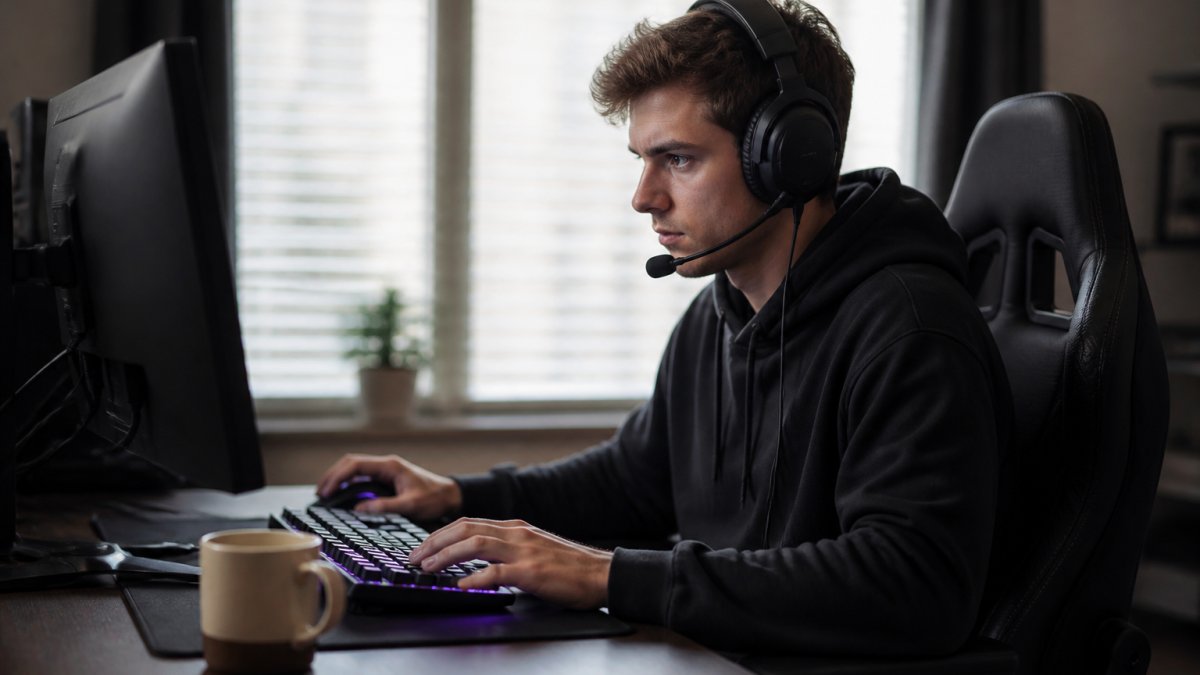
Avoid coffee in the late afternoon if you plan to sleep that night. Caffeine after 3 PM often disrupts sleep quality even if you don't notice, and poor sleep destroys next-day gaming performance far more than caffeine helps it.
The practical approach: align your coffee with your competitive window. Morning sessions, drink upon waking. Afternoon sessions, 30-45 minutes before you start. Evening sessions, drink early afternoon and skip caffeine after 3 PM.
Caffeine Jitters While Gaming and How to Avoid Them
Jitters happen when your dose exceeds your tolerance: your central nervous system becomes overstimulated, your hands shake, focus scatters, and anxiety spikes. For esports, where precision and calm matter, jitters are a performance killer.
The solution is simple: start low and find your threshold. If you've never used coffee for esports performance, begin with 100mg of caffeine (roughly one cup of standard brewed coffee). If you're steady and focused, that's your dose; if you feel jittery, use less next time.
Breakfast Blend + (Extra Caffeine) →
Body weight matters: a 150-pound and a 250-pound person respond differently to the same dose. Heavier individuals need more caffeine for the same effect; lighter individuals reach overstimulation faster.
Tolerance builds over time: daily coffee drinkers need higher doses for the same effect. Competitive gamers who use coffee regularly should occasionally take a 3-5 day break, which resets tolerance and makes lower doses effective again.
Finding Your Optimal Caffeine Dose
Most guides hand you a body-weight chart and call it a day. That's a starting point, not an answer: your optimal dose depends on four variables working together, body weight, caffeine tolerance, session length, and time of day.
Start with body weight as your anchor. Caffeine's effects scale roughly with lean body mass, so a lighter player reaches overstimulation on a smaller dose.
- Under 150 lbs: 75-100mg caffeine
- 150-200 lbs: 100-150mg caffeine
- Over 200 lbs: 150-200mg caffeine
Now adjust for tolerance. Daily coffee drinkers' adenosine receptors adapt, so regular users often need 25-50mg more than a non-user of the same weight.
Session length changes the math too.
Time of day is the fourth variable. Caffeine's half-life runs about 3-5 hours in most adults, so a dose that feels perfect at 10 AM can wreck your sleep at 8 PM. For evening sessions, lower the dose or move it earlier.
Here's the practical test protocol:
- Pick your starting dose from the body-weight range above.
- Drink it 30-45 minutes before your session.
- Log three things after the session: focus quality (1-5), reaction feel (sharp/scattered), and any jitters (none/mild/strong).
- Adjust by 25mg up or down next session based on what you logged.
- Repeat across at least four sessions before locking in a dose.
Most players land between 100-200mg per session. Above 200mg, jitter and anxiety risk rise without meaningful cognitive benefit, the dose-response curve flattens, then turns negative.
One more thing the charts never mention: coffee serving size isn't standardized. A "cup" can mean 8 oz of drip, a 12 oz mug, or a 16 oz cafe pour. A typical 8 oz brewed coffee runs about 95-100mg, but a large cafe drip can push past 200mg.
| Body Weight | Starting Dose | Typical Ceiling | Timing |
|---|---|---|---|
| Under 150 lbs | 75-100mg | 150mg | 30-45 min before |
| 150-200 lbs | 100-150mg | 200mg | 30-45 min before |
| Over 200 lbs | 150-200mg | 250mg | 30-45 min before |
For a low-risk self-experiment, pick two practice sessions of similar length and difficulty, use your normal dose for one and a slightly lower dose for the other, and compare your focus and jitter notes. It won't be lab-grade data, but it beats any generic guideline.
Sleep, Recovery, and Next-Day Gaming Performance
This is the section most caffeine guides skip, and it matters most for anyone competing across consecutive days: caffeine doesn't just keep you awake, it changes your sleep architecture, and degraded sleep is a bigger performance hit than any caffeine boost can offset.
The mechanism: caffeine blocks adenosine, the chemical that builds up through the day and creates sleep pressure. Afternoon or evening coffee doesn't just delay sleepiness, it reduces the depth and quality of the sleep you get.
The effect is dose- and timing-dependent.
For esports the trade-off is brutal: reaction time, decision-making, and sustained attention all degrade with poor sleep, and one bad night can erase the cognitive edge caffeine gave you the day before.
A practical rule that beats a fixed clock time: work backward from your target bedtime. To be asleep by 11 PM, finish your last caffeine dose at least 8 hours earlier, around 3 PM. If you're sensitive or a slower metabolizer, push it earlier. Competing late at night?
Hydration matters too, for a different reason than most people think: caffeine has a mild diuretic effect, and dehydration amplifies jitter and reduces fine motor control.
To track whether caffeine is costing you sleep, note your last caffeine time for one week and rate your next-morning focus (1-5) before your first coffee. If mornings after late caffeine consistently rate lower, move your cutoff an hour earlier and repeat.
Coffee is a tool for specific sessions, not a daily crutch. Used strategically around your competition schedule and sleep window, it sharpens performance; used carelessly, it borrows from tomorrow to pay for today.
Frequently Asked Questions
How much caffeine should a gamer consume before a gaming session?
Most research suggests 40-300 mg of caffeine per dose produces measurable benefits for alertness and reaction time without excessive overstimulation. For coffee, this typically means one 8 oz cup (95-200 mg caffeine) to two cups depending on brew strength and individual tolerance. Start with a single cup and assess your response over multiple sessions before increasing. Individual body weight, tolerance, and sensitivity vary significantly, so what works for a 150 lb player may feel different for a 200 lb player. Track your performance after different doses to find your sweet spot.
When should you drink coffee before gaming to maximize performance?
Caffeine reaches peak blood levels 30-60 minutes after consumption, so drink your coffee 30-45 minutes before your gaming session starts. This timing allows the central nervous system stimulation to peak right when you need sustained attention and reaction speed.
Why does coffee cause jitters in some gamers but not others?
Jitters and anxiety from caffeine stem from individual sensitivity to central nervous system stimulation and how quickly your body metabolizes caffeine. Some people process caffeine slowly, leading to prolonged overstimulation and tremors. Others have genetic variations that make them more sensitive to the flight-or-fight response caffeine triggers. Dose size, empty stomach versus full stomach, and existing anxiety or sleep deprivation all amplify jitters. Start with a smaller dose, eat something light before drinking, and allow 3-5 days between sessions to assess your individual response.
Is coffee actually better than energy drinks for gaming performance?
Coffee delivers pure caffeine without added sugars, artificial sweeteners, or synthetic stimulants that cause energy crashes and jitters. Most energy drinks contain 80-300 mg caffeine plus 25-80 grams of sugar, which triggers a blood sugar spike followed by a crash that kills focus midway through a gaming session. Coffee provides steady, sustained energy without the crash. Research on caffeine itself shows benefits for reaction time, working memory, and sustained attention, benefits that apply whether caffeine comes from coffee or energy drinks. The practical difference: coffee avoids the sugar crash and artificial additives, making it the cleaner choice for competitive gamers who need 2-6 hours of stable focus.