


Table of Contents
- Coffee vs Energy Drinks: A Quick Comparison
- Caffeine for Athletic Performance: How Much Do You Really Need?
- Ingredients Beyond Caffeine: Sugar, Taurine, and Additives
- Avoiding Sugar Crashes During Training and Competition
- A Clean Pre Workout Coffee Alternative: What to Look For
- Endurance vs Explosive Power: Which Fuel Fits Your Sport?
- Where Each Option Wins: Use-Case Recommendations
- Frequently Asked Questions
Last Updated: September 26, 2026
Coffee vs Energy Drinks: A Quick Comparison
The choice between coffee vs energy drinks for athletes comes down to what happens 90 minutes after you drink it. Coffee delivers caffeine from a natural source with no added sugar, while most energy drinks pair caffeine with sugar, taurine, and artificial additives that can trigger a crash mid-competition. This guide from Ed In Your Head breaks down absorption rates, ingredient differences, and which fuel fits endurance versus explosive sports.
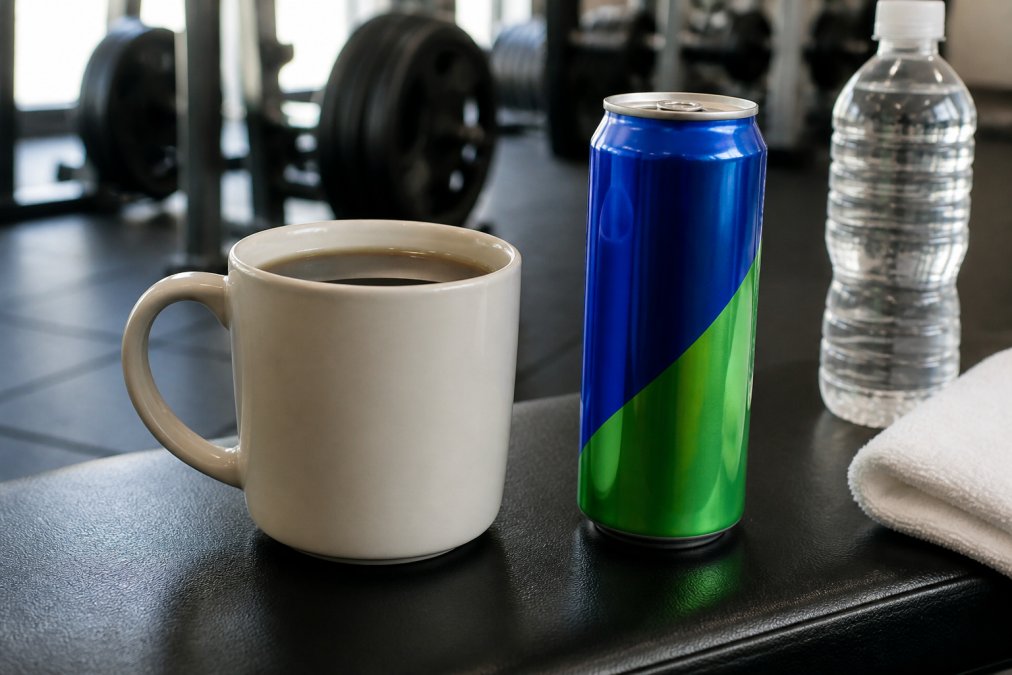
The short version: coffee wins for sustained energy, energy drinks win only when you need fast sugar alongside caffeine.
| Factor | Coffee | Energy Drinks |
|---|---|---|
| Caffeine source | Natural, brewed | Often caffeine anhydrous |
| Added sugar | None | Frequently high |
| Onset time | 20-45 minutes | 15-30 minutes |
| Crash risk | Low | High with sugar |
| Additives | None | Taurine, guarana, dyes |
| Cost per serving | Lower | Higher |
| Best for | Endurance, focus | Quick pre-lift boost |
Caffeine for Athletic Performance: How Much Do You Really Need?
Caffeine for athletic performance works best in the 3-6 mg per kilogram of body weight range, taken 45-60 minutes before activity, the range where most athletes notice improved alertness and endurance without side effects.
Absorption Rates and Onset Time
Caffeine absorbs through the gastrointestinal tract and peaks in the bloodstream roughly 30-60 minutes after ingestion, depending on whether you drank it on an empty stomach. Liquid sources hit faster than capsules or tablets.
Ingredients Beyond Caffeine: Sugar, Taurine, and Additives
Energy drinks rarely stop at caffeine. A typical can stacks caffeine with sugar, taurine, guarana, B vitamins, and artificial colors, each of which changes how the drink behaves in an athlete's body. Coffee's ingredient list is water and ground beans.
Sugar: The Crash Mechanism
A standard 16 oz energy drink can carry 25-30 grams of added sugar, sometimes more. That sugar spikes glucose and triggers an insulin response, which feels productive for about 20 minutes before blood glucose drops below baseline. The crash, foggy focus, heavy legs, another-can craving, lands right in the middle of a 90-minute match or long run.
Taurine and Guarana: Marketing vs. Mechanism
Taurine is an amino acid in almost every energy drink. It is marketed as a performance enhancer, but the research is mixed and can doses are usually far below what studies use. In practice, taurine mostly adds to the stimulant load rather than improving power output.
Artificial Sweeteners and Dyes
Sugar-free energy drinks swap sugar for sucralose, acesulfame potassium, or aspartame. That removes the glucose spike but does not make the drink clean, some athletes report GI discomfort from these sweeteners, especially during endurance events where gut tolerance is already stretched.
The Clean Label Advantage
Coffee's ingredient list is short: water and ground beans. No dyes, no added sugar, no proprietary blend hiding stimulant doses. Coffee also brings its own antioxidants, including chlorogenic acid.
How to Read a Label in 30 Seconds
- Caffeine source: named ("coffee," "green tea") or hidden ("energy blend")?
- Total caffeine per serving: a number you can calculate, or a range?
- Added sugar: zero, or 25+ grams?
- Sweeteners: none, sugar, or artificial?
- Dyes: any color number on the label?
If a can fails two or more of those checks, it is not a performance tool. It is a candy bar with caffeine in it.
Avoiding Sugar Crashes During Training and Competition
Avoiding sugar crashes during training starts with removing the sugar spike. If your pre-workout drink has 25 grams of added sugar, you have scheduled a crash for roughly 60-90 minutes into your session, exactly when a long run or late-game push needs steady energy.
- Pre-session: black coffee or a clean coffee blend, 45-60 minutes out
- Mid-session (90+ minutes): small carb source, not another energy drink
- Post-session: protein and carbs for glycogen resynthesis
A Clean Pre Workout Coffee Alternative: What to Look For
A clean pre workout coffee alternative is any caffeine source that delivers alertness without added sugar, artificial additives, or a proprietary blend. The label separates a real performance tool from a candy bar with caffeine in it.
Look for these markers on any product you consider:
- Zero added sugar, stated plainly
- A named caffeine source, not a "blend"
- No artificial colors or sweeteners
- A roast date or freshness indicator
- Total caffeine per serving you can actually calculate
Endurance vs Explosive Power: Which Fuel Fits Your Sport?
Endurance and power athletes need different things from a pre-workout, and that difference decides the coffee versus energy drink question for you. But the sport is only half the equation, the other half is how your body metabolizes caffeine.
Endurance: Steady Caffeine, No Sugar Spike
Endurance performance depends on sustained energy over 60+ minutes. Caffeine works as an ergogenic aid by lowering perceived effort and sparing glycogen, so a steady, sugar-free source is the better match. Sugary energy drinks help for 30 minutes, then work against you when blood glucose reverses.
Explosive Power: Faster Hit, Shorter Window
Explosive power sports, sprinting, Olympic lifting, a short esports match, tolerate a faster caffeine onset. A sugar-plus-caffeine drink can work if the effort is short and the crash lands after you are done, but most sessions and competitions are not that short.
The Variable Nobody Talks About: Your Metabolism
Caffeine is broken down in the liver by an enzyme called CYP1A2, and the gene that codes for it comes in fast and slow versions. Fast metabolizers clear caffeine quickly and feel alert without jitters; slow metabolizers clear it slowly, so the same cup can raise heart rate, disrupt sleep, and even hurt performance.
The Recovery Angle Competitors Skip
Most comparisons stop at the pre-workout window, but the bigger story is what happens after. Caffeine's 3-5 hour half-life means a 2 p.m. energy drink is still active at 7 p.m. and measurable at bedtime. Sleep is when muscle repair and glycogen resynthesis happen, disrupt it and you blunt the adaptation your training was supposed to create.
Matching Fuel to Sport and Body
- Marathon, cycling, long-distance swim: coffee, no sugar, timed 45-60 minutes out
- Team sports with repeated sprints: coffee plus controlled carbs
- Short max-effort lifts: either works, but watch total caffeine and timing
- Multi-hour gaming or focus sessions: coffee, for steady cognitive function
- Evening competitions: coffee earlier in the day, or a lower-caffeine serving, especially if you are a slow metabolizer
A sugar spike raises cortisol and can blunt the recovery signal your body needs, while a steady caffeine source keeps alertness high without that spike and clears in time to protect your sleep.
Where Each Option Wins: Use-Case Recommendations
Coffee wins for most athletes, most of the time: caffeine for athletic performance with zero added sugar, lower cost per serving, and no artificial additives. Energy drinks win in one narrow case, a short, explosive effort where a fast sugar hit is an advantage and the crash lands after the event.
Frequently Asked Questions
Is coffee actually healthier than energy drinks for athletic performance?
Coffee delivers caffeine without the added sugar, taurine, and artificial additives found in most energy drinks. A standard cup has roughly 95 mg of caffeine, while popular energy drinks often pack 80 to 160 mg plus 25 to 30 grams of sugar. For athletes, coffee provides a cleaner stimulant profile that supports alertness and endurance without the blood glucose spike and crash that follows sugary drinks.
How does the caffeine content in coffee compare to popular energy drinks?
An 8-ounce brewed coffee contains about 95 mg of caffeine. Energy drinks typically range from 80 mg to 160 mg per can, with some reaching over 200 mg. The key difference is delivery: coffee's caffeine arrives with chlorogenic acid and other compounds that slow absorption, while energy drinks often use caffeine anhydrous, which hits faster and fades quicker. That faster fade is what many athletes describe as a crash.
Why do athletes experience sugar crashes with energy drinks but not coffee?
Energy drinks often contain 25 to 30 grams of sugar per can. That sugar spikes blood glucose levels, triggering an insulin response that clears it from the bloodstream quickly. The result is a sharp drop in energy, jitteriness, and reduced focus. Black coffee has zero sugar, so it avoids that insulin spike entirely. The caffeine in coffee also has a longer half-life, providing sustained energy rather than a quick peak and drop.
Is coffee a better pre-workout supplement than synthetic energy drinks?
For most athletes, coffee is a more practical pre-workout option. It provides caffeine for athletic performance at a fraction of the cost per serving, contains antioxidants like chlorogenic acid, and has no artificial additives. Synthetic energy drinks may offer convenience, but they often include taurine, guarana, and carbonation that can cause digestive discomfort during training. Coffee's diuretic effect is mild, and proper hydration offsets it easily.
What are the long-term health implications of energy drink consumption for athletes?
Regular energy drink consumption has been linked to elevated heart rate variability, increased cortisol levels, and disrupted sleep patterns. The sugar content contributes to insulin resistance over time. Coffee, by contrast, has an antioxidant profile that may support metabolic rate and cognitive function. For athletes training daily, choosing coffee over energy drinks reduces exposure to artificial stimulants and added sugars while still delivering the alertness and performance enhancement they need.