


Table of Contents
- Why Fresh Roasted Coffee Outperforms Stale Beans
- Antioxidants, Chlorogenic Acid, and Oxidative Stress Reduction
- Sustained Energy Without the Crash
- Coffee Roasting Dates Explained: Why Freshness Matters
- How to Store Coffee Beans for Maximum Freshness
- Best Brewing Methods for Fresh Beans
- The Real Difference: Fresh Roasted vs. Commercial Coffee
Last Updated: August 25, 2026
Why Fresh Roasted Coffee Outperforms Stale Beans
Within days of roasting, coffee beans lose volatile aromatic compounds and antioxidants that deliver flavor and performance benefits. Fresh roasted coffee retains these compounds at peak levels, which is why athletes, gamers, and professionals increasingly prioritize it over mass-market alternatives.
At Ed In Your Head, every order ships roasted the day it leaves our facility, ensuring peak performance. The moment roasting stops, oxidation accelerates. Exposure to oxygen, light, and humidity degrades the compounds responsible for smooth energy and mental clarity.
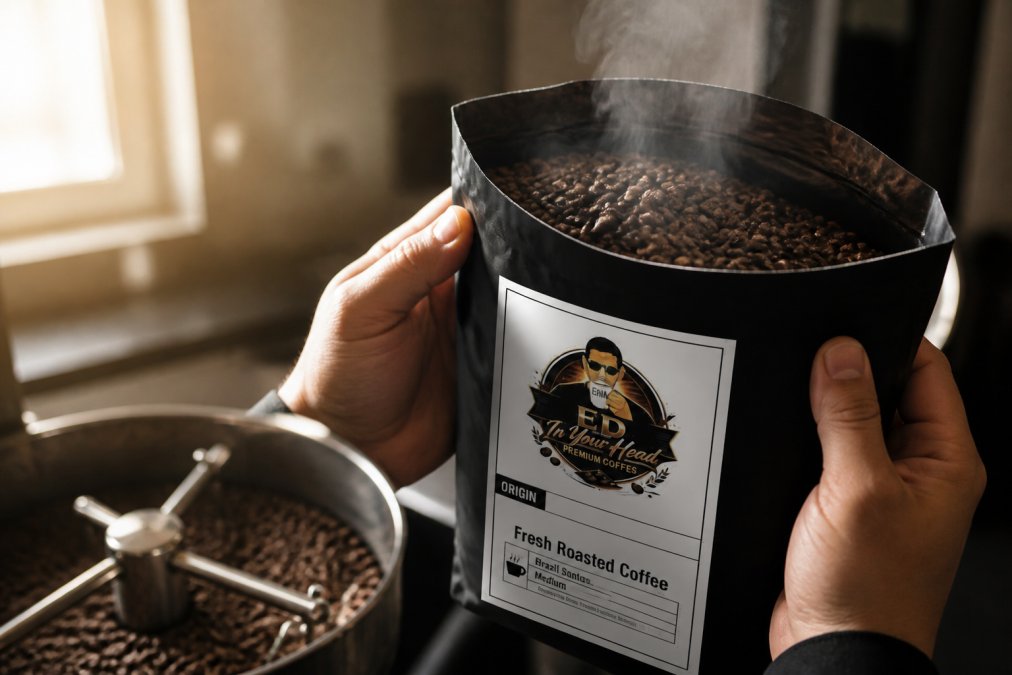
Stale coffee loses chlorogenic acid and polyphenols, meaning less antioxidant protection and weaker metabolic support. Commercial coffee, often roasted weeks or months before reaching consumers, has already lost significant potency by the time it brews. Fresh roasted coffee delivers sustained energy without the crash, while older beans produce jittery spikes followed by fatigue.
Freshness also affects how your body processes caffeine. Fresher beans contain more protective compounds that buffer caffeine absorption, allowing cleaner energy delivery. People switching from stale commercial coffee to fresh roasted often report fewer jitters because the supporting chemistry changed, not the caffeine content.
Antioxidants, Chlorogenic Acid, and Oxidative Stress Reduction
Coffee contains more antioxidants per serving than most foods people consume regularly. The primary antioxidant is chlorogenic acid, a polyphenol making up roughly 5-8% of coffee's dry weight (peer-reviewed research). Fresh roasted coffee preserves these compounds at their highest concentration, delivering meaningful antioxidant protection.
Chlorogenic acid neutralizes free radicals, unstable molecules that damage cells and accelerate aging. This oxidative stress reduction is one of the body's most fundamental defense mechanisms. Fresh roasted coffee provides your cells with tools to fight this damage continuously throughout the day.
Antioxidant content varies by roast profile. Medium roasts preserve more chlorogenic acid than darker roasts because longer roasting times break down some compounds. However, even dark roasts retain substantial antioxidant value compared to stale coffee of any roast level. Freshness outweighs roast profile when it comes to total antioxidant delivery.

Research consistently shows that regular coffee consumption correlates with reduced markers of oxidative stress in the bloodstream. For athletes and gamers pushing their bodies and minds hard, this protective layer matters.
Sustained Energy Without the Crash
Fresh roasted coffee delivers sustained focus without jittery spikes or crashes because caffeine interacts with other compounds in the bean. Fresh coffee contains a full spectrum of supporting alkaloids and polyphenols that moderate caffeine absorption and extend its effects over hours.
This "clean energy" comes from caffeine entering your bloodstream gradually, buffered by chlorogenic acid and other compounds that slow absorption. Your nervous system experiences a steady rise in alertness rather than a shock.
Commercial coffee and energy drinks lack this moderation. They either deliver caffeine too quickly, causing jitters, or rely on added sugars and synthetic stimulants that create artificial spikes followed by crashes. Fresh roasted coffee avoids both traps through natural bean chemistry.
For competitive gamers running 6-hour sessions or endurance athletes training for hours, this sustained energy profile is essential. A crash at hour three costs performance. Fresh roasted coffee maintains mental clarity and physical stamina across extended demands without metabolic collapse.
The mechanism involves bioavailability, how efficiently your body absorbs and uses caffeine. Fresh roasted coffee's full compound profile optimizes bioavailability, meaning more caffeine reaches your system in usable form, and supporting compounds extend its effects. Stale coffee loses these compounds, forcing your body to process caffeine alone, which leads to the boom-bust cycle most people associate with coffee.
Coffee Roasting Dates Explained: Why Freshness Matters
A roast date tells you exactly when beans were roasted. This single piece of information determines whether you're getting peak performance or a degraded product.
The ideal window for consuming coffee is 5-30 days after roasting (peer-reviewed research). Within this window, beans have finished degassing and stabilized, but haven't experienced significant oxidation. Flavor is complex, aroma is vibrant, and antioxidant content remains high. After 30 days, decline accelerates. After 60 days, you're drinking noticeably stale coffee.
Most commercial coffee lacks a roast date because it was roasted months ago. Without transparency, you can't know how old the product is. Specialty roasters like Ed In Your Head stamp the roast date on every bag because freshness is the foundation of quality.
Batch roasting, roasting smaller quantities more frequently, preserves quality better than large-batch roasting. Smaller batches allow precise temperature and airflow control, developing consistent flavor and maximizing antioxidant retention. Large batches sacrifice precision for volume, resulting in uneven roasts and inconsistent quality.
How to Store Coffee Beans for Maximum Freshness
Storage conditions determine how quickly your fresh roasted coffee degrades after opening. The four enemies of coffee freshness are oxygen, light, heat, and moisture.
Airtight containers are essential. Transfer opened coffee to a sealed container that minimizes headspace. Oxygen is the primary driver of oxidation, so reducing exposure is your first priority. A sealed container in a cool, dark place preserves freshness for 2-3 weeks after opening, compared to just days in an open bag.
Light degrades coffee quickly. Store beans in an opaque container or dark cabinet, away from direct sunlight. UV light accelerates breakdown of chlorogenic acid and aromatic compounds.
Temperature stability matters more than absolute coldness. A cool, dark pantry around 60-70°F is ideal. Freezing introduces moisture concerns when beans thaw. Room-temperature storage in an airtight, opaque container outperforms frozen storage.
Never store coffee in the refrigerator. Temperature fluctuations and humidity create condensation, accelerating oxidation and promoting mold growth. Room temperature in a sealed container is always better.
Grind immediately before brewing to preserve aromatic compounds. If you must pre-grind, do it just before brewing. Breaking the bean's surface accelerates oxidation dramatically. Whole beans protect interior compounds far better than ground coffee.
| Storage Method | Freshness Window | Ideal For |
|---|---|---|
| Sealed bag, room temp | 2-3 weeks | Short-term storage |
| Airtight container, dark pantry | 3-4 weeks | Optimal home storage |
| Vacuum-sealed bag | 4-6 weeks | Extended freshness |
| Freezer | 2-3 months | Long-term backup only |
| Open bag, countertop | 3-5 days | Not recommended |
Best Brewing Methods for Fresh Beans
The brewing method you choose determines how effectively fresh roasted coffee transfers its beneficial compounds into your cup. Different methods extract different amounts of chlorogenic acid, polyphenols, and caffeine.
Pour-over brewing extracts a clean, balanced cup with excellent control over extraction time and water temperature. Paper filters remove oils and sediment, resulting in a brighter cup that highlights subtle flavor notes. This method takes 3-4 minutes and works well for morning routines or pre-competition preparation.
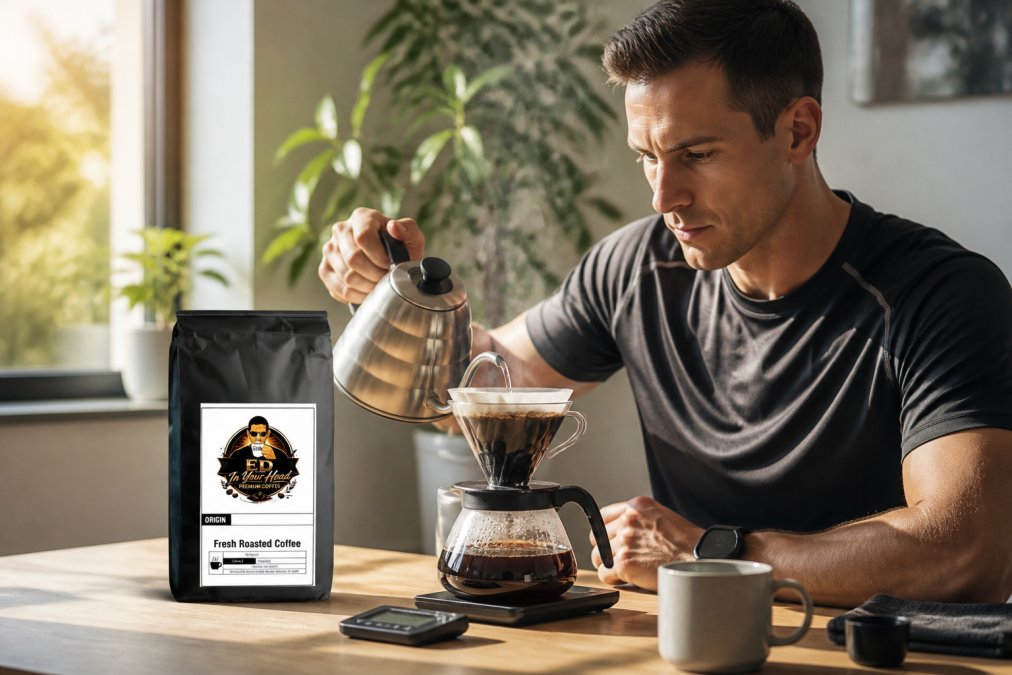
French press creates a fuller-bodied cup because the metal mesh filter allows coffee oils to remain in the liquid. These oils contain lipophilic compounds that contribute to sustained energy release. Immersion time is typically 4 minutes, ideal when you want maximum body and richer sensory experience.
Espresso machines force hot water through finely ground coffee under pressure, extracting concentrated compounds rapidly. A single shot contains more chlorogenic acid per milliliter than any other brewing method, making espresso the most potent delivery system for fresh roasted coffee's benefits.
Turkish coffee brewing involves fine grounds and extended heating, creating a thick, intense cup with maximum extraction. This traditional method pulls more polyphenols than most Western brewing techniques.
Water temperature matters across all methods. Optimal extraction occurs between 195-205°F. Water cooler than this underextracts; water hotter than this can over-extract bitter compounds. Fresh roasted coffee's full spectrum allows a wider extraction window than stale coffee.
Grind size directly affects extraction time and compound transfer. Match your grind size to your brewing method: espresso requires very fine grinds, pour-over uses medium grinds, French press uses coarse grinds. Fresh roasted coffee's intact cellular structure grinds more uniformly, improving consistency.
The Real Difference: Fresh Roasted vs. Commercial Coffee
Commercial coffee is typically roasted in massive batches weeks or months before reaching consumers. This approach prioritizes volume and cost efficiency over quality. By the time beans reach your home, significant degradation has occurred. Chlorogenic acid has oxidized, aromatic compounds have escaped, and the coffee's ability to deliver sustained energy has diminished substantially.
Fresh roasted coffee moves directly from roaster to consumer within days. At Ed In Your Head, we roast your order the day it ships, eliminating storage and distribution delays that degrade quality. You receive coffee at its peak performance window, when antioxidant content is highest and caffeine delivery is most effective.
The flavor difference is obvious to anyone who's tried both. Fresh roasted coffee tastes brighter and more complex; commercial coffee tastes flat and one-dimensional. The performance difference matters most for athletes and gamers: fresh roasted delivers clean, sustained energy while commercial coffee produces jitters or crashes.
The cost difference is smaller than most expect. Premium fresh roasted coffee typically costs $20-30 per pound, compared to $8-15 for commercial alternatives. The performance benefits justify the difference for anyone whose livelihood depends on mental or physical performance. You're investing in a tool that directly impacts your output.
Quality control also differs. Commercial roasters process enormous volumes, making consistency difficult. Fresh roasted specialty roasters batch smaller quantities, allowing precision monitoring of roast profiles, bean sourcing, and quality standards.
Fresh roasted coffee isn't a luxury, it's a performance tool. If you're serious about sustained focus, clean energy, and avoiding crashes that derail gaming sessions or workouts, the roast date matters more than any other factor in your coffee selection. Ed In Your Head delivers fresh roasted specialty coffee designed specifically for athletes and gamers who refuse to compromise on quality. Our single-origin options like Colombia and Peru arrive roasted the day they ship, ensuring you experience peak antioxidant content and sustained energy from your first cup. Start with a roast that matches your flavor preference, medium roasts like Brazil Santos offer smooth, balanced performance, and experience the difference fresh makes.


Frequently Asked Questions
Why is fresh roasted coffee better than pre-packaged coffee from the grocery store?
Fresh roasted coffee retains higher levels of antioxidants, chlorogenic acid, and aromatic compounds that degrade over time. Within 2-4 weeks of the roast date, coffee loses significant bioavailability of these beneficial compounds. Stale coffee also develops rancid flavors as fats oxidize, requiring more sugar or additives to mask the taste. Fresh roasted beans deliver cleaner caffeine absorption, sharper cognitive performance, and smoother energy without the jitters common in older, oxidized beans.
How long should you wait to drink coffee after it has been roasted?
The sweet spot is 24-48 hours after roasting. Immediately after roasting, coffee undergoes degassing, releasing CO2 that interferes with brewing extraction. Waiting 1-2 days allows the beans to stabilize while preserving peak antioxidant content and flavor. For maximum freshness and health benefits, consume within 2-4 weeks of the roast date. After 4 weeks, chlorogenic acid and polyphenol levels drop significantly, reducing both the performance benefits and the sensory experience.
What type of coffee roast offers the most health benefits?
Medium roasts preserve the highest concentration of chlorogenic acid and antioxidants compared to light or dark roasts. During roasting, heat breaks down some beneficial compounds, but medium roasts strike the optimal balance, they retain more polyphenols than dark roasts while developing the complex flavors and smoother profile that reduce caffeine sensitivity and jitters. Single-origin coffees from high-altitude volcanic loam regions, like those from Guatemala or Peru, also deliver higher micro-nutrient density and cleaner caffeine metabolism.
Does roasting date affect the antioxidant content in coffee?
Yes, significantly. Antioxidant levels peak within the first 2 weeks after roasting, then decline steadily. By 4 weeks, you lose 30-50% of the original chlorogenic acid and polyphenol content. Oxidation accelerates this degradation, exposure to air, light, and heat speeds up lipid peroxidation and free radical formation in the beans. This is why fresh roasted coffee roasted the day it ships delivers superior cognitive performance, reduced oxidative stress, and smoother energy compared to coffee sitting on store shelves for months.
This article was written using GrandRanker