


Table of Contents
- Why Sugar Crashes Wreck Your Gaming Performance
- Caffeine vs Sugar for Gaming Performance
- Step 1: Understand Your Blood Glucose Response
- Step 2: Build Your Pre-Gaming Meal with Protein and Healthy Fats
- Healthy Gaming Snacks That Keep You Steady
- Step 3: Time Your Meals and Caffeine Right
- Preventing Gaming Fatigue: Hydration and Sustained Focus
- What to Do If You Feel a Crash Coming
Last Updated: August 26, 2026
Why Sugar Crashes Wreck Your Gaming Performance
A sugar crash during competitive play kills performance. Your blood glucose levels directly impact reaction time, decision-making speed, and sustained focus. When glucose drops sharply after a spike, your brain struggles to maintain the cognitive load gaming demands.
Most gamers make a critical mistake: they reach for energy drinks or candy, thinking quick sugar will fuel their session. What happens instead is a vicious cycle. The initial spike gives temporary energy, then insulin kicks in hard, sending blood glucose plummeting. Your hands feel sluggish, your aim suffers, and your decision-making slows precisely when you need it most.
Understanding how to avoid sugar crash gaming requires knowing what happens inside your body during extended play. Long hours of sitting, focused mental effort, and often caffeine consumption create a metabolic environment where blood sugar stability becomes your competitive advantage.
Caffeine vs Sugar for Gaming Performance
Caffeine and sugar work through completely different mechanisms in your body.
Sugar provides a rapid glucose spike, triggering an aggressive insulin response. For the first 20-30 minutes, you feel energized. Then insulin pulls glucose from your bloodstream faster than your body can replenish it. The result is the crash: fatigue, brain fog, and reduced cognitive performance.
Caffeine works differently. It blocks adenosine receptors in your brain, which signal fatigue. This creates sustained mental alertness without the glucose spike-and-crash cycle. Caffeine maintains steady focus for 4-6 hours without raising blood glucose significantly.
The synergy problem: combining caffeine with sugar creates a dangerous situation. The caffeine keeps you wired while the sugar crashes, creating a jarring, disorienting experience. You feel jittery but mentally foggy.
The smarter approach is clean caffeine paired with macronutrient balance: protein, healthy fats, and complex carbohydrates that release glucose steadily over hours. Specialty coffee designed for athletic performance, like Ed In Your Head, outperforms energy drinks for serious gamers. Fresh-roasted coffee delivers pure caffeine without added sugars or the jittery crash that comes from caffeine-sugar combinations.

Research on caffeine's effects on cognitive performance
Step 1: Understand Your Blood Glucose Response
Your individual blood glucose response varies based on genetics, fitness level, meal timing, and what you've eaten recently. This is why a snack that works for one gamer might cause a crash for another.
The key is recognizing your personal pattern. Simple sugars and refined carbohydrates spike glucose rapidly. Complex carbohydrates, fiber, protein, and healthy fats slow that rise, creating a gentler curve that avoids sharp drops.
Track your energy levels during gaming sessions for one week. Note what you ate, when you ate it, and how you felt 30, 60, and 120 minutes after eating. You'll start seeing patterns. Maybe you crash 45 minutes after eating a bagel but feel steady for 3 hours after eating eggs with whole grain toast.
Reactive hypoglycemia, where blood glucose drops below normal levels, is particularly common in gamers because of prolonged sitting and mental focus without physical activity to burn glucose. Your body is in a high-alert state mentally but sedentary physically, triggering insulin sensitivity issues where your body overcompensates by pulling too much glucose from your bloodstream.
Understanding your blood glucose response starts with knowing how your specific metabolism reacts to different foods and timing patterns.
Step 2: Build Your Pre-Gaming Meal with Protein and Healthy Fats
The pre-gaming meal is your foundation for metabolic stability. Eaten 60-90 minutes before you start playing, this meal sets your blood glucose trajectory for the next 3-4 hours.
The structure is simple: lean protein, healthy fats, and complex carbohydrates. Protein triggers satiety and slows glucose absorption. Healthy fats further slow the rate at which carbohydrates convert to glucose. Complex carbohydrates provide sustained energy without rapid spikes.
Practical examples of effective pre-gaming meals:
- 3 whole eggs with 2 slices of whole grain toast, half an avocado, and a cup of fresh coffee
- 4 oz grilled chicken breast with a sweet potato and a side salad with olive oil dressing
- Greek yogurt (7 oz) with almonds, berries, and a drizzle of honey
- 2 tbsp natural peanut butter on whole wheat bread with a banana
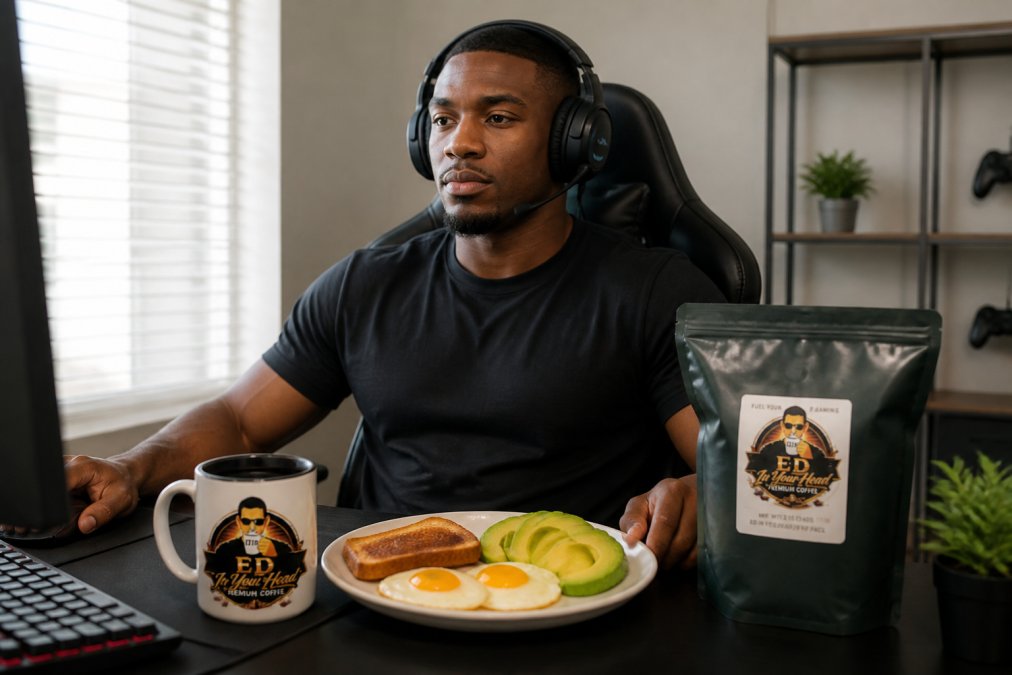
Timing matters. Eating 60-90 minutes before you play allows your digestive system to process the meal without sluggishness. Your blood glucose rises gradually and stabilizes at a level that supports focus without spike-crash cycles.
Avoid eating immediately before gaming, which creates a sluggish feeling. Similarly, avoid playing on an empty stomach. Without baseline glucose, your energy will crash within 90 minutes.
For sessions longer than 6 hours, plan two pre-gaming meals: one 3 hours before, another 90 minutes before. This staggered approach maintains stable glucose throughout extended play.
Healthy Gaming Snacks That Keep You Steady
During gaming sessions, snacks maintain stable blood glucose between meals rather than provide major energy.
The best gaming snacks combine protein with a small amount of complex carbohydrates or healthy fat. They're portable, require no utensils, and won't leave your hands sticky.
Effective options:
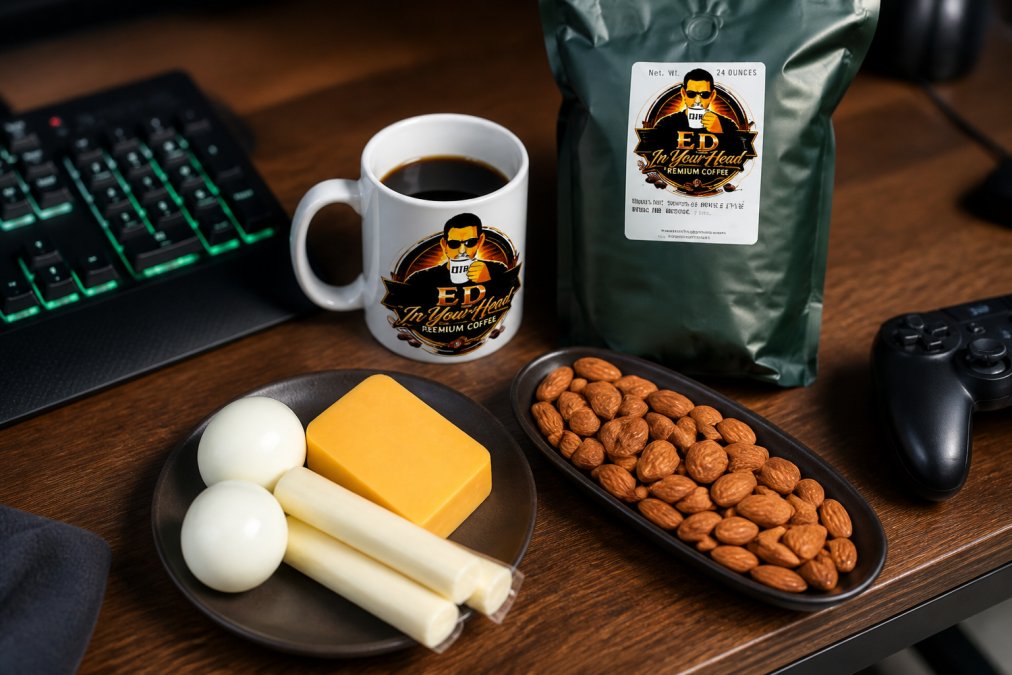
- Mixed nuts (almonds, walnuts, cashews): protein and healthy fats
- String cheese or cheese cubes: pure protein, stabilizes glucose
- Hard-boiled eggs: complete protein, extremely portable
- Greek yogurt cups: high protein, low sugar varieties
- Beef jerky or turkey jerky: pure protein, no blood sugar spike
- Apple with almond butter: complex carbs plus healthy fat and protein
- Whole grain crackers with hummus: fiber, protein, and steady glucose release
What to avoid during play:
- Candy, gummies, or energy bars with added sugars
- Soda or sugary drinks
- Chips or highly processed snacks
- Anything that requires both hands or creates sticky residue
Portion control matters. A small handful of nuts (about 1 oz) or a single string cheese is enough to stabilize glucose. The snacking strategy is maintenance, not fuel. You're preventing the dip that would cause a crash.
Step 3: Time Your Meals and Caffeine Right
Timing is where most gamers fail at avoiding sugar crash gaming.
Caffeine peaks in your bloodstream 30-45 minutes after consumption (peer-reviewed research). Its half-life is 5-6 hours. Drink coffee 30 minutes before you start playing so peak caffeine hits as you enter competitive play.
Your pre-gaming meal should be consumed 60-90 minutes before play. Eating closer to game time leaves you feeling full and sluggish. Eating much earlier means your blood glucose will start declining before peak play time.
For sessions longer than 4 hours, add a small snack (protein + minimal carbs) at the 2-hour mark. A handful of nuts or string cheese prevents the gradual glucose decline that causes mid-session crashes.
Hydration timing is equally important. Dehydration impairs cognitive performance and makes blood glucose regulation harder. Drink water consistently throughout your session, steady sips every 15-20 minutes.
Study on caffeine timing and cognitive performance
For gamers serious about avoiding sugar crash gaming, the Ed In Your Head MVP Pack provides a structured approach: fresh-roasted specialty coffee that delivers clean caffeine without jitters or crash, paired with knowledge that you're fueling with a product designed specifically for athletic performance.
Preventing Gaming Fatigue: Hydration and Sustained Focus
Dehydration is an underrated cause of gaming crashes. When your body is dehydrated, your blood becomes more concentrated, making glucose regulation harder. Your cognitive performance declines, reaction time slows, and fatigue sets in faster.
Many gamers mistake dehydration fatigue for blood sugar crashes and eat more snacks when they actually need water.
Hydration strategy for gaming:
- Drink 16-20 oz of water 2 hours before play
- Drink 8 oz every 20 minutes during play
- Avoid excessive caffeine without water (caffeine is a mild diuretic)
- Avoid energy drinks with high sugar and high caffeine
The relationship between hydration and blood glucose levels is direct. Proper hydration supports your kidneys' ability to regulate glucose. Dehydration impairs this regulation, making crashes more likely.
Electrolytes matter too, especially in longer sessions. Sodium, potassium, and magnesium support muscle function and cognitive performance. You don't need sports drinks loaded with sugar; a pinch of salt on your pre-gaming meal or a small electrolyte tablet in your water provides the same benefit without glucose spikes.
The combination of stable blood glucose from your meal strategy, clean caffeine for mental alertness, and consistent hydration creates the metabolic environment where crashes become rare.
What to Do If You Feel a Crash Coming
Despite perfect planning, crashes sometimes happen. Recognizing early signs and responding quickly can prevent performance collapse.
Early warning signs:
- Difficulty concentrating or mental fog
- Slower reaction time or sluggish movements
- Irritability or mood shift
- Trembling hands or jittery feeling
- Sudden fatigue
The moment you notice these signs, stop playing. Pushing through a crash makes it worse.
The 15-15 rule is the standard approach: consume 15 grams of fast-acting carbohydrates, wait 15 minutes, then check your response. Examples of 15-gram portions:
- 1 tbsp of honey or maple syrup
- 4 oz of fruit juice
- 3-4 glucose tablets
- 1 small banana
After 15 minutes, if you still feel crashed, consume another 15 grams. Once you've stabilized, eat a balanced snack with protein and fat to prevent another crash.
The key insight: if you're using the 15-15 rule, you've already failed your prevention strategy. The goal is never reaching the point where you need emergency glucose. One crash can cost you hours of progress or tournament placement.
Avoiding sugar crash gaming requires intentional planning. Your pre-gaming meal, snack strategy, hydration, and caffeine timing work together to create metabolic stability that supports peak performance for hours.
The difference between gamers who maintain focus for 6+ hour sessions and those who fade after 2-3 hours comes down to blood glucose management. Ed In Your Head's fresh-roasted specialty coffee supports this strategy with clean caffeine that won't spike and crash like energy drinks. Pair that with a solid pre-gaming meal built on protein and healthy fats, strategic snacking, and consistent hydration, and you've eliminated the metabolic chaos that causes crashes. Start with the MVP Pack to get six sample roasts, a ceramic mug, and a tee. Your next gaming session should feel noticeably sharper.

Frequently Asked Questions
Q: What's the best way to avoid a sugar crash during a long gaming session?
A: Pair protein and healthy fats with complex carbohydrates before you start, then snack on nutrient-dense foods every 2-3 hours. Skip sugary energy drinks and processed snacks that spike your blood glucose levels then crash hard. Instead, use fresh-roasted coffee for clean caffeine without the jitters or crash. The combination of steady macronutrient balance and quality caffeine keeps your blood sugar regulation stable and your focus sharp throughout extended gameplay.
Q: How does caffeine affect blood sugar levels compared to sugar-based energy drinks?
A: Caffeine alone doesn't spike blood glucose like sugar does. When you consume sugary energy drinks, you get a rapid insulin response that causes an energy dip 1-2 hours later. Clean caffeine from quality coffee provides sustained alertness without triggering that glucose spike and crash cycle. The key difference: sugar creates a metabolic rollercoaster, while caffeine supports steady cognitive performance. Pairing coffee with protein-rich snacks amplifies this effect by slowing nutrient absorption and maintaining stable energy metabolism.
Q: What are the best snacks to eat while gaming to prevent crashes?
A: Choose foods with protein, fiber, and healthy fats: almonds, Greek yogurt, cheese, hard-boiled eggs, or nut butter with whole grain crackers. These snacks stabilize your blood glucose levels and provide satiety without the reactive hypoglycemia that processed snacks cause. Avoid simple sugars and refined carbohydrates, which spike insulin response. Pair your snacks with fresh-roasted coffee for clean caffeine that complements your macronutrient balance and keeps your sustained focus locked in for hours.
Q: Why do energy drinks cause a crash after gaming, but coffee doesn't?
A: Most energy drinks contain 30-50 grams of added sugar, which triggers a rapid glucose spike followed by a sharp insulin response and blood sugar crash. Coffee contains zero sugar and delivers caffeine without the metabolic disruption. The difference in glucose homeostasis is dramatic: sugar-based drinks destabilize your energy metabolism, while quality coffee supports it. Fresh-roasted specialty coffee offers superior caffeine absorption and smoother sustained focus compared to stale coffee or drinks loaded with sweeteners and artificial ingredients.
This article was written using GrandRanker