


Table of Contents
- Why Athletic Trainers Recommend Coffee for Performance
- Caffeine as an Ergogenic Aid: How It Works
- Coffee vs Energy Drinks for Athletes
- How Much Caffeine Before a Workout
- Clean Pre Workout Coffee Alternative to Synthetic Supplements
- Managing Tolerance and Caffeine Cycling
- Coffee for Endurance, Recovery, and Muscle Soreness
- Conclusion
- Frequently Asked Questions
Last Updated: August 31, 2026
Why Athletic Trainers Recommend Coffee for Performance
Athletic trainers have shifted their approach to pre-workout fueling over the past few years, and one recommendation keeps surfacing: coffee. Not energy drinks loaded with sugar and artificial ingredients, but clean, quality coffee as a legitimate ergogenic aid. At Ed In Your Head, we've tracked this trend closely because it aligns with what athletes actually need, sustained focus and energy without the crash that comes from synthetic supplements.

The reason trainers recommend coffee is straightforward: caffeine works. It's not magic, but it's remarkably effective when timed correctly and sourced from quality beans. Unlike energy drinks that spike your blood sugar and leave you depleted an hour later, coffee delivers caffeine alongside polyphenols and antioxidants that support overall athletic performance. The difference matters, especially for endurance athletes and competitive gamers who need consistent mental clarity for hours at a time.
What most guides miss is that not all caffeine sources are equal. The way coffee is roasted, the bean variety, and how fresh it is all affect how your body processes it. This is where athletic trainers have become more specific in their recommendations, they're not just saying "drink coffee," they're saying "drink quality coffee prepared correctly."
Caffeine as an Ergogenic Aid: How It Works
Caffeine functions as an ergogenic aid by blocking adenosine receptors in your central nervous system, which delays the perception of fatigue and increases alertness. When you consume caffeine, it doesn't make you stronger, it makes you feel less tired, which allows you to push harder for longer. This distinction matters because it explains why caffeine works better for some activities than others.
The physiological response happens quickly. Within 15-45 minutes of consumption, caffeine reaches peak blood levels (peer-reviewed research). During this window, your reaction time improves, your focus sharpens, and your perceived exertion drops. For high-intensity exercise and intermittent training, this window is critical. Athletes who time their caffeine intake correctly can maintain intensity longer than they would without it.
Beyond the central nervous system effects, coffee delivers compounds that energy drinks typically don't. Polyphenols in coffee act as antioxidants, reducing inflammation markers after intense training. This isn't a minor benefit, it supports recovery and helps manage the soreness that follows maximal exertion. Additionally, caffeine increases fat oxidation during aerobic exercise, which means your body mobilizes stored energy more efficiently. For endurance athletes, this translates to better glycogen sparing and extended performance capacity.

The mechanism also explains why dosage matters. Too little caffeine and you don't trigger the response. Too much and you get jitters, anxiety, and potential cardiovascular stress. Athletic trainers recommend specific amounts because they understand this dose-response relationship. The sweet spot for most athletes falls between 3-6 milligrams per kilogram of body weight, consumed 30-60 minutes before activity (peer-reviewed research).
Coffee vs Energy Drinks for Athletes
The comparison here is stark, and it's why athletic trainers have increasingly moved away from recommending traditional energy drinks. Energy drinks typically contain high sugar content, artificial sweeteners, multiple stimulants beyond caffeine, and ingredients whose long-term effects remain unclear. A single energy drink can contain 54 grams of sugar, nearly the entire daily recommended limit for an adult, which triggers a rapid blood sugar spike followed by an inevitable crash (the CDC).
Coffee, by contrast, contains zero sugar (unless you add it), delivers caffeine alongside beneficial compounds, and has decades of research supporting its safety profile. When you drink quality coffee, you're consuming a beverage with a complex chemical profile that includes chlorogenic acid, quinides, and trigonellines, all compounds with potential performance and health benefits.
The energy delivery is fundamentally different. Energy drinks create a sharp spike in energy followed by a steep decline. Athletes describe the experience as a rush followed by a crash, often within 2-3 hours. Coffee delivers a more gradual rise and a sustained plateau, which is exactly what you want for training sessions that last 60-90 minutes or longer. The sustained release of caffeine from coffee aligns better with how your body actually processes energy during physical activity.
Athletic trainers also point out that energy drinks often contain multiple stimulants, taurine, guarana, ginseng, in addition to caffeine. While the individual ingredients may be safe, the combined effect is unpredictable, especially for athletes with caffeine sensitivity. Coffee is simpler. You know exactly what you're getting: caffeine and coffee compounds. No hidden ingredients, no unnecessary additives.
The cost difference matters too. A quality cup of coffee costs far less than an energy drink, making it accessible for athletes on tight budgets. For competitive gamers and esports athletes who consume multiple beverages during long sessions, this difference compounds quickly.

How Much Caffeine Before a Workout
The optimal caffeine dose depends on your body weight and the type of activity you're doing. Most research supports 3-6 milligrams per kilogram of body weight, consumed 30-60 minutes before exercise. For a 150-pound athlete, this translates to roughly 200-400 milligrams of caffeine, approximately two cups of strong coffee or one cup of very strong coffee.
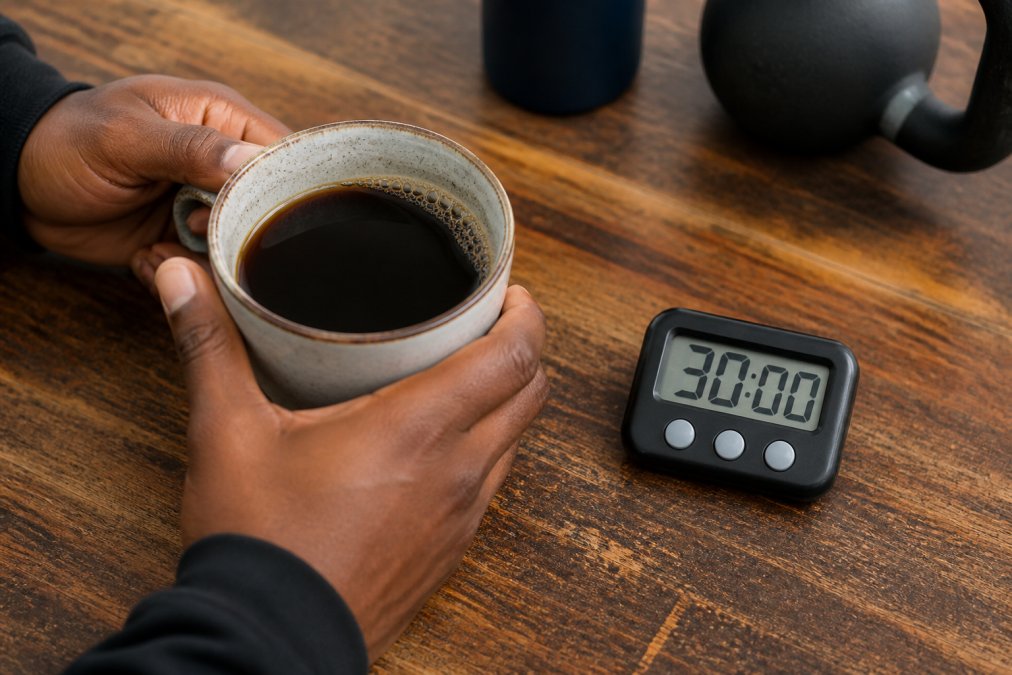
Timing is critical. Caffeine reaches peak blood concentration between 30-60 minutes after consumption, so drinking your coffee immediately before training isn't ideal. The better approach is to consume it 45-60 minutes before you start. This gives your body time to absorb the caffeine and reach peak effectiveness right when you need it most.
The type of activity changes the recommendation slightly. For high-intensity, short-duration exercise like sprinting or competitive gaming, you want to be at peak caffeine levels during the activity. For endurance events lasting 90 minutes or longer, some athletes benefit from a second dose at the 60-minute mark to maintain the effect as it metabolizes. Your body breaks down caffeine with a half-life of 3-7 hours, meaning half the caffeine you consumed is still in your system after 3-7 hours, depending on individual metabolism.
Individual tolerance varies significantly. If you consume caffeine regularly, your body develops tolerance, meaning you need more to achieve the same effect. This is why athletic trainers recommend caffeine cycling, periods of use followed by periods of abstinence, to maintain sensitivity. Someone who drinks coffee daily might need 400 milligrams to feel the effect, while someone who rarely consumes caffeine might feel jittery at 150 milligrams.
Common mistakes include consuming caffeine too close to training (less than 30 minutes before), consuming too much (leading to anxiety and jitters), and not accounting for caffeine already in your system from earlier in the day. If you've had coffee with breakfast and plan to train in the afternoon, you're likely still carrying caffeine in your bloodstream. Adding another dose can push you over your optimal threshold.
Clean Pre Workout Coffee Alternative to Synthetic Supplements
The shift toward clean pre-workout coffee represents a broader movement away from synthetic supplements toward whole-food sources. Synthetic pre-workout powders contain dozens of ingredients, beta-alanine, citrulline malate, nitrates, artificial flavors, and dyes, that may or may not be necessary for your performance. The research supporting many of these ingredients is mixed, and the long-term effects of consuming them regularly remain unclear.
Coffee is the opposite. It's a whole food with a clear mechanism of action. You're not betting on a proprietary blend or hoping that a combination of ingredients works better together. You're consuming a beverage that has been studied extensively for over a century, with consistent evidence supporting its performance benefits.
This matters for athletes concerned about what goes into their body. If you're competing at a level where banned substance testing occurs, you need complete transparency about your pre-workout fuel. Coffee has no banned substances. Synthetic pre-workout powders sometimes contain ingredients that fall into gray areas or have been reformulated specifically to avoid bans. With coffee, there's no ambiguity.
Quality matters here. Not all coffee is created equal. Freshness dramatically affects both taste and the bioavailability of beneficial compounds. Coffee roasted weeks or months ago has lost much of its volatile compounds and polyphenol content. This is why athletic trainers increasingly recommend freshly roasted coffee, ideally roasted within days of brewing. Ed In Your Head roasts every order the day it ships, ensuring you're getting maximum potency from every cup.
The brewing method also affects what you're actually consuming. Cold brew extraction pulls different compounds than hot brewing. French press leaves sediment that contains beneficial oils. Espresso concentrates the caffeine and polyphenols into a smaller volume. For pre-workout purposes, a strong cup of hot coffee or a concentrated cold brew works best, you get high caffeine content plus the full spectrum of coffee compounds in a form you can consume quickly.
Managing Tolerance and Caffeine Cycling
One of the biggest challenges with regular caffeine use is tolerance development. Your body adapts to consistent caffeine exposure by upregulating adenosine receptors, meaning you need more caffeine to achieve the same effect. This is why someone who drinks coffee daily might feel no effect from a cup that would significantly impact someone who rarely consumes caffeine.
Athletic trainers recommend caffeine cycling to combat this. The approach is straightforward: use caffeine regularly during training blocks when you need the performance boost, then abstain for 1-2 weeks to reset your sensitivity. During the abstinence period, your body downregulates adenosine receptors, restoring caffeine sensitivity. When you resume caffeine use, you'll feel the effect at lower doses again.
A practical cycling protocol looks like this: consume caffeine daily for 4-6 weeks during intense training phases, then take 1-2 weeks completely caffeine-free. During the abstinence period, you might experience mild headaches and fatigue as your body adjusts, but these symptoms pass within 2-3 days. The payoff is significant, when you resume caffeine use, a single cup of coffee will have the impact it did when you first started, rather than requiring multiple cups to feel anything.
Individual response to caffeine varies based on genetics, current caffeine consumption, sleep quality, and stress levels. Some people metabolize caffeine quickly and feel minimal effects even at high doses. Others are sensitive to small amounts. Athletic trainers work with individual athletes to find their optimal dose and cycling schedule. What works for one competitor might not work for another.
The key insight is that caffeine isn't a substance you can use indefinitely at the same dose and expect consistent results. Treating it strategically, cycling on and off, timing consumption correctly, and adjusting dose based on tolerance, is what separates effective use from ineffective use.
Coffee for Endurance, Recovery, and Muscle Soreness
Endurance athletes have long recognized caffeine's benefits for sustained performance, but the recovery angle is often overlooked. After intense training, your muscles experience inflammation and soreness. The polyphenols in coffee, particularly chlorogenic acid, have anti-inflammatory properties that can reduce this soreness and support faster recovery.
Research on caffeine and recovery suggests that post-workout caffeine consumption may enhance glycogen resynthesis, the process of replenishing stored carbohydrates in your muscles. This is particularly valuable for athletes who train multiple times per day or on consecutive days. A cup of coffee with carbohydrates after training can accelerate recovery compared to carbohydrates alone.
For endurance events specifically, caffeine's effect on perceived exertion is transformative. During a long run, swim, or cycling session, caffeine reduces how hard the effort feels, allowing you to maintain pace longer before hitting the anaerobic threshold. This is why many endurance athletes consume caffeine at strategic points during events, not to get faster, but to sustain the pace they've already established for longer.
The anti-inflammatory benefits extend beyond immediate recovery. Regular coffee consumption has been associated with reduced inflammation markers in athletes, which supports long-term training adaptation. This means that incorporating coffee into your regular routine, not just before workouts, may contribute to better overall recovery and training capacity.
| Benefit | Mechanism | Best Timing |
|---|---|---|
| Performance during exercise | Blocks adenosine receptors, reduces perceived exertion | 30-60 minutes before activity |
| Glycogen sparing | Increases fat oxidation during aerobic work | Before endurance sessions |
| Anti-inflammatory support | Polyphenols reduce inflammation markers | Post-workout or daily consumption |
| Recovery enhancement | Supports glycogen resynthesis | Immediately post-workout with carbs |
| Sustained focus | Central nervous system stimulation | 45-60 minutes before competition |
Conclusion
Athletic trainers recommend coffee because it works. It's not trendy or complicated, it's a straightforward, effective ergogenic aid backed by research and proven in practice across thousands of athletes. The shift from synthetic energy drinks to quality coffee reflects a broader understanding that simpler, whole-food sources often outperform complex formulations.
The key is quality and strategy. Freshly roasted coffee delivers caffeine alongside beneficial compounds that support performance and recovery. Proper timing ensures you're at peak caffeine levels when you need it most. Cycling prevents tolerance buildup, keeping the effect consistent over time.
If you're ready to make the switch from energy drinks to clean pre-workout coffee, start with Ed In Your Head's MVP Pack. It includes six 2-ounce bags of our best-selling blends roasted fresh the day it ships, plus a ceramic mug and t-shirt. You get the variety to find what works for your palate and training schedule, all without artificial ingredients or sugar crashes. FIND YOUR FUEL and experience the difference that quality coffee makes in your performance.
Frequently Asked Questions
Do professional athletes drink coffee?
Yes. Professional athletes across endurance sports, strength training, and team sports rely on coffee as a legal ergogenic aid. Caffeine improves reaction time, reduces perceived exertion, and enhances fat oxidation during training. Unlike banned substances, caffeine is approved for competition by most athletic organizations and is one of the most studied performance-enhancing compounds in sports science.
How much caffeine before a workout should I consume?
Most athletic trainers recommend 3-6 mg of caffeine per kilogram of body weight, taken 30-60 minutes before exercise. For a 150-pound athlete, this equals roughly 200-400 mg of caffeine. A typical cup of coffee contains 95-200 mg depending on brew method and roast. Start at the lower end to assess tolerance, then adjust based on performance and how you feel during and after training.
Why do trainers prefer coffee over energy drinks for athletes?
Coffee delivers caffeine without added sugars, artificial sweeteners, or excessive stimulants that cause crashes. Energy drinks often contain 200+ mg of caffeine plus sugar or artificial ingredients that spike blood glucose and lead to energy dips. Coffee's polyphenols also provide anti-inflammatory and antioxidant benefits that support recovery. Athletic trainers recommend coffee as a clean pre-workout alternative because it offers sustained energy without the jitters or digestive upset common with synthetic supplements.
Can caffeine help with muscle soreness and recovery?
Caffeine reduces perceived muscle soreness (DOMS) after intense training by blocking adenosine receptors in the central nervous system, which decreases pain signaling. Additionally, coffee's polyphenols have anti-inflammatory properties that may accelerate recovery. Consuming caffeine post-workout alongside protein and carbohydrates can enhance the recovery process, though it's most effective when combined with proper sleep and nutrition.
This article was written using GrandRanker