


Table of Contents
- Step 1: Build Your Energy Baseline With Foods That Give You Energy
- Step 2: Time Your Pre-Workout Foods for Energy Before Training
- Step 3: Choose Healthy Alternatives to Energy Drinks
- Step 4: Learn How to Reduce Caffeine Intake Without Losing Focus
- Step 5: Lock In Sleep, Light, and Movement to Sustain Natural Energy Optimization
- Common Mistakes That Sabotage Natural Energy Optimization
- Conclusion: Your Daily Energy Routine Starts With One Step
- Frequently Asked Questions
Last Updated: October 12, 2026
Step 1: Build Your Energy Baseline With Foods That Give You Energy
Natural energy optimization starts with what you eat before you need energy. Most people chase a fix at 2 PM when the real problem began at breakfast.
This step by step guide to natural energy optimization begins with your baseline. Get this right and every later step gets easier.
Foods that give you energy are not exotic. They are oats, eggs, Greek yogurt, beans, brown rice, nuts, and fruit. These foods digest slowly and release fuel over hours instead of minutes.
The Macro Mix That Prevents the 2 PM Crash
The crash is a blood sugar spike followed by a drop. Fix the mix and you fix the crash.
Aim for three things on every plate:
- Protein: eggs, chicken, yogurt, or beans
- Fiber: vegetables, oats, or whole grains
- Healthy fat: olive oil, nuts, seeds, or avocado
Simple carb-only meals spike fast and drop fast. Add protein and fat and the curve flattens.
Many people find that a 40/30/30 split (carbs, protein, fat) keeps them level through the afternoon. You do not need to count grams. Just make sure no meal is bread alone.
Hydration: The Step Most People Skip
Dehydration feels like fatigue. That is the whole problem.
When you feel tired at 3 PM, your first move should be a glass of water, not a snack. Mild dehydration commonly shows up as low focus and low mood, not thirst.
A simple rule: drink half your body weight in ounces daily. A 180-pound person needs about 90 ounces. Add more on training days.
Keep a bottle on your desk. You will drink more without thinking about it.
Step 2: Time Your Pre-Workout Foods for Energy Before Training
Pre-workout foods for energy work best when the timing matches the digestion. Eat too close and you feel heavy. Eat too early and you run out of fuel mid-session.
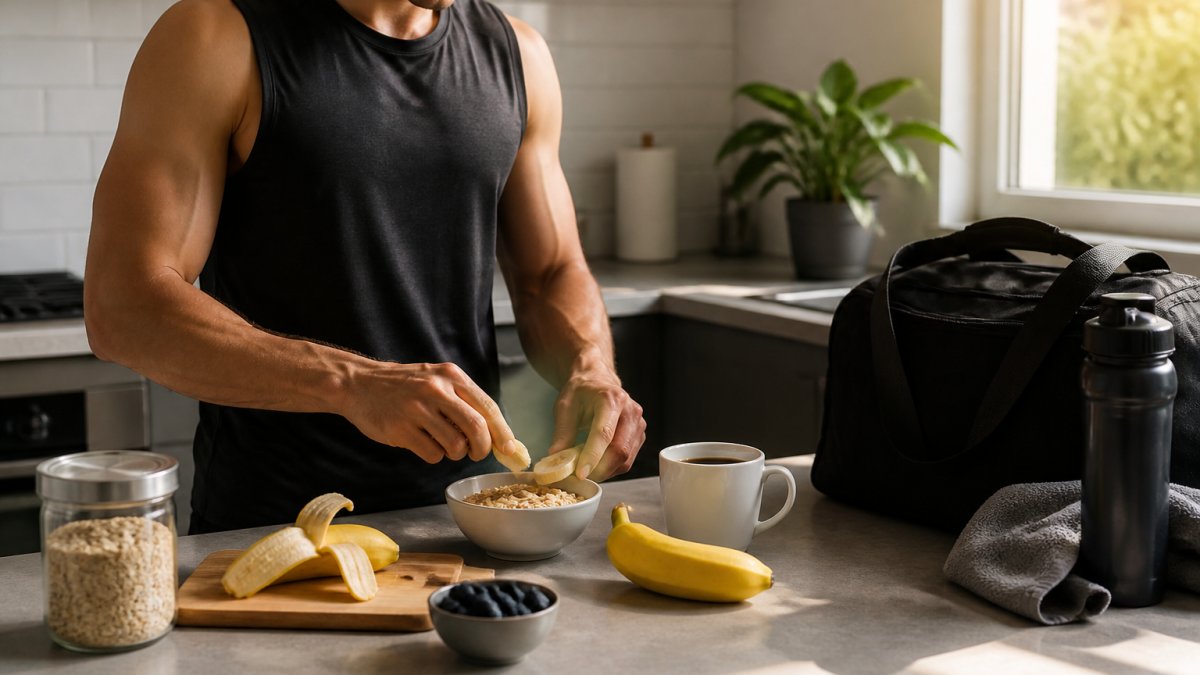
The window matters more than the food itself. Here is how most athletes and gamers time it.
What to Eat 30, 60, and 120 Minutes Out
- 30 minutes out: a banana, a small handful of dates, or a rice cake with honey. Fast carbs, easy on the stomach.
- 60 minutes out: oatmeal with a spoon of peanut butter, or yogurt with fruit. Mix of fast and slow fuel.
- 120 minutes out: a full meal with protein, carbs, and fat. Rice, chicken, and vegetables works well.
For a long gaming session, the 60-minute option tends to hold focus longest. For a short, intense workout, the 30-minute option gets you moving without a heavy stomach.
What most guides miss is hydration timing. Drink 16 ounces about two hours before training, then sip during. Chugging right before you start causes cramps.
Step 3: Choose Healthy Alternatives to Energy Drinks
Healthy alternatives to energy drinks deliver caffeine without the sugar load. That single change removes the crash for most people.
Traditional energy drinks pair caffeine with large amounts of sugar. You get a fast lift, then a hard drop. The fix is not less caffeine. It is cleaner caffeine.
The best options:
- Fresh-roasted coffee: clean caffeine, no added sugar
- Green tea: lower caffeine with L-theanine for smooth focus
- Matcha: steady release over several hours
- Yerba mate: caffeine plus minerals
- Black tea: moderate caffeine, easy to drink
Coffee wins on flexibility. You control the strength, the timing, and the add-ins.
Fresh-Roasted Coffee as a Clean Caffeine Source
Fresh-roasted coffee is the most direct swap for an energy drink. One cup gives you caffeine and nothing else you did not ask for.
Breakfast Blend + (Extra Caffeine) →
That is exactly why we built Ed In Your Head. Our coffee is roasted the day it ships, so the oils and flavor are still intact when it reaches you. We carry blends for different needs, including [our Breakfast Blend + (Extra Caffeine) for mornings that need a bigger push](/products/breakfast-blend-1) and our Cowboy Blend for a bold, smooth cup before a long session.


Every option has zero added sugar. No jitters, no crash.
If you are coming from energy drinks, expect the first cup to feel different. Less spike, more steady. Give it a week.
Step 4: Learn How to Reduce Caffeine Intake Without Losing Focus
How to reduce caffeine intake comes down to one idea: taper, do not quit. Cutting cold turkey causes headaches and brain fog that make you think you need more caffeine.
A common approach is to cut your daily total by about a quarter each week. If you drink four cups, go to three for a week, then two and a half, and so on.
Three habits make the taper easier:
- Swap one cup for green tea
- Push your first cup back by 30 minutes each week
- Stop caffeine eight hours before bed (Caffeine and Sleep Problems)
The goal is not zero caffeine. It is caffeine that works when you want it and does not own your afternoon.
Step 5: Lock In Sleep, Light, and Movement to Sustain Natural Energy Optimization
Natural energy optimization fails without sleep, light, and movement. Caffeine cannot fix a body that is not recovering.
Sleep is the base. Most adults need seven to nine hours. Go to bed and wake at the same time, even on weekends. That consistency does more for energy than any supplement.
Light sets your clock. Get bright light within an hour of waking. Step outside or sit near a window. Dim the lights in the evening.
Movement lifts energy in the short and long term. A 10-minute walk after lunch beats a second coffee for most people. Strength training three times a week builds the base.
Common Mistakes That Sabotage Natural Energy Optimization
Most energy plans fail for predictable reasons. Here are the ones we see most.
- Skipping breakfast, then loading up at lunch. This guarantees an afternoon crash.
- Drinking caffeine all day. The last cup at 4 PM is still in your system at 10 PM.
- Ignoring water. Fatigue is often dehydration in disguise.
- Eating carb-only snacks. A granola bar alone spikes and drops you.
- Cutting caffeine cold turkey. Taper instead.
- Training on an empty stomach for long sessions. Fuel first.
- Chasing energy with sugar. It works for 20 minutes, then makes things worse.
Fix two or three of these and you will feel the difference within a week.
Conclusion: Your Daily Energy Routine Starts With One Step
The hardest part of any energy plan is starting. Pick one step from this guide and run it for seven days before adding another.
If your caffeine source is the weak link, start there. Ed In Your Head roasts fresh for every order, so the cup you drink is clean caffeine with no added sugar and no crash. Our blends and pods give you smooth, steady energy for training, gaming, or a long workday.
Get started with Ed In Your Head and find your fuel.
Frequently Asked Questions
What foods give immediate energy before a workout?
Fast-digesting carbohydrates work best 30 to 60 minutes before training. A banana, a slice of toast with honey, or a small bowl of oatmeal all convert to usable glucose quickly without sitting heavy in your stomach. Pair them with a small amount of protein, such as a few almonds or a spoon of yogurt, to steady the release. Coffee about 30 minutes out can sharpen alertness, and a lightly roasted blend keeps the flavor bright without added sugar.
Can coffee be a healthier alternative to energy drinks?
Yes, when you skip the additives. A 12-ounce energy drink can carry 30 to 40 grams of sugar plus synthetic stimulants, which is what drives the spike and crash cycle. Fresh-roasted coffee delivers caffeine on its own with zero added sugar. Choosing a medium or light roast gives you a smooth, steady lift. If you want more caffeine without more volume, a high-caffeine blend built on Robusta beans gets you there in one cup.
How can I reduce caffeine intake without feeling tired?
Cut back gradually rather than quitting at once. Drop your total by about 25 percent each week, and shift your last cup earlier in the day so it does not interfere with sleep. Replace the removed caffeine with water, a short walk, or a protein-rich snack. If you still want the ritual, switch to a lighter roast or a smaller serving. Most people adjust within two to three weeks and report steadier energy across the afternoon.
What should I eat before a workout for energy if I train early in the morning?
Keep it small and easy to digest. Half a banana with a tablespoon of peanut butter, a rice cake with jam, or a small smoothie with fruit and yogurt all work within 30 minutes of training. If you have a full hour, add oats or a whole-grain English muffin. Drink 8 to 16 ounces of water alongside it. A cup of coffee rounds out the routine and supports focus through the session.