


Table of Contents
- Organic Coffee vs. Conventional Coffee: What Athletes Actually Need to Know
- How Caffeine Affects Athletic Performance and Endurance
- Best Coffee for Workouts: Why Fresh-Roasted Matters More Than Organic Certification
- Caffeine Timing Before Exercise: When to Drink Coffee for Peak Performance
- How Much Caffeine Before a Workout: Dosage by Body Weight and Exercise Type
- The Organic Question: Pesticide Residues, Performance, and Real-World Trade-Offs
- Choosing Your Coffee: Fresh-Roasted Blends for Clean, Sustained Energy
- Frequently Asked Questions
Last Updated: October 7, 2026
Organic Coffee vs. Conventional Coffee: What Athletes Actually Need to Know
When you're training hard, every advantage counts. Whether organic coffee athletic performance is better comes down to two things: what's in the cup and what your body does with it.
Caffeine content and freshness will impact your workout far more than organic certification. Organic coffee does eliminate pesticide residues, a variable some athletes want to avoid, but the performance difference is driven by caffeine timing, dosage, and individual response.
At Ed In Your Head, we've analyzed what athletes really need from pre-workout coffee: fresh-roasted quality, proper timing, and knowing your caffeine tolerance. Here's the science, the trade-offs, and how to choose the right coffee for your training goals.
How Caffeine Affects Athletic Performance and Endurance
Caffeine's performance effect starts in the brain, not the muscles. As a molecule, caffeine is structurally similar to adenosine, the neuromodulator that accumulates during waking hours and binds to receptors that promote drowsiness.
That perceptual shift cascades into measurable outcomes: lower perceived exertion at the same power output lets an athlete hold a pace longer or push harder. Caffeine also raises sympathetic nervous system activity, improving reaction time and focus for both endurance work and high-intensity efforts.
Caffeine can also increase fat oxidation during longer, lower-intensity efforts, sparing a small amount of muscle glycogen. That effect is modest and depends on training status, fed versus fasted state, and intensity. It won't turn you into a fat-burning machine.
The evidence is strongest for endurance performance and weaker for strength, power, and sprint tasks.
The caffeine molecule is identical whether it comes from organic coffee, conventional coffee, a pill, or a gel. The organic label doesn't change receptor binding, adenosine blockade, or fat oxidation.
A few practical mechanisms worth knowing:
- Habitual use blunts the effect. Regular daily caffeine intake can reduce the alertness and perceived-exertion benefit, partly through tolerance at the adenosine receptor. Athletes who want a reliable pre-workout effect often cycle intake or reserve caffeine for key sessions.
- Genetics shape response. Variation in genes such as CYP1A2, which influences caffeine metabolism, is one reason two athletes react differently to the same dose. Slow metabolizers may feel jittery; fast metabolizers may feel little.
- Sleep is the hidden cost. Caffeine has a half-life of roughly 3 to 7 hours in most adults, longer in some. An afternoon cup can still be active at bedtime, and degraded sleep undermines recovery and next-day performance more than any single workout boost can offset.
Best Coffee for Workouts: Why Fresh-Roasted Matters More Than Organic Certification
This is where the real competitive advantage lives: freshness.
Coffee begins losing volatile compounds, which create flavor and contribute to alertness, the moment it's roasted. A bag roasted three weeks ago is noticeably different from one roasted three days ago.
Fresh-roasted coffee also tastes better, which matters for consistency. If your pre-workout cup tastes harsh or bitter, you're more likely to skip it. A smooth cup you enjoy means you'll stick with your routine.
Many specialty roasters, including Ed In Your Head, roast to order and ship immediately, ensuring maximum freshness.
For athletes, the choice between organic and conventional matters far less than choosing fresh-roasted coffee from a roaster who prioritizes quality and speed. A fresh conventional coffee will outperform a stale organic one every single time.
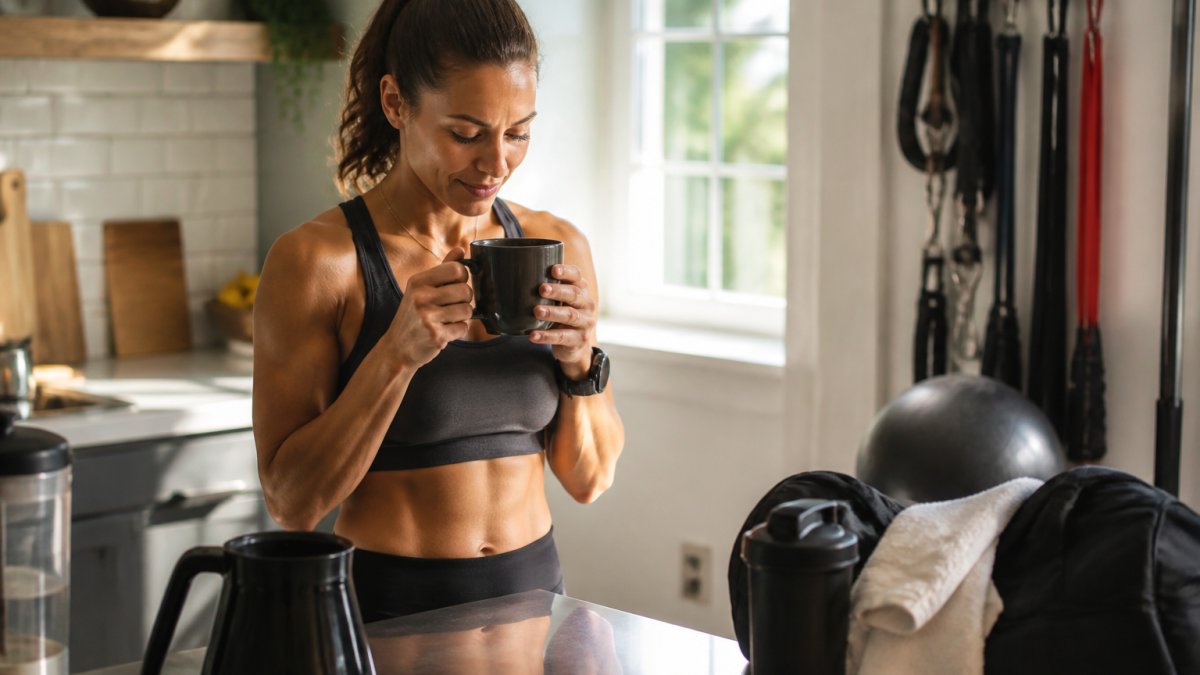
Caffeine Timing Before Exercise: When to Drink Coffee for Peak Performance
Timing matters as much as the coffee itself. Caffeine takes 30 to 45 minutes to reach peak blood levels, so drink your coffee 30 to 45 minutes before you start your workout.
Drink it right before exercise and you won't feel the full effect until you're deep into your session; drink it two hours early and the peak will have worn off when you need it most.
For best results:
- Drink your coffee 30-45 minutes before training
- Ensure you've eaten something light if you're sensitive to caffeine on an empty stomach
- Stay hydrated, caffeine is a mild diuretic, and dehydration will blunt performance gains
- Avoid coffee within 6-8 hours of bedtime, as it can interfere with sleep quality and recovery
Individual response varies: some athletes feel the effect within 20 minutes, others take the full 45. Track your own timing and adjust. Consistency matters more than perfection.
How Much Caffeine Before a Workout: Dosage by Body Weight and Exercise Type
Caffeine dosage is where individual factors become critical. The general recommendation is 3 to 6 milligrams of caffeine per kilogram of body weight, consumed 30 to 45 minutes before exercise.
Here's how that translates by body weight:
- 150 lbs (68 kg): 200-410 mg of caffeine
- 180 lbs (82 kg): 250-490 mg of caffeine
- 200 lbs (91 kg): 270-550 mg of caffeine
A typical 8-ounce cup of brewed coffee contains 95-200 mg of caffeine, depending on roast and brewing method; a shot of espresso contains 75 mg. Most athletes find a single cup of quality coffee provides the right dose.
For endurance exercise (running, cycling, rowing), the lower end of that range (3-4 mg/kg) often works well. For strength training or high-intensity interval work, many athletes prefer the higher end (5-6 mg/kg) for maximum alertness and focus.
Start conservative: if you're new to caffeine for performance, begin with a single cup and assess how you feel. Tolerance builds with daily use, so you'll need more for the same effect. Taking a few days off per week helps maintain sensitivity.
The Organic Question: Pesticide Residues, Performance, and Real-World Trade-Offs
Most articles on this topic answer a different question than the one being asked. Does organic coffee athletic performance improve over conventional coffee? No, not through any demonstrated performance mechanism.
What organic certification does not change. It doesn't change caffeine content, chlorogenic acid profile in any way shown to alter performance, caffeine metabolism, adenosine blockade, or fat oxidation.
The residue question, honestly framed. Conventional coffee is heavily treated in many producing regions, and residues can be detected on some beans.
Evidence quality matters here. The performance literature is about caffeine, not farming method. No credible research compares organic-coffee athletes to conventional-coffee athletes on time trials, VO2 max, or strength outcomes.
The real trade-offs.
- Cost. Organic specialty coffee commonly carries a meaningful price premium over comparable conventional specialty coffee. That premium buys a cultivation standard, not a performance benefit.
- Freshness can beat certification. A conventional bean roasted three days ago generally delivers a better cup, and a more consistent pre-workout routine, than an organic bean that's sat on a shelf for months. Volatile aromatics degrade with time regardless of how the beans were grown.
- Sensitivity and stomach comfort. Some athletes find certain coffees harsher on the stomach before training. That is usually about roast level, acidity, and brewing method, not organic status. A darker, lower-acid roast, organic or not, is often the better fix.
- Caffeine accuracy. Because organic and conventional beans of the same variety and roast have similar caffeine, the label does not help you dial in dose. Knowing your bean, roast, and brew ratio does.
How to decide. If minimizing synthetic pesticide exposure aligns with your values and budget, organic is a defensible choice.
Choosing Your Coffee: Fresh-Roasted Blends for Clean, Sustained Energy
When selecting coffee for athletic performance, prioritize in this order:
- Freshness, Roasted within the last two weeks, ideally within days
- Caffeine content, Know what you're getting; check the roaster's specs
- Smooth profile, Avoid harsh, acidic roasts if you're sensitive to caffeine
- Consistency, Stick with the same coffee so you know how your body responds
Ed In Your Head's blends are designed specifically for athletes. Our Breakfast Blend + (Extra Caffeine) delivers a medium roast with added Robusta beans for a caffeine boost without the harshness. For maximum performance, our Max Caf Blend combines Tanzania and India Robusta for sustained energy through longer training sessions.


If you're new to specialty coffee, start with our MVP Pack. It includes six 2-ounce bags of our best-selling coffee, a ceramic mug, and a tee, everything you need to test different blends and find what works for your body.

For athletes who want bold flavor and quick energy, our Cowboy Blend mixes dark and medium roasts with notes of cocoa, caramel, and vanilla. It's smooth enough for daily use but strong enough for game day.
The key difference between Ed In Your Head and generic coffee: we roast fresh for every order, so you're not buying coffee that's sat in a warehouse for weeks.
The choice between organic and conventional coffee for athletic performance comes down to personal values, not performance data. If minimizing pesticide exposure matters, choose organic. If budget matters more, fresh-roasted conventional coffee serves you just as well.
What absolutely matters: the coffee is fresh, you know your caffeine dose, and you time it correctly.
National Institutes of Health caffeine and exercise research
International Society of Sports Nutrition caffeine guidelines
USDA organic certification standards
Frequently Asked Questions
Is organic coffee actually better for athletic performance than conventional coffee?
Organic certification alone doesn't improve athletic performance. What matters is caffeine content, freshness, and how your body responds. Organic coffee may have fewer pesticide residues, but this doesn't translate to better endurance, strength, or focus during workouts. Fresh-roasted coffee, organic or conventional, delivers more consistent caffeine and smoother energy than stale beans. The real advantage comes from quality roasting and proper timing, not the organic label.
How much caffeine should you have before a workout?
Most athletes benefit from 3-6 mg of caffeine per kilogram of body weight, consumed 30-45 minutes before exercise. A 150-pound athlete (68 kg) would aim for 200-400 mg of caffeine. A standard 8-ounce cup of brewed coffee contains 80-100 mg; espresso has 75 mg per shot. Start at the lower end to assess tolerance and avoid jitters or stomach upset. Individual caffeine sensitivity varies widely, so adjust based on your response.
When should you drink coffee before a workout to avoid the crash?
Drink coffee 30-45 minutes before your workout. Caffeine peaks in your bloodstream within this window, giving you maximum alertness and reduced perceived exertion during training. Avoid drinking it immediately before exercise or more than 2 hours ahead. Pairing coffee with a small carbohydrate source (banana, toast) helps stabilize blood sugar and prevents the energy dip that causes crashes later. Fresh-roasted coffee without added sugar delivers steadier energy than pre-sweetened drinks.
Can organic coffee prevent jitters and stomach problems during workouts?
Organic certification doesn't prevent jitters, your caffeine sensitivity and stomach acid do. Jitters come from excessive caffeine intake or individual sensitivity, not from pesticide residues. What actually helps: start with lower caffeine doses, avoid coffee on an empty stomach, stay hydrated, and choose fresh-roasted beans roasted to a medium roast (darker roasts have slightly less caffeine and may be easier on digestion). If you're prone to gastrointestinal discomfort, test your tolerance well before race day.
Does coffee really improve endurance and stamina during exercise?
Yes. Caffeine reduces perceived exertion, meaning exercise feels less difficult even though your actual effort is the same. It also increases fat oxidation (your body burns more fat for energy), sparing glycogen stores during longer workouts. Studies show caffeine improves endurance performance in aerobic exercise lasting 30+ minutes. The effect is most noticeable in trained athletes; beginners may see smaller gains. Timing and dose matter, 30-45 minutes before sustained activity at 3-6 mg per kilogram of body weight delivers the best results.