


Table of Contents
- Why Natural Caffeine Sources Beat Gels and Pills on Race Day
- Caffeine Before a Workout: What It Actually Does for Endurance
- Natural Caffeine Sources Ranked by Dose and Practicality
- Caffeine Dosage for Endurance Athletes: Milligrams per Kilogram
- Caffeine Timing for Running: Pre-Race, Mid-Race, and the Sleep Tradeoff
- Coffee Before Running: A Practical Race-Day Fueling Plan
- Gut Tolerance, Hydration, and Carrying It All
- Safety, Habitual Use, and Who Should Skip It
- Frequently Asked Questions
Last Updated: October 17, 2026
Why Natural Caffeine Sources Beat Gels and Pills on Race Day
Natural caffeine sources for marathon runners are foods and drinks, mainly coffee and tea, that deliver caffeine as part of a whole beverage rather than a stripped-down tablet or shot.
Here is why that matters. Most runners treat caffeine as a number on a label. They chase milligrams and forget everything else in the cup.
Coffee brings water, warmth, and a ritual your gut already knows. A gel brings a sticky shot of isolated caffeine and sugar at mile 18, often on an empty, churning stomach.
The difference shows up late in the race, when your stomach is the weakest link.
Caffeine Before a Workout: What It Actually Does for Endurance
Caffeine before a workout blocks adenosine, the chemical that makes you feel tired. That delay in perceived fatigue is the real benefit, not a magic speed boost.
Many runners find the biggest gains in the back half of a long run. The effort feels easier, so you hold pace longer.
What most guides miss: caffeine does not create energy. It changes how hard the same pace feels. That is why timing and dose matter more than brand.
- It lowers perceived effort at a set pace
- It sharpens alertness when focus fades
- It can settle the "am I done?" panic in the final miles
- It does nothing for fuel, so pair it with carbs
Cleveland Clinic overview of how caffeine affects the body
Natural Caffeine Sources Ranked by Dose and Practicality
No single source wins for everyone. The right pick depends on how much caffeine you want, how well you tolerate it, and what you can carry.
Here is how the main options stack up for a marathon build.
| Source | Rough Caffeine | Best For | Watch Out For |
|---|---|---|---|
| Espresso | High per ounce | Quick pre-race hit | Hard to carry mid-race |
| Filter coffee | Moderate per cup | Morning routine | Volume means bathroom stops |
| Cold brew | Moderate to high | Hot weather | Easy to overdo |
| Green tea | Low | Sensitive stomachs | Too weak late in race |
| Yerba mate | Moderate | Steady sipping | Unfamiliar taste |
| Caffeinated gels | Measured dose | Mid-race top-ups | Gut surprises |
| Caffeine pills | Precise dose | Experienced users | Easy to overshoot |
Coffee, Espresso, and Cold Brew
Coffee is the most practical natural caffeine source for most runners. A single espresso delivers a concentrated hit in a tiny volume. Filter coffee spreads the same caffeine across a bigger cup, which means more fluid and more bathroom risk.
Cold brew is a strong option in warm races. It is smooth and easy on the stomach for many people. The catch is strength: coarse grounds and long steep times can push caffeine higher than you expect.
Our Cold Brew Coffee (Dark) is blended specifically for cold brew, with no additives and nothing artificial. It makes a clean, consistent cup you can dial in during training.

Tea, Green Tea, and Yerba Mate
Tea sits at the gentler end. Green tea carries less caffeine per cup, which suits runners who get jittery easily. The trade-off is dose: you may need several cups to match one coffee.
Yerba mate lands in the middle. It gives a steady lift and a different flavor profile. Try it in training first, not on race morning.
Gels, Chews, and Caffeine Shots
Gels and chews are convenient and measured. That precision is their strength and their trap. Isolated caffeine hits fast, and some runners feel it in their gut within minutes.
Use gels you have tested on long runs. Never debut a new caffeinated gel at mile 18 of a marathon.
Caffeine Dosage for Endurance Athletes: Milligrams per Kilogram
Caffeine dosage for endurance athletes is usually framed in milligrams per kilogram of body weight. A common approach in the sports world is a moderate dose scaled to your weight, taken before the effort starts. The reason the math matters is simple: a 130-pound runner and a 190-pound runner should not chase the same milligram number.
Most sports-nutrition practitioners point to a range of roughly 3 to 6 milligrams per kilogram of body weight for endurance performance, with many runners finding a useful effect in the lower half of that range. Here is what that looks like in practice, using body weight in pounds and a rough conversion to kilograms:
| Body weight | 3 mg/kg | 6 mg/kg |
|---|---|---|
| 130 lb (about 59 kg) | about 177 mg | about 354 mg |
| 160 lb (about 73 kg) | about 219 mg | about 438 mg |
| 190 lb (about 86 kg) | about 258 mg | about 516 mg |
| 220 lb (about 100 kg) | about 300 mg | about 600 mg |
Those numbers are a starting frame, not a prescription. The low end is where most runners should begin, especially if they are caffeine-sensitive or have never used caffeine deliberately before a run. The high end is for experienced users who have tested it in training and know how their gut and sleep respond.
A few practical notes on applying the math:
- Count every source. A pre-race coffee, a mid-race gel, and a cola at an aid station all add up. Runners often double their intended dose without realizing it.
- Do not stack a big coffee on top of a caffeinated gel unless you have rehearsed that exact combination on a long run.
- Scale down for heat and nerves. Race-morning adrenaline amplifies caffeine's edge, so many runners use a slightly lower dose than their training maximum.
- Keep a simple log. Note the source, the amount, the timing, and how you felt at 30, 60, and 90 minutes. That log is worth more than any generic chart.
We will not hand you a number to copy. Individual response varies widely, and tolerance changes everything. Instead, use this process:
- Pick a low dose on an easy training day
- Note how you feel at 30, 60, and 90 minutes
- Repeat at a slightly higher dose the next week
- Keep the dose that gives alertness without jitters
- Lock that dose in for race day
FDA guidance on caffeine and how much is too much
Caffeine Timing for Running: Pre-Race, Mid-Race, and the Sleep Tradeoff
Caffeine timing for running comes down to three windows: before the gun, mid-race, and the hours after you finish.
Most runners take their main dose 30 to 60 minutes before the start. That gives caffeine time to peak as the race gets hard. A smaller top-up mid-race can help if you tolerate it.
Breakfast Blend + (Extra Caffeine) →
Then there is sleep. Caffeine has a long half-life, and a late top-up can wreck the night after a race. If you race in the evening or take a big dose late, expect lighter sleep.
- Main dose: 30-60 minutes pre-race
- Top-up: only if tested in training
- Cutoff: avoid caffeine within several hours of bedtime
- Hydrate: caffeine is mild on fluid loss for most people
Coffee Before Running: A Practical Race-Day Fueling Plan
Coffee before running works best as a rehearsed routine, not a scramble in the hotel lobby.
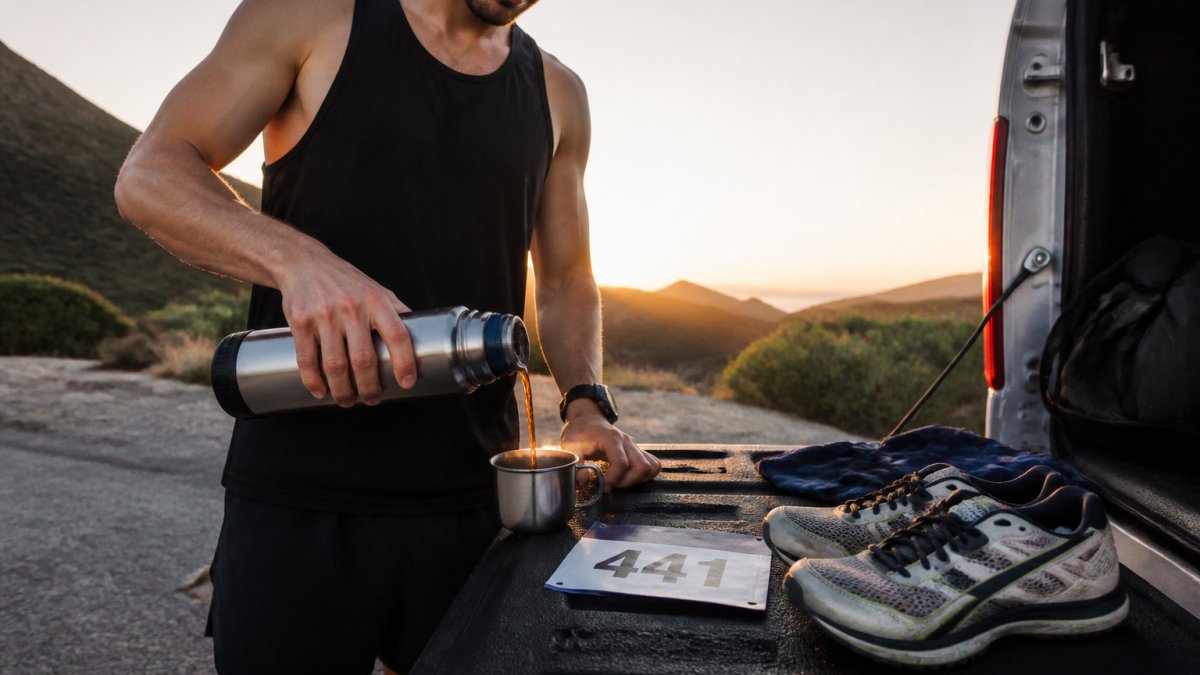
Night before: Set out your gear and your coffee. Keep dinner boring and familiar.
2-3 hours out: Drink your normal training coffee. Same beans, same strength. This is not the day to experiment.
60 minutes out: Small sip of water. Light carbs. Bathroom stop. This is the window where coffee's gut effect is helpful rather than disastrous.
30-45 minutes out: Finish your coffee if you split it. Let it settle.
Mid-race: Stick to your tested gels and fluids. Add caffeine only if you trained with it.
After the finish: Watch your total.
A sample timeline for a 7 a.m. start:
| Time | Action |
|---|---|
| 4:00-4:30 a.m. | Normal training coffee, light breakfast |
| 6:00 a.m. | Water, light carbs, bathroom stop |
| 6:15-6:30 a.m. | Finish coffee, let it settle |
| 7:00 a.m. | Start |
| Mid-race | Tested gels and fluids only |
Our Breakfast Blend + is built for exactly this: a medium roast with added robusta for extra caffeine.

Gut Tolerance, Hydration, and Carrying It All
Gut tolerance decides whether your caffeine plan survives contact with the race. Coffee moves many people's bowels, which is helpful two hours before the gun and disastrous at mile 15.
Test every source in training. Note what sits well and what does not.
Carrying coffee mid-race is awkward. A thermos is heavy, and a hot drink is rare on course. That is why most runners keep coffee for the pre-race window and use gels or chews later.
Hydration deserves a mention too. Caffeine is mild on fluid balance for most people, but coffee is still fluid in, not fluid out. Sip water alongside it.
Safety, Habitual Use, and Who Should Skip It
Habitual caffeine use blunts the effect. If you drink coffee all day every day, race-day caffeine may feel flat. Some runners taper caffeine for a week before a goal race to sharpen the response.
Individual response varies a lot. Some people metabolize caffeine slowly and feel it for hours. Others barely notice it.
Talk to a doctor before adding caffeine if you have heart conditions, anxiety disorders, sleep problems, or take medication. This is general guidance, not medical advice.
Who should skip it:
- Runners prone to severe jitters or panic
- Anyone with a diagnosed heart rhythm issue
- People who cannot sleep after even small doses
- Runners who have never tested caffeine in training
FDA guidance on caffeine and how much is too much
If you want a clean, steady source you can practice with, our Max Caf Blend pairs Tanzania and India robusta for a high-caffeine cup. Start with a smaller serving than you think you need.

Frequently Asked Questions
How much caffeine should a marathon runner take?
Most sports nutrition guidance lands on roughly 3 to 6 milligrams per kilogram of body weight, taken about 45 to 60 minutes before the start. For a 150-pound runner that works out to about 200 to 400 milligrams. Start at the low end and test it in training, not on race morning. If you weigh 130 pounds, 3 mg/kg is around 175 milligrams, which is close to one strong 12-ounce coffee. Higher doses do not reliably add more benefit and raise the odds of stomach trouble and jitters.
Is coffee or tea better before a marathon?
Coffee delivers more caffeine per serving, so it is easier to hit a useful dose without drinking a lot of liquid before the start. A 12-ounce drip coffee typically carries 120 to 200 milligrams, while a cup of black tea runs about 40 to 60 milligrams. Tea is gentler on the stomach and lower in caffeine, which suits runners who are sensitive or running a shorter race. If you want a bigger dose from tea, you need two or three cups, and that means more fluid and more bathroom stops.
Can natural caffeine sources cause stomach problems during a long run?
Yes, and coffee is the usual culprit. Caffeine speeds up gut transit and coffee itself stimulates the colon, which is why so many runners need a bathroom stop 20 to 40 minutes after a cup. Take your caffeine early enough that the effect passes before the gun, and keep mid-race intake small. Gels and chews are easier to control because the dose is fixed. Avoid dairy and heavy sweeteners on race morning, and never try a new source on race day.
When should runners take caffeine before a race?
Aim for 45 to 60 minutes before the start so blood levels peak around gun time. If you want a top-up late in a marathon, a small dose at roughly the 90-minute to 2-hour mark can help alertness when fatigue sets in. Keep that second dose under about 50 to 100 milligrams and pair it with water. Anything later than about four hours before bedtime risks wrecking your sleep, which matters more for recovery than the small boost is worth.
Caffeine is a tool, and like any tool it rewards practice over panic. Build your dose in training, keep race morning boring, and let the cup do its job. At Ed In Your Head, we roast every order the day it ships, so your race-week coffee arrives fresh, with zero added sugar and no crash. Find your fuel and make race morning one less variable to worry about.