


Table of Contents
- Quick Comparison: Natural Caffeine Sources for Focus
- 1. Matcha: L-Theanine and Caffeine for Calm Alertness
- 2. Yerba Mate: Sustained Energy Without the Jitters
- 3. Guarana: High-Caffeine Seed for Endurance
- 4. Mushroom Coffee: Lion's Mane and Cordyceps for Cognitive Performance
- 5. Cacao: Theobromine and Caffeine for Smooth Focus
- 6. Green Tea: Catechins and Moderate Caffeine for Mental Clarity
- 7. Kola Nut: Traditional Source for Alertness
- How Caffeine Timing and Half-Life Affect Focus
- Natural vs. Synthetic Caffeine for Performance
- Individual Caffeine Sensitivity: Why One Size Doesn't Fit All
- Sustainable and Ethical Sourcing
- What Matters Most
- Frequently Asked Questions
Last Updated: September 10, 2026
If you want clean energy without the crash, natural caffeine sources for focus are the answer. Natural caffeine comes from plants like tea leaves, coffee beans, and cacao, often alongside compounds that smooth out the stimulant's edge. At Ed In Your Head, we roast coffee for athletes and gamers who need steady focus, not a sugar spike followed by a wall. Below, we rank the seven best natural caffeine sources and show you how to time them.
Quick Comparison: Natural Caffeine Sources for Focus
Here is how the seven top natural caffeine sources compare at a glance.
| Source | Caffeine Level | Key Compound | Best For |
|---|---|---|---|
| Matcha | Moderate | L-theanine | Calm, sustained alertness |
| Yerba mate | Moderate | Polyphenols | All-day energy |
| Guarana | High | Guaranine | Endurance and workouts |
| Mushroom coffee | Moderate | Lion's mane, cordyceps | Cognitive performance |
| Cacao | Low | Theobromine | Smooth, gentle focus |
| Green tea | Low to moderate | Catechins, L-theanine | Mental clarity |
| Kola nut | Moderate | Theobromine | Traditional alertness boost |
The difference from a standard energy drink comes down to packaging: plants bundle caffeine with antioxidants, amino acids, and other alkaloids that change how your body absorbs it.
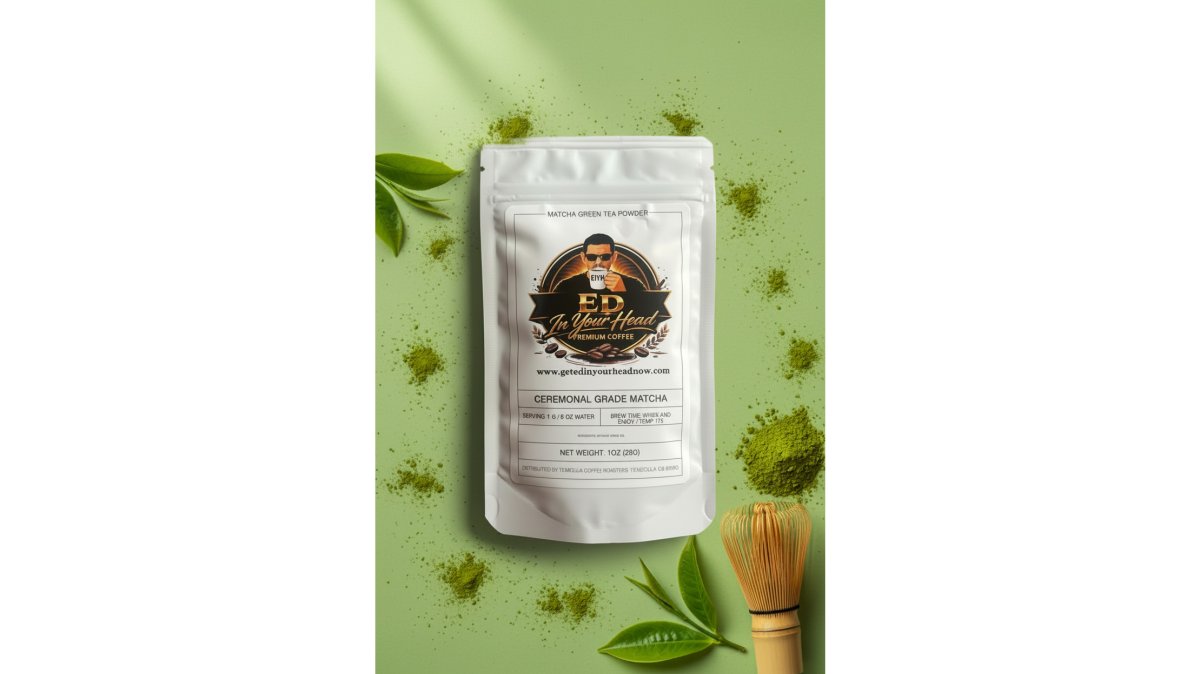
1. Matcha: L-Theanine and Caffeine for Calm Alertness
Matcha delivers caffeine and L-theanine together, producing calm alertness instead of a spike. L-theanine, an amino acid in tea leaves, crosses into the central nervous system and moderates the stimulant effect, giving focus without jitteriness for many people.
Matcha's caffeine releases slowly because you consume the whole leaf, not just an infusion, so drinkers report sustained energy across several hours rather than a sharp peak, a better starting point than coffee if you are caffeine-sensitive.
2. Yerba Mate: Sustained Energy Without the Jitters
Yerba mate is a South American infusion that provides a steady lift with less jitteriness than coffee for many drinkers. It contains caffeine plus polyphenols, antioxidants, and small amounts of theobromine and theophylline, which relax blood vessels.
Many find it gentler on the stomach than coffee, though the taste is grassy and bitter until you adjust. Steep three to five minutes for a cleaner cup with less tannic bite.
3. Guarana: High-Caffeine Seed for Endurance
Guarana seeds carry roughly twice the caffeine of coffee beans by weight, making guarana one of the strongest natural caffeine sources available. The caffeine is often called guaranine, though chemically it is the same molecule, and tannins slow absorption for a longer window.
Endurance athletes often reach for guarana before training because the slow release pairs well with long efforts. The tradeoff is potency: if you are jitter-prone, start small.
4. Mushroom Coffee: Lion's Mane and Cordyceps for Cognitive Performance
Mushroom coffee blends specialty coffee with functional mushrooms, most often lion's mane and cordyceps, the former associated with clarity and focus, the latter valued for stamina.

That is why it is popular with gamers and knowledge workers who want focus without a hard crash. Ed In Your Head's Coffee with Mushrooms Dark Roast pairs specialty-grade coffee with lion's mane, cordyceps, and reishi for $25.00.
5. Cacao: Theobromine and Caffeine for Smooth Focus
Cacao offers a gentle lift built mostly around theobromine, a milder stimulant, with a small amount of caffeine. Theobromine widens blood vessels and produces a smoother, longer-lasting effect than caffeine alone, which is why raw cacao feels different from coffee even at similar caffeine levels.
The catch is that most commercial chocolate bars are loaded with sugar, which cancels out the benefit. For focus, use raw cacao powder or high-percentage dark chocolate, not milk chocolate.
6. Green Tea: Catechins and Moderate Caffeine for Mental Clarity
Green tea combines a moderate dose of caffeine with catechins and L-theanine, a trio that supports mental clarity without overstimulation. The catechins are antioxidants, the L-theanine smooths the caffeine curve, and the dose is low enough for an afternoon cup without wrecking sleep.
A common mistake is brewing green tea with water that is too hot, which pulls out bitter tannins. Use water around 75°C to 80°C and steep for two to three minutes.
Ed In Your Head's Jasmine is a hand-picked green tea blended with fresh jasmine blossoms, priced at $19.99, and it holds up to multiple steepings.
7. Kola Nut: Traditional Source for Alertness
Kola nut is a traditional West African source of caffeine, used for centuries to support alertness and stamina. It contains caffeine plus theobromine, giving it a warmer, more gradual lift than a straight caffeine pill, and it flavored early cola drinks.
You will find kola nut in some natural energy products and teas. The flavor is bitter and astringent, so it is usually blended with something sweeter. Look for whole nuts or a standardized extract rather than a heavily sweetened drink.
How Caffeine Timing and Half-Life Affect Focus
Caffeine's effect on focus is not just about how much you take, but when the peak lands relative to the work you need to do. Get the timing wrong and you either underdose during your hardest block or sleep badly.
What half-life actually means for your day
Half-life is the time it takes your body to clear half of a given dose. For most healthy adults, caffeine's half-life runs roughly three to seven hours, with about five hours as a common middle estimate, driven by genetics, liver enzyme activity, pregnancy, oral contraceptive use, smoking status, and certain medications (peer-reviewed research). A fast metabolizer can clear most of a cup in a few hours; a slow one still has meaningful amounts circulating at bedtime.
The practical math: 100 mg at 8 a.m. with a five-hour half-life leaves roughly 50 mg at 1 p.m., about 25 mg at 6 p.m., and a residual trace after 11 p.m., often enough to delay sleep onset or lighten sleep stages even when you feel "fine."
The adenosine mechanism, in plain terms
Caffeine works by blocking adenosine receptors in the brain. Adenosine is a byproduct of neural activity that accumulates across the day and creates sleep pressure. Caffeine does not remove adenosine, it occupies the receptor so adenosine cannot bind. When the caffeine clears, the adenosine is still there, which is why the crash feels sudden and why timing matters more than raw dose: you are borrowing alertness, not creating it.
A timing framework for focus blocks
Caffeine reaches peak blood concentration roughly 30 to 60 minutes after drinking, varying by source and whether you have eaten (PubMed). A workable pattern:
- Delay your first dose 60 to 90 minutes after waking. Cortisol peaks shortly after you get up, and stacking caffeine on top of it tends to produce jitteriness rather than sharper focus.
- Anchor caffeine to your hardest cognitive block, not to a habit. If your deep-work window is 10 a.m. to noon, take your dose around 9:30 a.m. so the peak lands inside the block.
- Set a hard cutoff 8 to 10 hours before bed. For a 10:30 p.m. bedtime, that means no caffeine after roughly 12:30 to 2:30 p.m. Slow metabolizers should cut off earlier.
- Keep a second dose small, or skip it. A full morning dose and a half-dose in the early afternoon works; doubling the morning amount at 3 p.m. leads to a wired evening and a rough next morning.
Why natural sources change the curve
Whole-plant sources do not deliver caffeine as a single spike. Matcha is consumed as the entire leaf, so caffeine releases as your body breaks down the plant matrix, while yerba mate and guarana contain tannins and polyphenols that slow absorption. The result is a flatter curve, a lower peak and a longer tail, which is why many call these sources "smoother" even at similar milligram doses.
That flatter curve has a tradeoff: the effect can linger longer than a fast-absorbing source, so a late-afternoon matcha may still be active at bedtime even if the peak felt gentle. Track your own cutoff rather than assuming a low peak means a short tail.
Natural vs. Synthetic Caffeine for Performance
Natural caffeine comes from plant sources, while synthetic caffeine is produced in a lab and added to many energy drinks and supplements. The molecule is identical, but the delivery is not: natural sources bring polyphenols, antioxidants, and amino acids that affect absorption speed and how smooth the curve feels.
Many athletes and gamers find natural caffeine produces a steadier lift with less jitteriness and a softer crash. Synthetic caffeine, especially with sugar, spikes fast and drops hard, the main reason people cycle through energy drinks all day.
Ed In Your Head's Breakfast Blend + (Extra Caffeine) uses a house blend plus robusta for extra caffeine, priced at $25.99, and it is roasted the day it ships.

Individual Caffeine Sensitivity: Why One Size Doesn't Fit All
Generic milligram recommendations are the weakest part of most caffeine guides. Two people can drink the same 200 mg and have completely different experiences, one sharp for four hours, the other anxious for six. The difference is biology, and it is measurable enough to build a personal dose around.
What actually drives sensitivity
Three factors explain most of the variation:
- Liver enzyme speed (CYP1A2). Caffeine is metabolized primarily by CYP1A2 (peer-reviewed research). Slow metabolizers clear it at roughly half the rate, so the same cup stays active far longer.
- Adenosine receptor sensitivity (ADORA2A). This gene influences how strongly you feel caffeine's stimulant effect. Some notice even small doses; others barely register them.
- Body weight and composition. Caffeine distributes through lean tissue and water, so a smaller person reaches a higher effective concentration from the same dose.
Everyday factors also shift sensitivity: sleep debt, dehydration, stress, certain medications (including some antidepressants and antibiotics), oral contraceptives, pregnancy, and whether you have eaten. That is why the same cup can hit differently on a Monday versus a Saturday.
A simple self-test to find your dose
You do not need a genetic test. A structured self-experiment works:
- Wash out for 48 to 72 hours. Cut caffeine entirely for a clean baseline. Expect a dull headache on day one if you are a regular user.
- Start at a low, fixed dose. Pick a source you can measure consistently, green tea, matcha, or a known-amount coffee. Aim for roughly 30 to 50 mg.
- Log four checkpoints. Note how you feel at 30 minutes, 2 hours, 4 hours, and 6 hours, rating alertness, jitteriness, and any stomach or anxiety effects on a 1-to-5 scale.
- Step up gradually. Increase by roughly 25 to 50 mg every two to three days until focus improves without side effects. Stop there.
- Find your ceiling. The dose just above your sweet spot is your personal ceiling, that is the number that matters, not a generic guideline.
Reading your own signals
A few patterns are worth naming because they point to different adjustments:
- Jittery but not focused usually means the dose is too high or the source too fast-absorbing. Try a lower dose or a slower-release source like matcha or yerba mate.
- Focused for an hour, then flat often means a fast spike and drop. A source with tannins or a protein-and-fat snack can flatten the curve.
- Fine during the day, poor sleep at night points to a clearance problem, not a dose problem. Move your cutoff earlier before reducing your morning amount.
- No effect at all can mean tolerance, a fast metabolism, or a low dose. A short washout will tell you which.
Tolerance is not permanent
Daily use builds tolerance, and the same dose that felt strong in week one can feel flat by week four. Sensitivity also drifts with sleep, stress, and hydration, so re-run the self-test every few months. Cycling down for a week, or taking two caffeine-free days per week, keeps your effective dose lower and your response cleaner.
Sustainable and Ethical Sourcing
Where your caffeine comes from matters for quality and ethics. Coffee grown under shade with fair labor practices tends to be higher quality because the beans ripen slowly and develop more complex flavor. Look for roasters who publish sourcing details and roast dates.
Freshness is the other half. Coffee starts losing flavor and aroma within weeks of roasting, so a bag roasted months ago tastes flat no matter how good the origin. Ed In Your Head roasts every order the day it ships.
What Matters Most
The best natural caffeine source for focus matches your sensitivity, schedule, and goals. Matcha and green tea suit calm alertness; yerba mate and guarana fit athletes who need endurance; mushroom coffee and cacao work for smooth, steady focus without a hard crash.
If you want the cleanest version of that experience, Ed In Your Head roasts specialty coffee for athletes and gamers, ships it fresh the day it is roasted, and skips the added sugar entirely. Our blends deliver natural focus and alertness with a smooth, steady energy curve. Find your fuel with Max Caf Blend or the mushroom-infused dark roast, and see what clean caffeine feels like.

Frequently Asked Questions
Which is healthier, energy drinks or coffee?
Coffee, especially natural caffeine sources like black coffee or matcha, is generally healthier than energy drinks. Energy drinks often contain high amounts of added sugar, artificial ingredients, and synthetic caffeine that can cause jitteriness and a rapid crash. Coffee provides natural caffeine along with antioxidants and polyphenols. For sustained energy without sugar crashes, choose a clean source like Ed In Your Head's Breakfast Blend +, which is roasted fresh and has zero added sugar.
What is the best drink for sustained energy?
For sustained energy, drinks that combine natural caffeine with L-theanine, such as matcha or green tea, are excellent choices. Yerba mate and mushroom coffee also provide a smoother, longer-lasting lift. The key is to avoid high-sugar options that spike and crash your blood sugar. Ed In Your Head's Coffee with Mushrooms Medium Roast pairs specialty coffee with Lion's Mane and Cordyceps for steady focus without the jitters.
How many coffees is an energy drink equivalent to?
A typical 16 oz energy drink contains about 160 mg of caffeine, roughly equal to one and a half to two cups of regular coffee. However, the delivery matters: energy drinks often have synthetic caffeine and sugar that absorb quickly, leading to a crash. Natural caffeine sources like coffee or matcha provide a more gradual release. Always check labels, as caffeine content varies widely across brands and brewing methods.
What is the 2 hour coffee rule?
The 2 hour coffee rule suggests waiting at least 90 to 120 minutes after waking before drinking coffee. This allows your body's natural cortisol levels to peak and then decline, so caffeine can work more effectively without interfering with your circadian rhythm. Following this rule can reduce tolerance and help you avoid the afternoon crash. Pair it with a natural source like Max Caf Blend for a smooth, sustained boost when you do drink it.
Does natural caffeine provide better focus than synthetic caffeine?
Natural caffeine sources often provide better focus because they come with complementary compounds. For example, matcha contains L-theanine, which promotes calm alertness, while coffee has antioxidants that support overall health. Synthetic caffeine, found in many energy drinks, is isolated and can cause a rapid spike followed by jitteriness and a crash. Choosing natural sources like Ed In Your Head's Matcha or Breakfast Blend + supports smoother, more sustained cognitive performance.