


Table of Contents
- Why Mental Clarity Matters in Tournament Play
- Build a Pre-Game Routine for Focus
- Manage Tournament Nerves Before Competition Starts
- Mental Reset Between Matches: A Practical Protocol
- How to Avoid an Energy Crash While Gaming or Competing
- Sleep, Hydration, and Nutrition: The Foundation for Mental Sharpness
- Sustain Focus During Long Competition Days
- Frequently Asked Questions
Last Updated: October 19, 2026
Why Mental Clarity Matters in Tournament Play
Mental clarity tournaments separate athletes who perform under pressure from those who crumble. Your ability to stay sharp through multiple rounds, matches, or games determines whether you finish strong or fade in the final hour.
Tournament stress floods your system with cortisol and adrenaline. Your heart races. Your breathing becomes shallow. Your focus narrows or scatters entirely. This is your nervous system responding to threat, a useful response in survival situations, but a liability when you need precision and decision-making.
The good news: mental clarity is trainable. You don't inherit it. You build it through specific routines, breathing techniques, and preparation habits that calm your nervous system while keeping you alert.
At Ed In Your Head, we work with competitive athletes and gamers who face exactly this challenge. They compete in marathons of matches where mental fatigue sets in around hour three or four. The ones who maintain mental clarity throughout the day share a common pattern: they prepare their mind the same way they prepare their body.

Build a Pre-Game Routine for Focus
A solid pre-game routine signals to your brain that it's time to compete. Your routine becomes an anchor, a repeatable sequence that tells your nervous system what to expect.
The best pre-game routines take 15-30 minutes and include three elements: mental focus work, physical activation, and a specific trigger that says "competition starts now."
Start with a quiet space. Sit alone for 5 minutes. Close your eyes. Notice your breathing without changing it. This isn't meditation, it's a mental reset that clears the noise from your day. Many athletes skip this step because it feels inactive.
Next, spend 5-10 minutes reviewing your game plan. Not memorizing it. Reviewing it. Ask yourself: What's my primary strength today? What opponent weakness am I targeting? What's my first decision? Keep it to three key points maximum. More than that overwhelms your working memory.
Then, move your body. Stretch, walk, do light exercises. Get your blood flowing. This shifts your nervous system from rest mode into activation mode without spiking anxiety.
Finally, establish a pre-competition cue. Some athletes say a specific phrase. Others touch a piece of equipment or perform a gesture. Make it something you can repeat consistently, something that feels natural to you, something that takes less than 10 seconds.
Manage Tournament Nerves Before Competition Starts
Tournament nerves are normal. They're your body preparing for challenge. The problem isn't the nerves, it's when they spike your anxiety so high that your thinking gets fuzzy.
Nerves become a problem when you interpret them as danger instead of readiness. Your heart races. You think "I'm anxious" instead of "I'm ready." That interpretation matters more than the physical sensation.
Two techniques work better than any others for managing pre-competition nerves: visualization and controlled breathing. Both are backed by athlete experience across sports and esports. Both work within minutes.
Visualization and Mental Rehearsal
Visualization isn't daydreaming. It's a specific mental practice where you see yourself executing successfully. You're running through your game plan in your mind before you execute it in real life.
Spend 3-5 minutes before competition mentally rehearsing your first match or game. Close your eyes. Picture yourself walking to your station or court. See the environment. See yourself making your first key decision. See yourself executing it well. See the result.
Make it vivid. Include details: the sounds around you, the feeling of your hands, the visual feedback from your opponent or the screen. The more sensory detail you include, the more your nervous system treats it as a real experience.
This mental rehearsal primes your neural pathways. When you actually compete, your brain recognizes the patterns because you've already practiced them mentally.
Breathing and Muscle Relaxation
Your nervous system responds to your breath. Shallow, fast breathing signals danger. Deep, slow breathing signals safety.
Use this simple technique: breathe in for a count of 4, hold for a count of 4, exhale for a count of 6. Do this 5-10 times. The longer exhale activates your parasympathetic nervous system, which calms you down.
Pair this with progressive muscle relaxation. Tense your shoulders for 3 seconds, then release. Do the same with your neck, your hands, your legs. This tells your body it's safe to relax while keeping your mind alert.
Together, these two techniques take less than 5 minutes and measurably reduce pre-competition anxiety.
Mental Reset Between Matches: A Practical Protocol
The space between matches is where your mental clarity either recovers or deteriorates. Most athletes waste this time. They sit around, replay the last match, or stress about the next one.
Your brain needs a reset. A specific protocol that clears the last match from your working memory and prepares you for the next one.
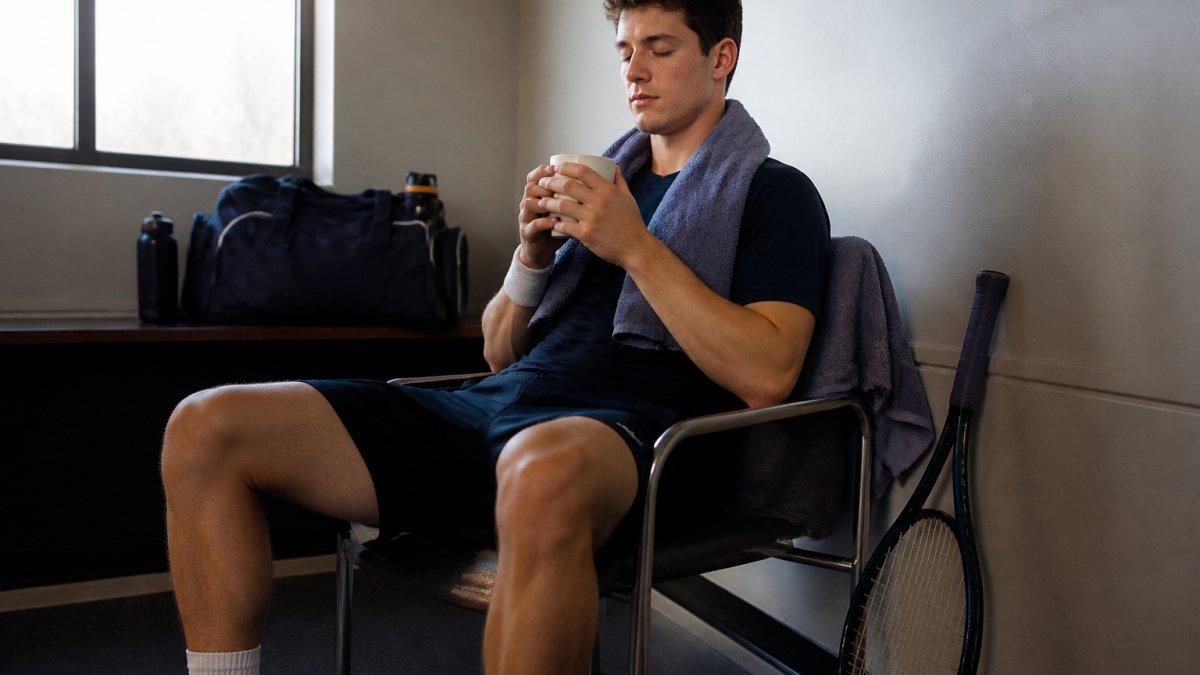
Here's a protocol that works in 10-15 minutes:
Minutes 1-2: Physical reset. Leave your competition space. Walk to a different room. Splash cold water on your face or drink water. The change of environment signals to your brain that the last match is over. Cold water activates your parasympathetic nervous system and clears mental fog.
Minutes 3-5: Breathing and stillness. Sit in a quiet space. Use the 4-4-6 breathing technique from above. Don't think about the last match. Don't think about the next one. Just breathe.
Minutes 6-10: Fuel and hydration. Eat something. Drink water or a beverage with sustained energy. Your brain uses glucose for focus.
Minutes 11-15: Mental preparation for the next match. Review your game plan for the upcoming opponent. Three key points. Nothing more. Visualize yourself executing well. Use your pre-competition cue to signal that you're ready.
This protocol takes discipline. You'll feel pressure to stay in your competition space, to socialize, to check your phone. Resist that.
How to Avoid an Energy Crash While Gaming or Competing
An energy crash during a tournament is brutal. Your mental clarity disappears. Your reaction time slows. Your decision-making gets fuzzy.
Most crashes happen because of two mistakes: relying on sugary energy drinks and skipping nutrition between matches.
Sugary energy drinks spike your blood sugar fast. Your brain gets a rush of glucose. You feel sharp for 30-45 minutes. Then your pancreas releases insulin. Your blood sugar crashes.
The solution is sustained energy. You need a source of caffeine and fuel that delivers steady energy without the crash.
Fresh-roasted specialty coffee delivers clean caffeine without the jitters or crash. Unlike energy drinks loaded with sugar and artificial ingredients, quality coffee provides a smooth, steady energy source that supports focus across long competition days.
Our MVP Pack ($69.99) is built for athletes competing through multiple rounds.

Between matches, drink a cup of coffee 15-20 minutes before your next competition. This timing allows the caffeine to peak right when you need focus.
For gamers in particular, the difference is noticeable. You maintain focus through hour four, five, or six of competition. Your reaction time stays sharp. Your decision-making stays clear.
Sleep, Hydration, and Nutrition: The Foundation for Mental Sharpness
Mental clarity during tournaments is built the night before and the weeks before. Your preparation off the field determines your performance on it.
Sleep is non-negotiable. Your brain consolidates memories and clears metabolic waste during sleep. A single night of poor sleep reduces your reaction time and decision-making ability. Two nights of poor sleep compounds the problem.
Aim for 7-9 hours the night before competition. Avoid caffeine after 2 PM. Keep your bedroom cool and dark. This isn't luxury, it's preparation.
Hydration affects mental clarity more than most athletes realize. Dehydration reduces blood flow to your brain. You feel foggy and tired. Drink water consistently throughout the day. A simple rule: drink half your body weight in ounces of water daily. If you weigh 160 pounds, drink 80 ounces of water.
Nutrition fuels your brain. Your brain uses about 20 percent of your body's energy. Tournament days demand more mental energy than normal days. Eat balanced meals with protein, complex carbs, and healthy fats. Avoid skipping meals to save time. A skipped meal leads to blood sugar crashes and mental fatigue.
Many athletes underestimate how much nutrition affects mental clarity. They focus on physical training and forget that their brain runs on fuel just like their muscles do.
Sustain Focus During Long Competition Days
Long mental clarity tournaments, six, eight, or ten hours of competition, demand sustained focus. This is where most athletes struggle.
Mental fatigue is real. It's not laziness.
The solution is managing mental fatigue actively instead of hoping it doesn't happen.
First, protect your attention. Minimize distractions between matches. Put your phone away. Don't watch other competitors. Don't check social media. Each of these fragments your attention.
Second, take genuine breaks. A break isn't sitting in your chair thinking about the next match.
Third, manage your energy with consistent fuel and hydration. This is where many athletes fail. They get busy and forget to eat or drink.
Fourth, use your reset protocol between every match, not just the ones you lose. This is the single biggest mistake competitive athletes make.
The athletes who finish strong on long tournament days are the ones who protect their mental clarity through discipline and routine.
Maintaining mental clarity during tournaments comes down to preparation, routine, and managing your physiology.
Start with sleep the night before. Fuel consistently between matches with sustained energy sources like specialty coffee instead of sugary drinks. Use your reset protocol religiously.
When you're ready to fuel your competition days with clean, sustained energy, try Ed In Your Head specialty coffee.
Frequently Asked Questions
How do you maintain mental clarity during a long tournament day?
Mental clarity during tournaments depends on three pillars: a consistent pre-game routine that primes your focus, a between-match reset protocol to recover attention, and stable energy from clean nutrition and hydration. Fresh-roasted specialty coffee without added sugar, like Ed In Your Head's blends, delivers steady caffeine without the crash that derails focus. Pair this with sleep, water, and structured breathing breaks every 60-90 minutes to keep mental sharpness intact across multiple matches.
What's the best way to avoid a caffeine crash during a gaming session?
Energy crashes happen when caffeine spikes sharply and drops fast, or when sugar crashes follow synthetic stimulants. Choose specialty-grade coffee roasted fresh for maximum flavor and smooth delivery, Ed In Your Head's Breakfast Blend Plus, a blend with extra caffeine, provides smooth energy without jitters. Our Coffee with Mushrooms blends are also available. Avoid energy drinks with added sugars and artificial ingredients. Drink water between cups, eat protein and complex carbs, and limit caffeine intake to 200-400mg per day to prevent tolerance buildup and crashes.
How can I build a pre-game routine that actually improves my focus?
A pre-game routine for focus works best when it's short, repeatable, and triggers the same mental state before every match. Start 15-20 minutes before competition: drink a cup of clean coffee, do 3-5 minutes of deep breathing (in for 4 counts, hold for 4, out for 6), visualize yourself executing your game plan successfully, and repeat a personal cue word or phrase that anchors your attention. Write your routine down and practice it the same way before practice sessions so your brain recognizes the signal and enters competition mode automatically.
Does caffeine actually help you stay mentally sharp during competition?
Yes, caffeine improves focus, reaction time, and mental clarity when consumed as clean specialty coffee rather than sugary energy drinks. Caffeine blocks adenosine receptors that signal fatigue, sharpening attention and concentration. The key is quality: fresh-roasted coffee delivers caffeine smoothly without the jitters or crashes that disrupt focus. Timing matters too, drink your coffee 20-30 minutes before competition so peak effect aligns with match start. During long tournaments, a second cup 3-4 hours later can sustain mental clarity through fatigue, but avoid late-day doses that interfere with post-tournament sleep.