


Table of Contents
- What Clean Caffeine Means for Gaming Performance
- Coffee vs Energy Drinks for Gaming: What the Label Doesn't Tell You
- How Much Caffeine Before Gaming: Dose and Timing That Works
- Caffeine Jitters While Gaming: Why They Happen and How to Stop Them
- Best Coffee for Gamers: A Side-by-Side Comparison
- Evidence Limits: What Gaming Caffeine Research Actually Shows
- Safety, Tolerance, and Withdrawal: The Long Game
- Frequently Asked Questions
Last Updated: October 13, 2026
What Clean Caffeine Means for Gaming Performance
Clean caffeine is caffeine delivered without added sugar, artificial additives, or the stimulant blends that produce a fast spike and an equally fast crash.
At Ed In Your Head, we roast coffee specifically for people who need to stay sharp for hours, not minutes. That distinction matters more than most players realize.
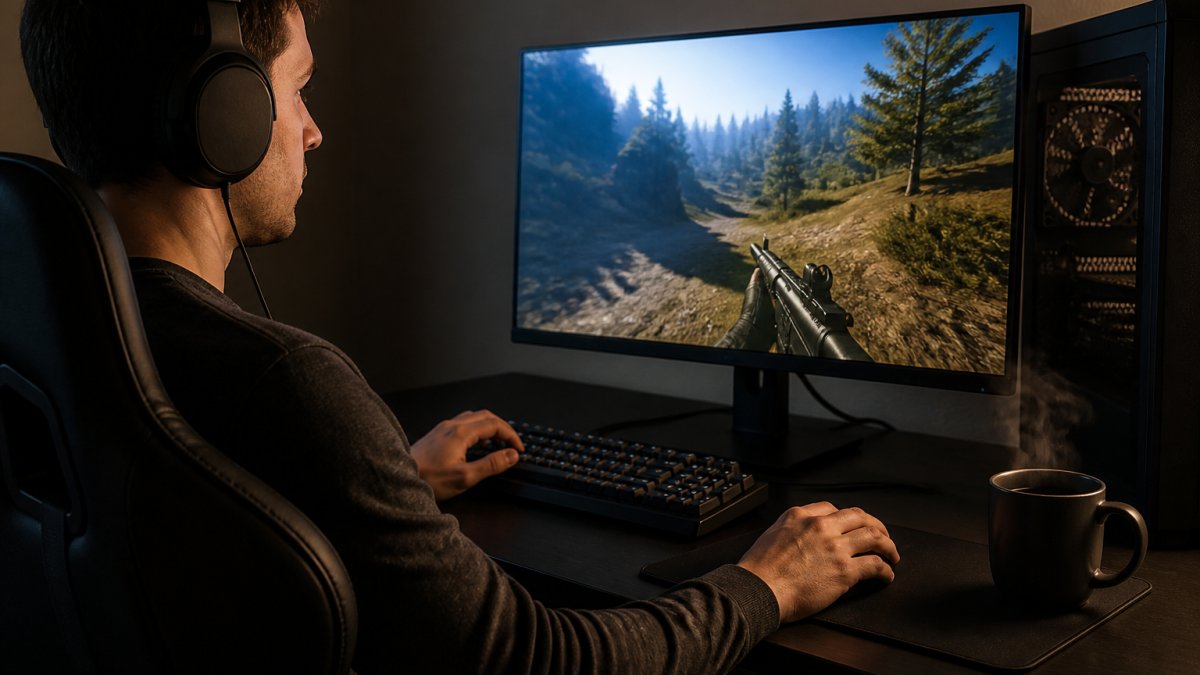
How Clean Caffeine Differs From Coffee, Energy Drinks, and Blends
Coffee is a brewed drink made from roasted beans. Clean caffeine is a standard, not a drink: it means the caffeine arrives without added sugar or artificial ingredients. Energy drinks usually add sugar, taurine, and B-vitamin blends. Caffeine blends stack multiple stimulants together. Coffee sits closest to clean caffeine when you drink it black.
Coffee vs Energy Drinks for Gaming: What the Label Doesn't Tell You
The label tells you the caffeine count. It rarely tells you what else you're drinking alongside it, and that gap is where most gaming sessions go wrong.
A black coffee is water and coffee grounds. An energy drink is typically carbonated water, sugar or a non-nutritive sweetener, an acidifier like citric or phosphoric acid, natural or artificial flavorings, preservatives such as sodium benzoate or potassium sorbate, and often a stimulant or amino-acid blend. The caffeine may be similar between the two. The rest of the can is not.
Reading the Ingredient Panel Like a Gamer
Here is what actually differs between the three common caffeine sources players reach for:
| Source | Typical Caffeine | Added Sugar | Other Active Ingredients | Label Transparency |
|---|---|---|---|---|
| Black brewed coffee | ~95 mg per 8 oz cup | None | Trace niacin, magnesium, potassium | Single ingredient |
| Mass-market energy drink | 80-160 mg per 8-16 oz can | Often 25-50 g | Taurine, B-vitamin complex, sometimes guarana or ginseng | Caffeine amount usually listed; blend amounts often not |
| "Caffeine blend" or pre-workout style powder | 150-300 mg per scoop | Varies | Multiple stimulants stacked (caffeine + guarana + yohimbine, etc.) | Proprietary blends may hide individual doses |
| Clean caffeine (black coffee, plain caffeine + theanine) | 50-200 mg, dosed by you | None | Caffeine alone, or caffeine + L-theanine | Full disclosure |
The FDA requires caffeine to be listed on the Nutrition Facts panel when it is added to a food or drink, but it does not require the amounts of other ingredients in a proprietary blend to be broken out. That is the loophole most "gaming" energy drinks sit inside.
Sugar, Crash, and the Crash After
Sugar enters the bloodstream quickly, and the energy it provides fades quickly too. When it drops, concentration drops with it. A common mistake is treating that dip as a sign you need more caffeine, which stacks stimulant on top of a falling blood sugar level and makes the jitters worse. Black coffee skips that cycle entirely. Our blends contain zero added sugar, so there is no spike to come down from.
The Unique Angle: Clean Caffeine Is a Standard, Not a Product
Most guides compare "coffee vs energy drinks" and stop there. The more useful frame is that clean caffeine is a formulation standard, no added sugar, no artificial additives, no stacked stimulants, and a disclosed caffeine dose, and any source can meet it or fail it. A black drip coffee meets it. A cold brew meets it. A canned energy drink with 40 g of sugar and a proprietary blend does not. A pre-workout with three stimulants does not.
How Much Caffeine Before Gaming: Dose and Timing That Works
A practical starting range for most adult gamers is roughly 100 to 200 mg of caffeine, taken 30 to 60 minutes before you sit down. That is about one to two cups of brewed coffee.
The FDA guidance on caffeine and how much is too much notes that 400 mg per day is generally not associated with negative effects for most healthy adults. That is a daily ceiling, not a target for a single session.
Timing matters as much as dose. Caffeine takes about 30 minutes to peak and has a half-life of roughly five hours, so a cup at 7 p.m. is still working at midnight.
Caffeine-to-Theanine Ratios and the Dose-Response Curve
L-theanine is an amino acid found in tea that many players pair with caffeine to smooth out the edge. A commonly cited ratio is about 1:1 or 2:1 caffeine to theanine, though individual response varies widely. The dose-response curve matters here: more caffeine helps alertness up to a point, then flattens and turns into jitters.
| Caffeine Dose | Timing Before Play | Typical Effect | Watch Out For |
|---|---|---|---|
| 50-100 mg | 30 min | Mild alertness lift | Little effect if tolerant |
| 100-200 mg | 30-60 min | Steady focus, better reaction time | Jitters at the top end |
| 200-300 mg | 30-60 min | Strong stimulation | Restlessness, poor sleep |
| 300 mg+ | Any | Diminishing returns | Shaking, anxiety, crash |
Caffeine Jitters While Gaming: Why They Happen and How to Stop Them
Jitters come from overstimulation of the nervous system, usually from too high a dose, too much sugar alongside it, or a low tolerance. The fix is rarely "push through." It is to lower the dose and remove the sugar.
What most guides miss is that jitteriness is often a blood sugar problem dressed up as a caffeine problem. Cut the sugar, keep the coffee, and the shaking usually stops.
- Lower your dose by roughly half and reassess
- Drink coffee black instead of sweetened
- Eat something with protein before your session
- Avoid stacking caffeine with other stimulants
- Give yourself 30 minutes before you expect the effect
Best Coffee for Gamers: A Side-by-Side Comparison
The best coffee for gamers is a fresh-roasted blend you can dose consistently, drink black, and time before a session. Freshness matters because roasted coffee loses aroma and flavor as it sits, which is why we roast every order the day it ships.
How to Compare Clean Caffeine Options
Before looking at any specific product, score each option against five criteria:
- Caffeine per serving, Can you get 100-200 mg in one cup without drinking three mugs?
- Added ingredients, Sugar, artificial sweeteners, taurine, or stacked stimulants? Clean caffeine means none.
- Label transparency, Is the caffeine amount stated per serving, or hidden in a blend?
- Release profile, Fast peak (espresso, high-caffeine blends) or slow plateau (cold brew)?
- Session fit, Short ranked match, multi-hour scrim block, or late-night casual play?
Our Lineup Scored Against Those Criteria
| Product | Roast | Caffeine Profile | Price |
|---|---|---|---|
| Max Caf Blend | High-caffeine blend (Tanzania + India Robusta) | Higher load per cup; fast-to-moderate peak | $25.99 |
| Breakfast Blend + | Medium | Moderate, balanced | $25.99 |
| Cowboy Blend | Dark and medium | Moderate, fuller body | $25.99 |
| Cold Brew Coffee | Dark French roast | Gradual release, long plateau | $25.99 |
| MVP Pack | Six-bag bundle | Full range | $69.99 |
Matching the Roast to the Session
The Max Caf Blend is our pick for a six-hour session. It combines Tanzania and India Robusta for a higher caffeine load in a single cup, so you are not drinking three mugs to get there.


Cold brew is the underrated option. Because it is brewed cold and slow, it tends to release its caffeine more gradually, which suits players who want a long plateau rather than a peak. If your session runs from mid-afternoon into the evening, cold brew lets you start lower and stretch the effect without a hard spike.
What This Comparison Does Not Cover
We are a coffee roaster, so this table compares coffee. It does not score canned energy drinks, pre-workout powders, or caffeine capsules, because those products fail the clean-caffeine standard on added ingredients or label transparency. If you want a true cross-category comparison, apply the five criteria above to any product you are considering, the framework travels even when the product does not.
Evidence Limits: What Gaming Caffeine Research Actually Shows
Here is the honest version: most caffeine research measures simple reaction time and vigilance tasks, not ranked play. Studies on esports performance are fewer, smaller, and harder to generalize than the headlines suggest.
What the broader literature supports reasonably well is that caffeine can improve alertness, sustained attention, and simple reaction time. What it does not clearly show is that caffeine makes you better at the parts of gaming that involve strategy, teamwork, or decision-making under pressure.
That distinction matters. Caffeine can help you stay locked in during a long session. It will not raise your rank on its own. Treat it as a performance support, not a performance substitute.
Safety, Tolerance, and Withdrawal: The Long Game
Tolerance builds with daily use, which means the same cup delivers less over time. Many players respond by increasing the dose, which raises the jitter risk and pushes sleep later. The better move is to cycle: keep a baseline, and save the higher-caffeine blends for sessions that actually need them.
Withdrawal is real and predictable. Headaches, fatigue, and irritability typically show up within a day of stopping and ease over several days. Tapering over a week or so is far easier than quitting cold.
Sleep is the part players most often sacrifice. Caffeine has a long half-life, so an evening cup can still be active when you lie down.
Frequently Asked Questions
What is considered clean caffeine?
Clean caffeine is caffeine delivered without added sugar, artificial sweeteners, or synthetic additives. In practice, that means black coffee, plain tea, or a coffee blend where the only ingredient is coffee. Energy drinks often pair caffeine with 25 to 40 grams of sugar and taurine, which changes how your body absorbs and responds to the stimulant. Clean caffeine keeps the source simple so the alertness comes from caffeine itself, not a sugar spike.
How much caffeine is too much before gaming?
Most research on caffeine and cognitive performance uses doses between 1 and 3 milligrams per kilogram of body weight, which lands around 75 to 225 mg for an average adult. Above 400 mg per day, the FDA notes increased risk of jitteriness, rapid heartbeat, and sleep disruption. For a gaming session, staying under 200 mg in a single dose keeps alertness benefits while limiting the caffeine jitters while gaming that hurt aim and decision-making.
Is coffee a better choice than energy drinks for gaming?
Coffee gives you caffeine without the sugar load that energy drinks carry, so you avoid the spike-and-crash pattern that can tank focus mid-session. A 12-ounce energy drink can hold 30-plus grams of sugar alongside 100 to 200 mg of caffeine. Black coffee delivers a similar caffeine dose with zero added sugar, which supports steadier energy across a long gaming session and avoids the late-session slump.
Can caffeine cause jitters that hurt gaming performance?
Yes, at higher doses. Caffeine blocks adenosine receptors and stimulates the central nervous system, which sharpens alertness at moderate doses but can trigger shaky hands, racing heart, and anxiety above your personal threshold. Pairing caffeine with L-theanine, an amino acid found in green tea, smooths that edge. Many gamers find a 1:1 or 2:1 caffeine-to-theanine ratio keeps focus steady without the jittery feeling that throws off fine motor control.
Long sessions demand focus you can hold, not a spike you have to survive. Ed In Your Head roasts fresh for every order, so the cup you brew before a match tastes like it was meant to, and our blends carry zero added sugar for smooth, steady energy without the crash. Start with the Max Caf Blend for high-stakes play or the Breakfast Blend + for everyday sessions. Find your fuel with Ed In Your Head and protect the focus you have already earned.