


Table of Contents
- How Caffeine Sharpens Reaction Time and Gaming Performance
- Establish Your Baseline Reaction Speed Before You Start
- Gaming Coffee vs Energy Drinks: Why Clean Caffeine Matters
- How to Avoid Caffeine Jitters and Stay Steady
- Best Time to Drink Coffee for Gaming Sessions
- Optimize Your Gaming Gear and Settings for Faster Reflexes
- Mental Preparation and Focus Techniques for Peak Performance
- Conclusion: Build Your Reaction Speed Protocol
- Frequently Asked Questions
Last Updated: October 2, 2026
How Caffeine Sharpens Reaction Time and Gaming Performance
Caffeine improves gaming coffee reaction time by increasing alertness and sharpening focus, enhancing your brain's ability to process visual information faster and respond to stimuli more quickly.
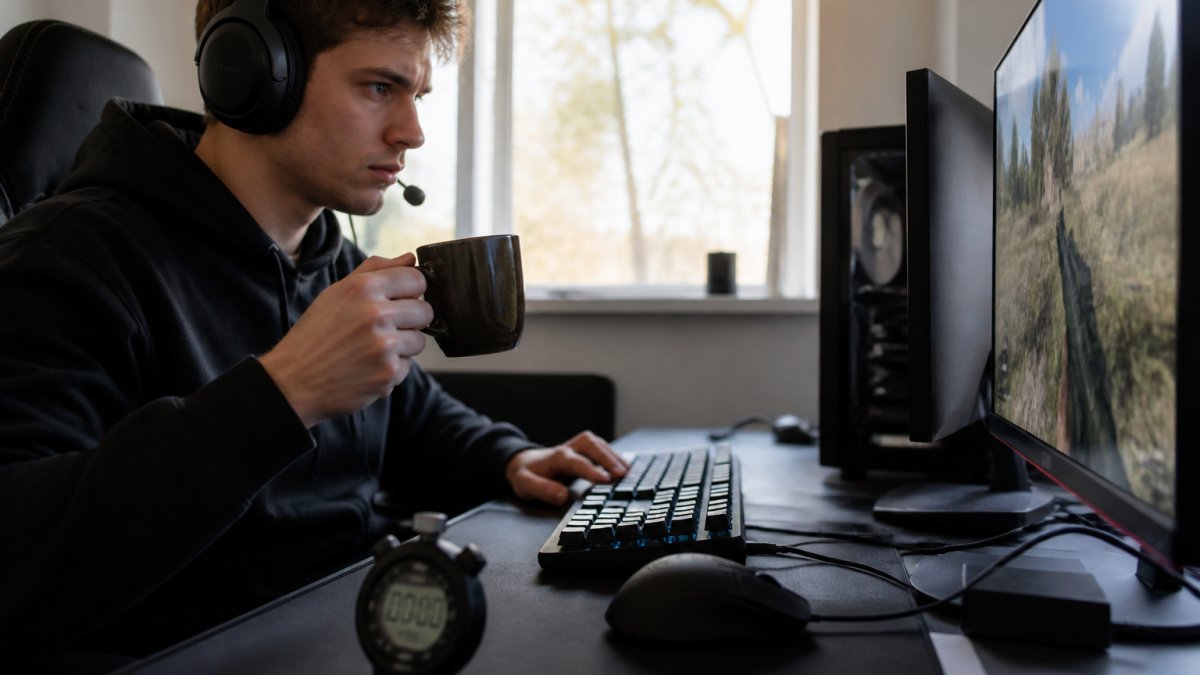
Caffeine blocks adenosine receptors in your brain, keeping your mental acuity sharp for faster stimulus-response times and better hand-eye coordination during competitive play.
Most energy drinks contain high sugar and artificial ingredients that lead to crashes. Clean caffeine from specialty coffee delivers sustained alertness without jitters or mental fatigue.
Ed In Your Head's fresh-roasted specialty coffee is designed for gamers who need sustained focus without the crash.
Establish Your Baseline Reaction Speed Before You Start
Online reaction time tests measure milliseconds between stimulus and response. Most people average 200-300ms; competitive gamers typically score 150-200ms.
Run the test three times and record your average before making any changes. This baseline becomes your reference point.
Test weekly to track whether your gaming coffee reaction time improves and whether the strategy is working for you.
| Reaction Speed Range | Typical Gamer Type | What It Means |
|---|---|---|
| 150-200ms | Competitive/Pro | Excellent reflexes |
| 200-300ms | Casual/Intermediate | Average response time |
| 300ms+ | Beginner | Room for improvement |
Gaming Coffee vs Energy Drinks: Why Clean Caffeine Matters
Energy drinks deliver a quick spike followed by a crash, loaded with sugar and artificial stimulants that overstimulate your nervous system and cause jitters, the opposite of what you need for precision gaming.
Gaming coffee is pure caffeine without additives. A single cup contains 95-200mg of caffeine, enough to sharpen focus without overwhelming your system.
With clean caffeine, your mental acuity and hand steadiness remain stable for hours, avoiding tremors and cognitive load from sugar crashes.
Ed In Your Head's coffee blends are crafted for this exact purpose. Our Breakfast Blend Plus adds extra caffeine from Robusta beans for gamers who need maximum alertness. The Max Caf Blend combines Tanzania and India Robusta for sustained focus during long sessions. Both deliver clean energy without the jitters that sabotage your reflexes.

How to Avoid Caffeine Jitters and Stay Steady
Jitters occur when caffeine overstimulates your nervous system faster than your body can metabolize it, causing hand tremors, scattered focus, and worsened reaction time.
The Physiology Behind Jitters
Caffeine blocks adenosine receptors and increases adrenaline production. At moderate doses (100-200mg), this sharpens alertness. Higher doses trigger tremors, elevated heart rate, and anxiety.
Dosage Titration: Start Low and Build Tolerance Safely
Begin with 50-75mg per session and observe your response for 3-5 sessions before increasing. Most people safely tolerate 100-200mg without jitters.
For reference, caffeine content varies by preparation:
- Brewed coffee (8 oz): 95-200mg depending on roast and brew time
- Espresso (1 oz shot): 63-75mg
- Instant coffee (8 oz): 27-173mg
- Cold brew (8 oz): 150-240mg
The L-Theanine Advantage
L-Theanine, an amino acid found in tea, works synergistically with caffeine to promote calm focus while increasing alertness.
Hydration and Electrolyte Balance
Caffeine is a diuretic that amplifies jitters through dehydration.
Food Timing and Stomach pH
Never consume coffee on an empty stomach.
What to Avoid
- Multiple cups of coffee in quick succession (space doses at least 2-3 hours apart)
- Mixing coffee with other stimulants (energy drinks, pre-workout supplements, nicotine)
- Caffeine after 3 PM if you plan to sleep that night (disrupts sleep quality, which degrades reaction time more than any single session benefit)
- Gaming on caffeine while dehydrated or hungry
- Consuming caffeine during high-stress periods (stress hormones compound caffeine's effects)
Best Time to Drink Coffee for Gaming Sessions
The Caffeine Absorption and Peak Window
Caffeine reaches peak blood concentration 20-30 minutes after consumption.
Absorption varies by body weight, stomach contents, caffeine tolerance, and medications.
The Plateau Phase: Sustained Performance (2-4 Hours)
After peak effect, caffeine levels plateau for 2-4 hours.
Caffeine's half-life is 5-6 hours.
Managing the Caffeine Crash: The Hidden Performance Killer
After 4-5 hours, caffeine levels drop sharply, causing rebound fatigue: your reaction time slows below baseline, focus collapses, and hands feel heavy.
The Sleep-Caffeine Trade-Off: Long-Term Performance Wins
Caffeine is a short-term performance tool, but sleep is the long-term foundation.
If you game in the evening, avoid caffeine after 3 PM.
Caffeine Cycling: Avoiding Tolerance Buildup
Regular caffeine consumption builds tolerance after 2-3 weeks. To maintain effectiveness, cycle caffeine 4-5 days per week with 2-3 days off.
Practical Timing Examples
- Morning session (9 AM start): Drink coffee at 8:30 AM. Peak effect aligns with session start. No sleep impact.
- Afternoon session (2 PM start): Drink coffee at 1:30 PM. Peak effect at 2 PM. Caffeine clears by 8-9 PM. Safe for normal sleep.
- Evening session (7 PM start, 3-hour duration): Drink coffee at 6:30 PM. Peak effect 7-10 PM covers your session. Caffeine still present at bedtime, only use if you plan to sleep after midnight or if sleep quality is not a priority.
- Long tournament (10 AM-6 PM, 8 hours): First cup at 9:30 AM (peak 10 AM). Second cup at 1 PM (peak 1:30 PM). This covers the full day without a severe crash. Plan light dinner and hydration between doses.
Optimize Your Gaming Gear and Settings for Faster Reflexes
Caffeine sharpens your mind, but your gear determines whether those faster reflexes translate to better gameplay. Input lag and latency matter more than you think.
A gaming mouse with low latency (under 1ms) responds instantly to your movements. A 144Hz monitor or higher reduces visual lag.
In-game settings matter too. Lower your graphics settings to maintain high frame rates. Stuttering and frame drops destroy reflexes.
Peripheral vision also affects reaction speed. Position your monitor at eye level, 24-30 inches away.
Cable management and desk setup affect your hand position and comfort. Your hands should rest naturally on your mouse and keyboard.
Mental Preparation and Focus Techniques for Peak Performance
Caffeine enhances alertness, but sustained attention requires mental discipline. Your brain's cognitive performance depends on focus, not just stimulation.
Before each gaming session, spend 2-3 minutes on mental preparation. Breathe deeply. Visualize successful plays. Set a specific goal for the session.
During play, maintain focus on one thing at a time. Scanning the entire screen at once creates mental fatigue.
Eliminate distractions. Phone on silent. Discord notifications off. Chat muted. Every distraction pulls attention away from the game and increases your reaction time.
Take breaks every 60-90 minutes. Your mental acuity drops after this point. A 5-10 minute break resets your focus. Walk around. Drink water.
Conclusion: Build Your Reaction Speed Protocol
Improving reaction time with gaming coffee requires a complete system: the right caffeine source, proper timing, hydration, nutrition, optimized gear, and mental focus.
Start with your baseline. Test your reaction speed this week. Then implement one change at a time: upgrade to clean specialty coffee, adjust your caffeine timing, optimize your setup. Track weekly improvements. You'll see which changes actually move your reflexes.
Ed In Your Head's fresh-roasted coffee is built for this exact protocol. Our MVP Pack gives you six 2 oz bags to test our blends alongside a ceramic mug and branded tee, everything you need to start. The Max Caf Blend delivers maximum caffeine for serious gaming sessions. Every order is roasted the day it ships, ensuring the freshest possible energy with zero jitters.

The best reaction time comes from consistency. Same coffee, same timing, same prep routine before each session. Your body adapts to predictable patterns. After 2-3 weeks of consistent practice, you'll notice measurable improvements in your reflexes and gameplay.
Caffeine's effects on cognitive performance and reaction time
Gaming performance optimization research
Caffeine pharmacology and nervous system response
Frequently Asked Questions
Does caffeine actually improve gaming reaction time?
Yes. Caffeine blocks adenosine receptors in the brain, increasing alertness and cognitive performance. For gamers, this translates to faster stimulus-response times and sharper visual processing during competitive play. The effect peaks 30-60 minutes after consumption and sustains for 3-5 hours, making it ideal for tournament prep or ranked sessions. Clean caffeine from specialty coffee delivers this benefit without the jitters or crashes that come with high-sugar energy drinks.
What's the difference between gaming coffee and energy drinks?
Gaming coffee provides pure caffeine without added sugars, artificial stimulants, or excessive additives that trigger crashes. Energy drinks often contain taurine, guarana, and high sugar loads that spike blood pressure and cause mental fatigue when they wear off. Specialty gaming coffee like the Breakfast Blend Plus or Max Caf Blend from Ed In Your Head delivers steady caffeine with no crash, letting you maintain focus and hand-eye coordination throughout long sessions without the anxiety or jitters common with traditional energy drinks.
How much gaming coffee should I drink before a match?
A single 8-12 oz cup 30-45 minutes before gameplay provides optimal caffeine intake for most gamers without overdosing. This timing allows peak alertness to align with your competitive window. Caffeine sensitivity varies by body weight and tolerance; start with one cup and adjust upward only if needed. The MVP Pack includes six 2 oz bags, making it easy to dial in your ideal dose. Avoid multiple cups within short periods, as this increases jitter risk and can degrade the precision your reflexes demand.
Can coffee help prevent gaming fatigue during long sessions?
Coffee sustains alertness and mental acuity for 3-5 hours, helping you fight cognitive load during extended tournaments or streaming marathons. However, it works best when paired with proper sleep hygiene and hydration. Caffeine is not a substitute for rest; if you're sleep-deprived, coffee will provide temporary focus but won't restore the neural recovery your reflexes need. Time your coffee intake strategically around your session length, and avoid drinking late in the day if you need quality sleep for circadian rhythm recovery.