


Table of Contents
- What Performance Coffee Actually Means
- Step 1: Choose Quality Coffee Beans
- Step 2: Grind Your Beans Fresh
- Step 3: Get Your Coffee-to-Water Ratio Right
- Step 4: Control Water Temperature and Brew Time
- How Much Coffee Before a Workout
- Coffee Before Workout: Timing and Preparation
- Building Your Homemade Pre-Workout Coffee Recipe
- Frequently Asked Questions
Last Updated: October 9, 2026
What Performance Coffee Actually Means
Performance coffee at home is specialty-grade coffee brewed with precision to deliver sustained focus and clean energy without the crash. It's not just a stronger cup, it's about extracting maximum caffeine and flavor while avoiding jitters from poorly prepared coffee or sugary energy drinks.
At Ed In Your Head, we've built our brand around this concept. Performance coffee combines high-quality beans, proper technique, and intentional timing to fuel athletes, gamers, and professionals. Four factors separate a mediocre cup from true performance coffee: bean quality, grind freshness, water temperature, and brew extraction.
Roasted to bring out natural caffeine and smooth flavor compounds, then brewed at the right temperature and ratio, it delivers clean, sustained energy without the crash that follows energy drinks or bad coffee.
Step 1: Choose Quality Coffee Beans
Start with fresh-roasted specialty coffee beans, bean quality determines everything that follows.
Look for beans roasted within the last 2-4 weeks; older beans lose flavor compounds and some caffeine punch. Specialty roasters source higher-quality beans and roast with more precision, balancing caffeine with smooth flavor to avoid bitterness.
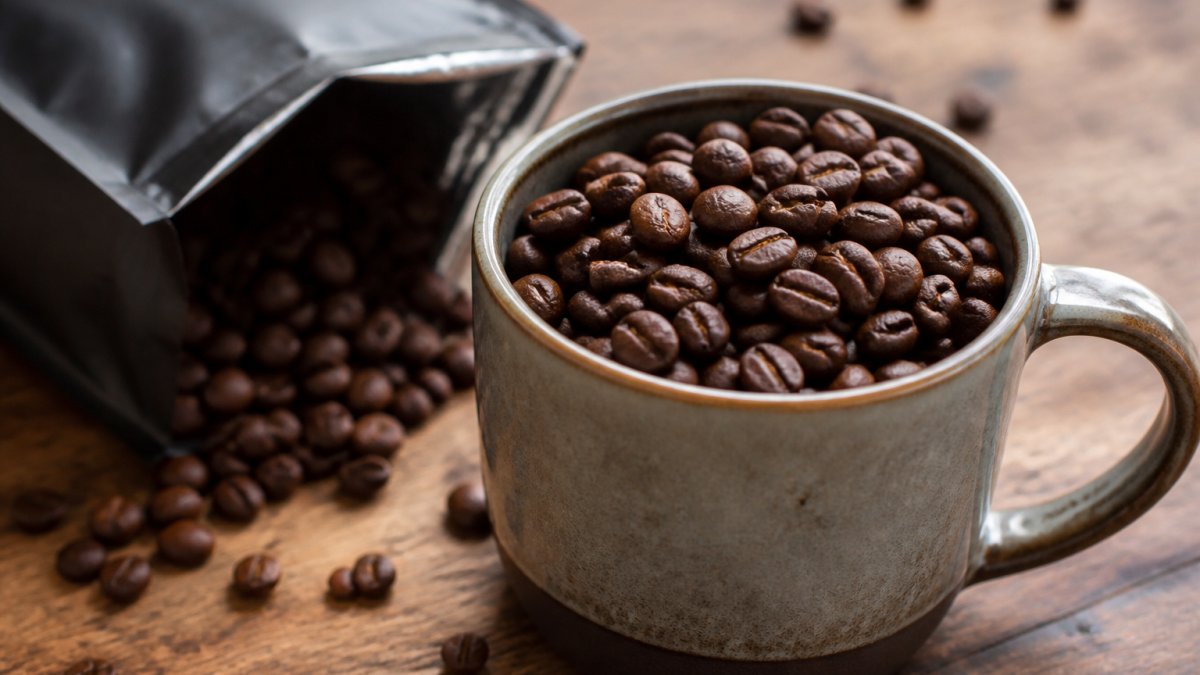
For performance coffee at home, consider blends designed for sustained energy. Ed In Your Head's Breakfast Blend + (Extra Caffeine) combines a house blend with Robusta beans, while the Max Caf Blend uses Tanzania and India Robusta for maximum caffeine. Both are roasted fresh for every order.

Single-origin coffees work too, but blends let roasters balance caffeine, flavor, and smoothness more effectively.
The roast date matters more than the roast level. A medium roast from last week beats a dark roast from two months ago. Check the bag, if it doesn't list a roast date, find a different roaster.
Step 2: Grind Your Beans Fresh
Grind your beans immediately before brewing. Pre-ground coffee loses flavor and potency within hours.
Use a burr grinder (not a blade grinder) for consistent particle size. Uneven grind sizes extract at different rates, leading to weak or bitter coffee; uniform grounds extract evenly.
Grind size depends on your brewing method:
- Coarse grind (French press, cold brew): large, chunky grounds
- Medium grind (drip, AeroPress, Moka pot): balanced size
- Fine grind (espresso, Turkish): powder-like consistency
For performance coffee at home, medium grind works best for most home brewers. It balances extraction speed with flavor, pulling out caffeine and smooth compounds without over-extracting bitter notes.
Grind fresh before each brew. Pre-ground coffee oxidizes quickly and loses the volatile compounds behind its flavor and performance edge, noticeable within 30 minutes.
Step 3: Get Your Coffee-to-Water Ratio Right
The coffee-to-water ratio controls strength, extraction, and how much caffeine ends up in your cup.
A standard ratio is 1:16 (one part coffee to 16 parts water by weight). For performance coffee at home, aim for 1:15 or 1:14 for a stronger brew with more caffeine and deeper flavor.
Here's how to measure:
- Use a kitchen scale (grams work best)
- Weigh your ground coffee
- Multiply by 15 or 16 to get your water weight
- Example: 20 grams of coffee × 15 = 300 grams of water
If you don't have a scale:
- 1 tablespoon of ground coffee per 6 ounces of water (standard strength)
- 1.5 tablespoons per 6 ounces (stronger, for performance)
Adjust to taste: stronger ratios give more caffeine per cup and bolder flavor; weaker ratios produce lighter, subtler coffee.
| Ratio | Strength | Best For | Caffeine Level |
|---|---|---|---|
| 1:18 | Light | Afternoon coffee | Lower |
| 1:16 | Standard | Daily drinking | Moderate |
| 1:15 | Strong | Performance focus | Higher |
| 1:14 | Very Strong | Pre-workout | Highest |
Step 4: Control Water Temperature and Brew Time
Water temperature and brew time control extraction, how much flavor and caffeine actually ends up in your cup.
The ideal brewing temperature is 195-205°F (90-96°C).
Brew time varies by method:
- Pour-over: 3-4 minutes
- French press: 4 minutes
- AeroPress: 1-2 minutes
- Single-serve coffee machine: 1-2 minutes
For performance coffee at home, aim for the longer end of these ranges to maximize extraction.
Here's the process:
- Heat water to 200°F
- Add ground coffee to your brewer
- Pour water and start timing
- Brew for your method's recommended time
- Press, pour, or drain when time's up
How Much Coffee Before a Workout
Most articles tell you to drink coffee before training and stop there. The real question is how much, when, and how to know what is actually in your cup.
Start With a Dose Range, Not a Cup Count
The range is wide on purpose, reflecting tolerance, sensitivity, and effort type. Most people get a meaningful effect at the lower end and see diminishing returns, plus more side effects, toward the top.
Estimate Caffeine Per Serving Before You Brew
Two levers move caffeine more than anything else: dose of ground coffee (more grams means more caffeine, roughly in proportion) and extraction (longer, hotter, more complete extraction pulls more caffeine from the same grounds). Brew 20 grams into 300 grams of water and you consume the caffeine from those 20 grams; doubling to 40 grams roughly doubles it.
A Simple Way to Calibrate Your Own Cup
People commonly overshoot on dose and undershoot on timing. Drinking 300 milligrams 10 minutes before training is worse than 150 milligrams 45 minutes before, because caffeine has not peaked when the session starts.
Factors That Shift Your Number
- Body weight: heavier individuals generally need more caffeine for the same effect.
- Tolerance: regular users often need more to feel the same lift, and clear it faster.
- Genetics and sensitivity: some feel 100 milligrams strongly; others barely notice 200. That's physiology, not willpower.
- Medications and health conditions: certain prescriptions, heart conditions, anxiety disorders, and pregnancy change the safe range. Check with a clinician if any apply.
- Time of day: caffeine has a half-life of roughly 3-7 hours in most adults, so an afternoon cup can still be active at bedtime.
Safety Ceiling Worth Knowing
Federal dietary guidance treats up to about 400 milligrams of caffeine per day as not associated with harmful effects for most healthy adults (the FDA). That's a daily total, not a pre-workout target, and includes coffee, tea, soda, energy drinks, and supplements combined. Exceeding it occasionally isn't automatically dangerous, but it raises the odds of jitters, racing heart, upset stomach, and disrupted sleep, all of which work against performance.
Coffee Before Workout: Timing and Preparation
Timing matters as much as the coffee itself. For best results, drink your performance coffee 45 minutes before your workout or gaming session.
Prepare your coffee while getting ready, brew while you shower or dress, and the timing works out naturally.
For performance, avoid sugar or heavy cream. If you need flavor, add a splash of milk or a little honey. Ed In Your Head's blends are smooth enough to drink black, keeping energy clean and steady.
Building Your Homemade Pre-Workout Coffee Recipe
Most recipes stop at "brew strong coffee and drink it." Below is a base recipe, then the add-ins that actually change how the cup performs.
The Base Recipe
Ingredients:
- 20 grams of fresh-roasted coffee, ground medium (about 1.5 tablespoons if you are not weighing)
- 300 grams (about 10 ounces) of filtered water
Equipment:
- Burr grinder
- Kitchen scale (strongly recommended, volume measures vary too much)
- French press, AeroPress, pour-over, or drip brewer
- Timer and thermometer
Steps:
- Grind fresh. Medium for French press, AeroPress, or drip; slightly finer for pour-over.
- Heat water to 200°F. Boiling water cooled about 30 seconds gets you close.
- Add coffee to the brewer. Level the bed so water hits it evenly.
- Pour and start the timer. Add all 300 grams of water; for pour-over, pour in two stages with a brief bloom.
- Brew for 4 minutes (French press), 1-2 minutes (AeroPress), or 3-4 minutes (pour-over).
- Finish and drink. Press, drain, or pour; drink within a few minutes for best flavor.
- Time it. Finish the cup about 45 minutes before your session.
Optional Add-Ins and What They Actually Do
Flavor without sugar (cinnamon, cocoa powder, vanilla extract)
- Why add it: makes black coffee more drinkable without a sugar load.
- Trade-off: cocoa and cinnamon settle at the bottom; stir before each sip.
Personalize for Your Goal
- Pre-workout, short and intense: black coffee, 150-200 milligrams, 45 minutes out. Skip fat and heavy protein.
- Pre-workout, long endurance: black coffee plus a small carb source, 60-90 minutes out, sipped over 15 minutes.
- Everyday focus: 100-150 milligrams, mid-morning, no add-ins.
- Low-caffeine preference: use a half-caf blend or halve the grounds; keep the same water and timing so the ritual stays consistent.
- Dairy-free or vegan: plant milks work, but choose barista-style, thin almond milk curdles in hot coffee.
Batch and Portable Options
If mornings are tight, brew a larger batch and store it properly:

Repeatability Beats Novelty
The biggest upgrade to a home performance coffee routine isn't a new ingredient, it's doing the same thing the same way. Same beans, grind, ratio, water temperature, and timing. Once the base is repeatable, change one variable at a time and learn what works for you.
Frequently Asked Questions
How much caffeine should I consume before a workout?
Timing matters: consume it 30-60 minutes before exercise. Start at the lower end and adjust based on how your body responds.
What's the best coffee-to-water ratio for a strong brew?
Use 1:16 coffee-to-water ratio as your baseline (1 gram coffee to 16 grams water). For a stronger cup, shift to 1:15. Most home brewers use 1-2 tablespoons per 6 ounces of water; a tablespoon of ground coffee weighs roughly 5-6 grams. Adjust based on your grind size and brewing method.
Can I add milk or sweetener to my pre-workout coffee?
Yes, but timing and type matter. Avoid added sugars before workouts. Black coffee or unsweetened milk alternatives work best for sustained focus. If you prefer it creamy, use a splash of unsweetened almond or oat milk.
Is homemade performance coffee better than energy drinks?
Homemade coffee delivers clean caffeine. You control the dose, brew time, and freshness, critical for consistency. The trade-off: you prepare it yourself rather than grab-and-go.