


Table of Contents
- How Roasting Temperature Affects Coffee Acidity
- Light Roast vs Dark Roast Acidity
- Coffee Roasting Temperature and Time
- Chemical Acidity vs Perceived Acidity
- Coffee Brewing Temperature and Acidity
- How to Reduce Acidity in Coffee
- Choosing Your Roast for Smooth, Sustained Energy
- Frequently Asked Questions
Last Updated: October 16, 2026
How Roasting Temperature Affects Coffee Acidity
Roasting temperature is the single biggest factor controlling how acidic your coffee tastes: higher temperatures break down acids in the bean, lower temperatures preserve them.
At Ed In Your Head, we roast fresh for every order, so you get coffee at its peak flavor window.
When coffee beans roast, heat triggers chemical reactions that transform the acids inside.
But chemical acidity and perceived acidity are not the same thing.
Light Roast vs Dark Roast Acidity
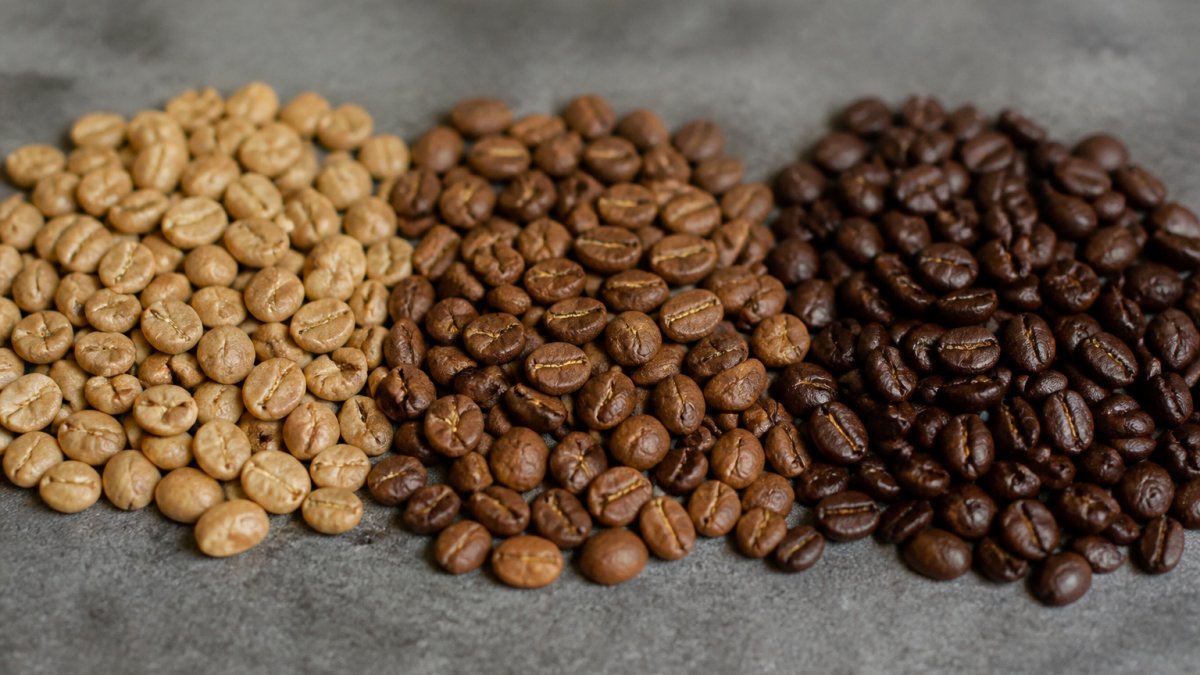
Light roasts preserve more of the bean's natural acids and taste bright, fruity, and sharp. Medium roasts balance acidity and body.
Here's what this means in your cup:
- Light roasts highlight origin flavors and have higher perceived acidity
- Medium roasts balance brightness with smoothness
- Dark roasts taste bold and low-acid, with more body and less sharpness
Our Breakfast Blend ($25.99) is a light roast that brings out walnut, apple, and toffee notes.

The choice depends on your taste and how your stomach handles acid. Athletes and gamers who need sustained energy without jitters often prefer medium to dark roasts.
Coffee Roasting Temperature and Time
Roasting temperature and roast duration work together to control acid breakdown, but they are not the same variable, and conflating them is the most common reason home roasters reach the wrong conclusion about acidity. Temperature is a measurement, time is a duration, and roast level is an outcome; a single cup reflects all three plus the bean itself.
The four temperatures people mean when they say "roast temperature"
When someone says a coffee was roasted at a certain temperature, they usually mean one of four things:
- Charge temperature is the reading of the roaster drum or environment at the moment green coffee goes in. It is a roaster-setting number, not a bean measurement, and it varies widely by machine type and batch size.
- Environmental (air or drum) temperature is the surrounding heat the beans are exposed to throughout the roast. It is what the roaster controller is usually adjusting.
- Bean temperature is the reading from a probe in the bean mass. It is the closest thing to the actual heat the coffee has absorbed, and it is the number most closely tied to chemical change.
A roaster who says "I roast at 400°F" might mean a 400°F charge, environment, or drop, and those three roasts can produce very different cups. When you read any claim about roasting temperature and acidity, first ask which temperature is being described; a charge temperature is not a universal setting and cannot be compared across roaster designs.
Why temperature and time cannot be fully separated
Bean temperature rises over time, so any end temperature is reached by some combination of heat input and duration.
Temperature alone does not determine acidity: temperature, time, airflow, batch size, and the bean's density and moisture all interact. Temperature sets the rate of the reactions that break down acids and build new compounds; time determines how long those reactions run.
What a controlled comparison can and cannot show
To understand temperature's effect on acidity in your own cup, change one variable at a time:
- Start with one coffee. Use the same origin, variety, process, and crop so bean differences do not contaminate the result. Split a single bag into equal batches.
- Hold duration and drop temperature constant. Keep the same roast time and the same end bean temperature for every batch. This isolates the heat path rather than roast level.
- Change only the charge or environment temperature. For example, run one batch with a lower charge and a gentler rate of rise, and another with a higher charge and a steeper rate of rise, both finishing at the same drop temperature.
- Record everything. Log charge temperature, environment temperature at intervals, bean temperature at first crack, drop temperature, total time, and weight loss.
- Rest and taste consistently. Let all samples rest the same number of days, grind identically, brew with the same water temperature and ratio, and taste blind if possible.
This comparison can show whether the heat path alone changes perceived brightness at a fixed roast level. It cannot show a universal temperature that produces a given acidity, because the result is specific to that roaster, batch size, and bean. A single trial is an anecdote; repeated trials across several coffees are a pattern.
First crack as a checkpoint, not a temperature target
First crack is often quoted at around 350-356°F bean temperature, but that range shifts with bean density, moisture, and variety, so treat it as an event to observe rather than a number to hit.
Charge Temperature and Bean Development
Charge temperature sets the pace for the entire roast. A high charge accelerates development and can suit dense, high-grown beans that tolerate aggressive early heat; a lower charge slows development and gives softer, lower-density beans more room before the surface scorches.
The right charge temperature depends on the roaster's thermal mass, the batch size, and the bean's density and moisture. That is why charge temperature advice does not transfer cleanly from one machine to another.
First Crack and Acid Breakdown
Before first crack, the bean is still drying and browning, acids are largely intact, and the bean is dense. After first crack, acids break down faster, sugars brown, and flavor deepens.
The longer you roast past first crack, the more acids disappear, which is why dark roasts feel smoother on the palate. The trade-off is the loss of the bright, fruity notes that lighter roasts preserve.
Chemical Acidity vs Perceived Acidity
Chemical acidity and perceived acidity are related but not the same, and the gap between them explains why a dark roast can taste sharp to one drinker and smooth to another.
What chemical acidity actually measures
Chemical acidity is a laboratory measurement, and there are two common versions:
- pH measures the concentration of free hydrogen ions. Coffee typically falls in a mildly acidic range, and pH is a poor predictor of how acidic a coffee tastes because it ignores the buffering effect of other compounds.
- Titratable acidity measures the total amount of acid that can be neutralized, which captures acids that pH misses. It correlates better with sensory impressions than pH does, but it still does not fully predict them.
Common coffee acids include chlorogenic, citric, malic, quinic, acetic, and formic acid, and roasting transforms them in different directions. Chlorogenic acids degrade progressively as roast proceeds, a major reason darker roasts contain less of them, but quinic acid can rise as chlorogenic acids break down and acetic acid can form during extended development. So "darker means less acidic" is a shorthand, not a law: total titratable acidity often falls with darker roasting, but individual acids move differently and the sensory result depends on the mix.
What perceived acidity actually is
Perceived acidity is a sensory impression: brightness, liveliness, tartness, or fruit-like snap. It comes from the interaction of acids with sugars, roast-derived aroma compounds, body, and bitterness, so two coffees with similar titratable acidity can taste very different depending on how much sweetness and aroma balance the acid.
This is why the same coffee can read as "bright" to a trained taster and "sour" to a drinker who is used to dark roasts. Sourness is a specific taste quality, while brightness is a broader impression that includes aroma and structure.
Why the oversimplification persists
The shorthand survives because it is directionally useful: across a wide range of coffees, darker roasting tends to reduce titratable acidity and perceived brightness. But it breaks down in three situations:
- Very light roasts can taste sour rather than bright if development is too short and underripe, grassy, or vegetal notes dominate.
- Very dark roasts can taste harsh or ashy, and drinkers may call that acidity when it is really bitterness and dryness.
- Different beans respond differently. A high-grown, dense bean and a low-grown, softer bean roasted to the same drop temperature will not land at the same acidity.
What this means for your cup
For drinkers sensitive to acid, perceived acidity matters more than any lab number; a smooth, low-acid coffee should be low in both titratable acidity and the sharp, dry sensations that mimic it. Our Italian Roast ($24.99) is our darkest blend, slow roasted for a rich, low-acid profile that delivers sustained energy without the edge. To compare roast levels directly, brew the same coffee at two roast levels with identical water, grind, and ratio, and taste side by side rather than relying on bean color.

Coffee Brewing Temperature and Acidity
Brewing temperature affects how much acid ends up in your cup. Hotter water pulls more acids from the grounds. Cooler water pulls fewer.
Standard brewing temperatures range from 195-205°F, extracting most of the acids along with the flavors you want. Brewing at 200°F is the industry standard for balanced extraction.
Water quality matters too: softer water extracts more acid, hard water less.
How to Reduce Acidity in Coffee
Choose a darker roast. This is the most direct fix. Dark roasts have fewer acids. Our French Roast and Italian Roast both deliver low acidity with bold, smooth flavor.

Brew at lower temperatures. Drop to 195°F instead of 205°F.
Use coarser grounds. Finer grounds extract more acid because they have more surface area.
Brew for less time. Shorter brew times mean less acid extraction.
Add a pinch of baking soda. This neutralizes acid chemically.
Choose beans from certain origins. Some origins naturally have lower acidity.
Avoid light roasts if you're acid-sensitive. Light roasts preserve the most acid.
Choosing Your Roast for Smooth, Sustained Energy
For bright, fruity flavor: Choose a light roast. You'll get more perceived acidity, more origin character, and more complexity.
For balanced flavor and smoothness: Choose a medium roast. You get some brightness and some body. Acidity is moderate.
For smooth, bold flavor with low acidity: Choose a dark roast. You get sustained energy without the sharp edge.
The roast you choose shapes your entire coffee experience: taste, how your body responds, and how long the energy lasts.
Frequently Asked Questions
Does roasting coffee at a higher temperature reduce acidity?
Yes. Higher roasting temperatures break down chlorogenic acids and other organic acids that create perceived acidity. Dark roasts, which reach temperatures around 430-450°F, have significantly less perceived acidity than light roasts roasted at 350-370°F. However, the relationship is not linear, roast duration and heat application rate matter as much as peak temperature. A slow, controlled roast at high temperature produces different acid levels than a rapid roast to the same temperature.
How does roast level affect the acidity of coffee?
Roast level directly impacts both chemical and perceived acidity. Light roasts retain more organic acids like citric acid and malic acid, creating bright, fruity flavors and higher perceived acidity. Medium roasts offer a middle ground with balanced acid levels and more caramelization. Dark roasts like our French Roast and Italian Roast break down most acids during extended heat exposure, resulting in low acidity, bittersweet flavor, and a heavier body. Your taste preference and sensitivity to acidity should guide your roast choice.
Can brewing temperature change how acidic coffee tastes?
Absolutely. Water temperature between 195-205°F extracts acids efficiently and can make coffee taste brighter and more acidic. Lower brewing temperatures (under 190°F) extract fewer acids and can produce flat, under-extracted coffee. Higher temperatures (over 210°F) can over-extract and increase bitterness. If you find your coffee too acidic, try brewing at the lower end of the range or reducing brew time. Grind size and brew method also influence extraction and perceived acidity.
What's the difference between chemical acidity and perceived acidity in coffee?
Chemical acidity refers to the actual pH and organic acid content (chlorogenic, citric, malic acids) in the beans. Perceived acidity is what your palate experiences as brightness, sourness, or tang. A light roast has high chemical acidity but can taste clean and fruity rather than sour. A dark roast has low chemical acidity but may taste bittersweet. Roasting temperature, origin, processing method, and brew variables all influence how you perceive acidity, not just the chemical composition alone.