


Table of Contents
- Esports Coffee vs Standard Coffee: The Core Differences
- Caffeine Content and Concentration: What the Numbers Say
- Coffee vs Energy Drinks for Gaming: Why Brewing Method Matters
- Caffeine and Gaming Performance: Focus, Reaction Time, and the Crash
- How to Avoid Caffeine Jitters While Gaming
- Choosing the Right Esports Coffee: Blends, Roasts, and Grinds
- Frequently Asked Questions
Last Updated: September 25, 2026
Esports Coffee vs Standard Coffee: The Core Differences
The difference between esports coffee and standard coffee comes down to caffeine per ounce and how fast it hits you. A standard 8oz drip delivers roughly 95mg; a 2oz double espresso delivers about 63mg. Espresso's concentration is roughly four times higher, so you drink less liquid for a faster, sharper lift without a bloated stomach mid-match.

That distinction matters. Three hours into a ranked session, you don't want to chug 16oz of lukewarm drip coffee just to stay alert, you want a small, potent dose that kicks in quickly and fades without a hard crash.
This guide breaks down how brewing method, grind size, and caffeine concentration affect gaming performance, why energy drinks fail where coffee succeeds, and how to pick a blend that keeps you locked in without the jitters.
Caffeine Content and Concentration: What the Numbers Say
Caffeine concentration, caffeine per fluid ounce, is the single biggest difference between esports coffee and standard coffee. An 8oz drip has around 95mg, or about 12mg per ounce. A 2oz double espresso has roughly 63mg, or about 31mg per ounce: nearly three times the concentration.
Here's how common coffee styles compare:
| Drink | Serving Size | Total Caffeine | Caffeine Per Ounce |
|---|---|---|---|
| Drip coffee | 8oz | ~95mg | ~12mg |
| Cold brew | 8oz | ~200mg | ~25mg |
| Double espresso | 2oz | ~63mg | ~31mg |
| Espresso shot | 1oz | ~63mg | ~63mg |
The takeaway: espresso gives you more caffeine per sip, meaning less liquid volume and faster absorption. Cold brew sits in the middle; drip is weakest per ounce but easiest to sip slowly over a long session.

What most guides miss is that total caffeine matters less than how quickly it enters your bloodstream. A 2oz espresso hits your system in about 15 minutes; an 8oz drip takes 30 to 45 minutes because your stomach processes the larger volume first. For a gamer who needs to be sharp at the start of a match, that speed difference is everything.
Coffee vs Energy Drinks for Gaming: Why Brewing Method Matters
Coffee beats energy drinks for gaming because it delivers caffeine without the sugar load that causes a crash 90 minutes later. A standard 8oz energy drink contains roughly 27g of sugar, which spikes blood glucose, gives a short burst, then drops you into a fog right when you need to clutch a round.
Brewing method changes how your body handles caffeine. Drip's paper filter traps some oils, producing a cleaner cup that digests faster. Espresso forces water through finely ground coffee at high pressure, pulling out more caffeine per gram of bean. Cold brew steeps grounds in cold water for 12 to 24 hours, extracting slowly for a smoother, less acidic cup.
According to the FDA's guidance on caffeine and energy drinks, most healthy adults can consume up to 400mg of caffeine per day without negative effects. That's roughly four 8oz cups of drip coffee or six espresso shots. The problem isn't the caffeine itself. It's what comes with it.
Energy drinks pair caffeine with sugar, taurine, and artificial colors. Coffee pairs it with antioxidants and, if you drink it black, nothing else. Over a 6-hour gaming session, coffee wins because it doesn't spike and crash your energy levels.
Caffeine and Gaming Performance: Focus, Reaction Time, and the Crash
Caffeine improves gaming performance by blocking adenosine, the chemical that makes you feel tired, which increases alertness and reaction speed. A 2019 study published in the Journal of the International Society of Sports Nutrition found that caffeine supplementation improved reaction time and accuracy in esports players. The effect peaked about 30 to 60 minutes after ingestion and lasted roughly 3 to 4 hours.
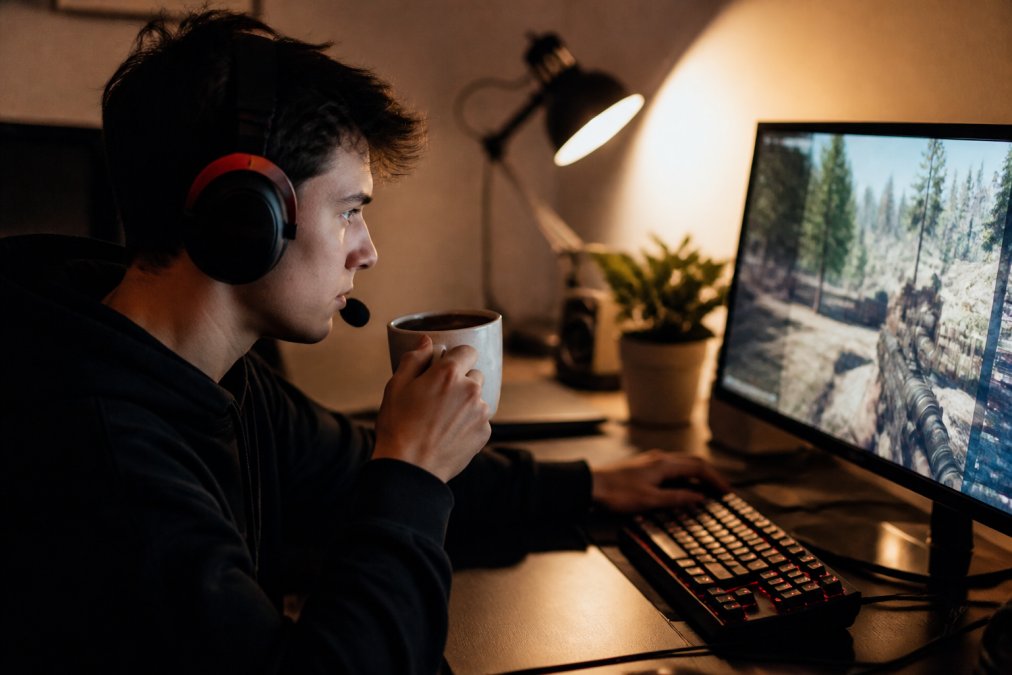
The crash is the real enemy.
How to Avoid Caffeine Jitters While Gaming
Jitters during a match are not a caffeine problem, they are a dosing and delivery problem. The tremor, racing pulse, and "too wired to aim" feeling come from caffeine hitting your adenosine receptors faster than your liver's CYP1A2 enzyme can clear it.
The four levers that actually control jitter
1. Dose relative to bodyweight, not a flat number. Competitive players commonly use roughly 1 to 1.5mg of caffeine per kilogram of bodyweight per dose, for a 70kg player, 70 to 105mg, about one double espresso or one strong 8oz drip. The FDA's 400mg daily figure is a ceiling for healthy adults, not a target for a ranked session, and says nothing about how fast to consume it.
A practical anti-jitter checklist for a session
- Weigh your dose in milligrams, not cups, a "cup" ranges from 60mg to over 200mg depending on brew
- Target roughly 1 to 1.5mg per kg of bodyweight per dose
- Eat a small protein-containing meal 20 to 30 minutes before your first cup
- Add L-theanine if your coffee does not already include it
- Space top-ups 2 hours apart at 40 to 60mg instead of one large re-dose
- Drink water between cups, caffeine is a mild diuretic and dehydration mimics jitter symptoms
- Cut off caffeine 6 to 8 hours before sleep
The bottom line: jitters are a delivery problem. Standard coffee gives you caffeine but none of the smoothing agents.
Choosing the Right Esports Coffee: Blends, Roasts, and Grinds
The right esports coffee isn't the one with the most caffeine, it's the one whose caffeine curve matches your session's length and intensity. Match the curve to the session.
Match the brew to the session length
| Session Type | Best Brew | Caffeine Range | Curve Shape | Why It Fits |
|---|---|---|---|---|
| Short ranked matches (under 1 hour) | Espresso | 60-80mg | Fast up, fast down | Onset in ~15 minutes, clears before the next match |
| 3-4 hour scrims | Drip or pour-over | 95-150mg | Moderate, steady | Easier to sip and top up across the block |
| All-day tournaments | Cold brew | 150-200mg | Slow, flat | Low acid, gentle curve, less stomach upset over 8+ hours |
| Late-night sessions | Decaf or half-caf | Under 50mg | Minimal | Protects sleep so tomorrow's session is not compromised |
The curve shape column is what generic guides skip. A 2oz espresso hits your bloodstream in about 15 minutes; an 8oz drip takes 30 to 45 minutes because your stomach processes the larger volume first. For a player who needs to be sharp at the opening whistle, that 20-minute difference is the whole game.
What to look for on the label
Theanine content. As covered above, L-theanine is the compound that converts caffeine's edge into calm focus. Standard drip and espresso contain almost none. A 1:1 or 2:1 theanine-to-caffeine ratio is the common formulation.
A note on the crash curve
The takeaway for selection: pick the brew whose curve matches your session length, then check the label for theanine or added nootropics. Caffeine gets you alert; the curve and additives decide whether you stay sharp or shake out of the match.
Frequently Asked Questions
What makes esports coffee different from regular coffee?
Esports coffee is often blended for sustained energy. It may use a coarser grind and lower brewing temperature. Standard coffee may be a light roast with higher acidity and a faster caffeine release. The goal with esports coffee is steady focus over several hours without the crash that comes from high-sugar energy drinks.
Does coffee improve gaming reaction time and focus?
Caffeine can sharpen alertness and reduce fatigue during long sessions, which may help reaction time. The effect depends on dose and timing. A moderate amount, roughly 1 to 2 milligrams per kilogram of body weight, tends to support focus without overstimulation. Too much can cause jitteriness, increased heart rate, and anxiety, which hurt aim and decision-making. Pairing caffeine with a small snack and water helps maintain steady energy.
How can I avoid caffeine jitters while gaming?
Start with a smaller dose than you think you need, especially if you are sensitive. Choose a smooth, low-acid roast and avoid adding sugar or artificial syrups. Drink water alongside your coffee to stay hydrated. Space your intake: one cup at the start of a session and a half-cup two hours later works better than a single large dose. If you feel shaky, switch to decaf or take a 20-minute break.
Is it better to drink coffee before a gaming session?
Yes, drinking coffee 20 to 30 minutes before you start gives caffeine time to absorb and peak when you need focus. Avoid drinking it on an empty stomach if you are prone to jitters. A light snack with protein or fat slows absorption and smooths the curve. For marathon sessions, plan a second smaller cup around the two-hour mark rather than front-loading all your caffeine at once.
Are there side effects of high-caffeine energy drinks for gamers?
High-caffeine energy drinks often contain 150 to 300 milligrams of caffeine plus large amounts of sugar or artificial sweeteners. The sugar causes a rapid spike in blood sugar followed by a crash that can leave you tired and unfocused. The combination of caffeine and sugar can also increase jitteriness, raise heart rate, and disrupt sleep. Coffee without added sugar provides a steadier release and fewer crash-inducing ingredients.