


Table of Contents
- What Makes Fresh Roasted Coffee Beans Different
- Understanding Coffee Roast Date Importance
- How to Brew Fresh Coffee for Maximum Flavor
- Best Coffee Bean Storage Practices at Home
- Evaluating Quality: What to Look for When Shopping Online
- Single-Origin vs. Blends: Which One to Choose
- Getting Started: Our Sample Packs for First-Time Buyers
- Conclusion
Last Updated: August 21, 2026
What Makes Fresh Roasted Coffee Beans Different
Fresh roasted coffee beans online differ fundamentally from commercial coffee because they're roasted days, or in the case of Ed In Your Head, the same day your order ships, before brewing. The moment coffee is roasted, it begins losing volatile aromatic compounds and flavor complexity. Most commercial coffee has sat in warehouses or on shelves for weeks or months, delivering only a shadow of the original flavor.
The first two weeks after roasting is when coffee hits its flavor peak (peer-reviewed research). The beans are still releasing CO2, actively alive chemically. Grind one and you'll notice intense aroma immediately. Brew it and you'll taste clarity and complexity that stale coffee cannot deliver.
Roast date transparency is essential. When you buy fresh roasted coffee beans, the roast date should be printed on the bag. If it's not, that's a red flag. At Ed In Your Head, every bag is roasted fresh for shipment, ensuring you get beans at their absolute peak. This approach eliminates guesswork and guarantees full flavor and caffeine potential whether you're a competitive gamer seeking sustained focus or an endurance athlete needing clean energy.
Understanding Coffee Roast Date Importance
The roast date is your coffee's birthday and the single most reliable freshness indicator when buying fresh roasted coffee beans online. Unlike arbitrary "best by" dates, the roast date tells you exactly when the transformation from green (raw) bean to roasted bean occurred.
In the first 24-48 hours after roasting, beans degas heavily, releasing CO2 and volatile compounds rapidly (peer-reviewed research). Once they hit day three or four, they enter their optimal window, typically lasting about two weeks depending on storage conditions. After that, beans gradually lose brightness and complexity.
Look for a roast date no more than two weeks old. Reputable roasters like Ed In Your Head make the roast date prominent because it's proof of quality. Roasting to order, meaning beans roast the day they ship, is a significant advantage over standard specialty coffee roasted in batches and warehoused.
How to Brew Fresh Coffee for Maximum Flavor
Brewing fresh roasted coffee beans requires attention to key variables. Start with whole beans and grind immediately before brewing, this is non-negotiable if you want to experience what fresh roasted coffee beans are capable of. Once ground, surface area exposed to oxygen increases dramatically, and aromatic compounds escape. A burr grinder (flat or conical) is essential; blade grinders create inconsistent particle sizes leading to uneven extraction.
Water temperature matters significantly. The ideal brewing temperature is 195-205°F (ncausa.org). Water above 210°F over-extracts and creates harsh, bitter notes. Water below 190°F under-extracts and produces sour, thin coffee. An electric kettle with temperature control removes guesswork.
Your brewing method affects how much character you'll experience. Pour-over methods like Chemex or V60 produce cleaner cups because paper filters remove oils and fine particles. French press and espresso preserve more body and oils, highlighting different flavor notes. For fresh roasted coffee beans from Ed In Your Head, try multiple methods to discover which brings out your preferred flavors.
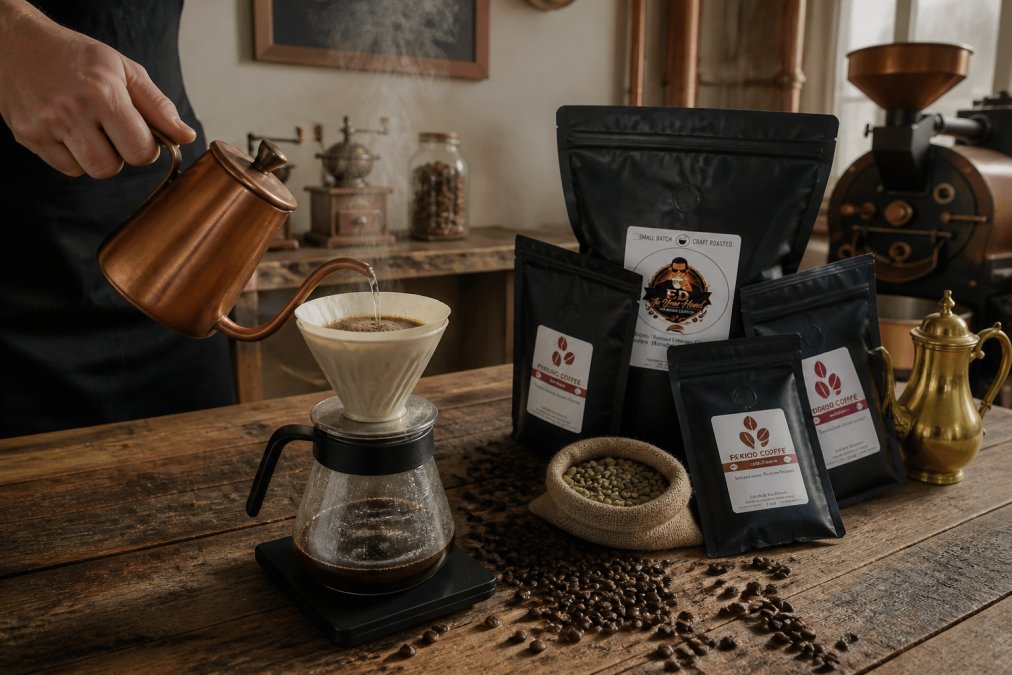
Most brewing methods range from 2-4 minutes. Keep consistency, brewing the same coffee the same way develops intuition for what works. A simple brewing log noting grind size, water temperature, brewing time, and taste helps identify what produces your best cup.
Best Coffee Bean Storage Practices at Home
Once you've invested in fresh roasted coffee beans, proper storage becomes critical. Coffee's enemies are air, light, heat, and moisture. The goal is minimizing contact with all four.
Best containers are airtight, opaque, and kept in cool, dry places. Glass jars with rubber seals work well, but many specialty roasters offer resealable bags with one-way valves allowing CO2 escape while preventing oxygen entry. Avoid clear containers exposing beans to light, and avoid refrigerators or freezers unless storing for several months, condensation from temperature fluctuations introduces moisture accelerating degradation.
Room temperature (65-75°F) is ideal. A pantry or cabinet away from direct sunlight works perfectly. Never store coffee above the stove or near heat sources; fluctuating temperatures speed staling. If buying bulk, divide into smaller portions, storing what you'll use in the next week or two in your main container and keeping the rest sealed separately.
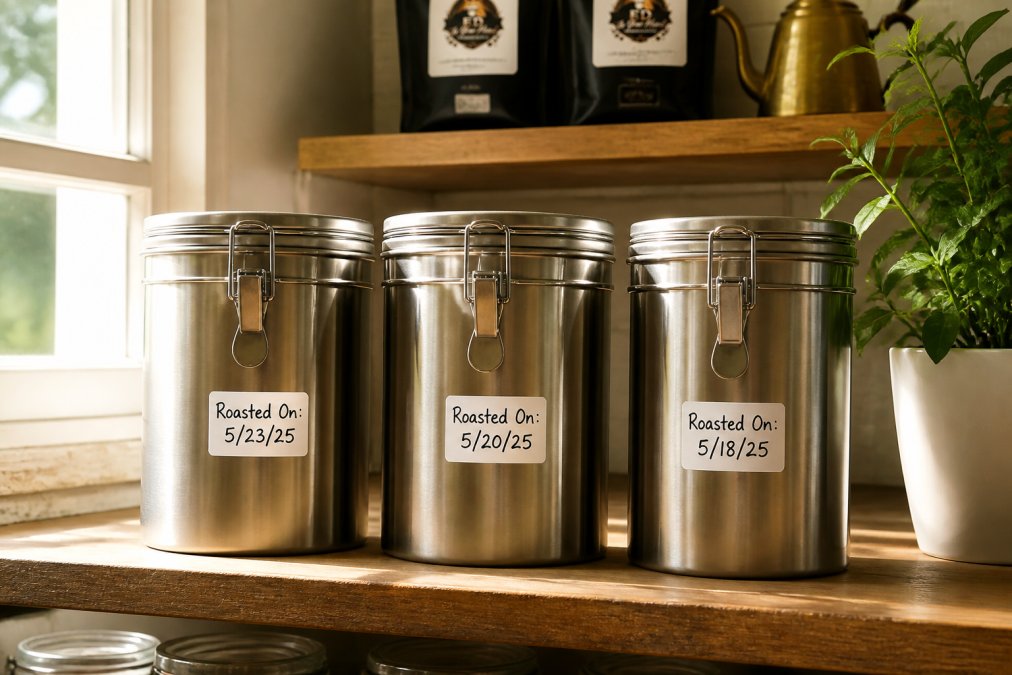
Properly stored whole beans peak for about one month. After that, they're still drinkable but noticeably less bright and complex. Ground coffee stales much faster, usually within a week, because increased surface area accelerates oxidation.
Evaluating Quality: What to Look for When Shopping Online
When shopping for fresh roasted coffee beans online, knowing what signals quality saves you from expensive disappointment. The first signal is transparency: roast date, bean origin, and roast profile (light, medium, or dark). Quality roasters also provide tasting notes describing what you should expect.
Origin matters because coffee from different regions has distinct characteristics. Central American beans often have balanced acidity and nutty notes. African coffees tend toward fruity and floral profiles. Indonesian coffees are typically earthy with lower acidity. Check whether the roaster sources specific lots from specific regions or buys generic commodity coffee. Specialty roasters like Ed In Your Head source single-origin beans and small-batch blends selected for specific flavor characteristics.
Tasting notes should be specific. "Smooth" and "balanced" are too vague. Look for descriptions like "chocolate, caramel, and citrus" or "berry, floral, and sweet." These specific notes indicate the roaster has cupped the coffee and identified what's in the cup.
Check the roasting company's background. At Ed In Your Head, we're athletic trainer-owned and focused on providing coffee specifically for athletes and gamers needing sustained focus without jitters or sugar crashes. A roaster's story and mission inform their sourcing and roasting choices.
Look at customer reviews for specifics. Real reviews mention observations like "This tastes brighter than I expected" or "The acidity is lower than most single-origins I've tried," suggesting actual tasting experience.
Price is a signal but not perfect. Fresh roasted coffee beans online typically cost $12-16 per pound for quality specialty coffee. At Ed In Your Head, our Best Sellers Sample Pack is $27 for six 2-ounce samples (24+ cups), roughly $12 per pound, reflecting sourcing quality beans, roasting to order, and shipping fresh.

Single-Origin vs. Blends: Which One to Choose
Single-origin coffees come from a specific farm, region, or country. A bag labeled "Brazil Santos" or "Peru Huancayo" contains beans from that location. Single-origins showcase terroir, unique characteristics from soil, altitude, and climate. The downside is variability; one harvest might taste different from the next due to weather and other factors.
Blends combine beans from multiple origins to create consistent flavor profiles. A roaster might blend a bright African coffee with a smooth Indonesian coffee to create balance. Blends offer consistency and complexity, creating flavor profiles impossible with single origins.
For athletes and gamers seeking sustained focus, both work but deliver different experiences. Single-origin coffees like our Brazil Santos (medium roast) offer clarity and brightness, energizing for focused work. Blends like our 6Bean blend provide balanced flavor and smooth body, easier to drink in larger quantities without fatigue.
If you're new to specialty coffee, start with a sample pack. The Ed In Your Head Best Sellers Sample Pack ($27) includes both blends and single-origins, letting you taste the difference without committing to a full pound.

Getting Started: Our Sample Packs for First-Time Buyers
If you're new to buying fresh roasted coffee beans online, sample packs are the smartest entry point. They let you explore flavor profiles and brewing methods without overcommitting to a full pound you might not love.
The Best Sellers Sample Pack ($27.00) includes six 2-ounce samples: 6Bean Blend, Cowboy, Breakfast, Peru, Mexico, and Bali. Each sample makes approximately four cups, giving you about 24 cups total to experiment. This pack offers the full range of Ed In Your Head offerings, blends and single-origins across different roast profiles.
The Single Origin Favorites Sample Pack ($27.00) contains six single-origin coffees, including Brazil Santos (medium roast) with elegant, smooth cup with cocoa notes. If you're specifically interested in exploring how different regions express themselves, this pack is your starting point.
For those exploring something unique, the Whiskey Barrel Aged ($25.99) is a single-origin Guatemala aged 30 days in a bourbon barrel before roasting. This specialty product demonstrates the range possible when roasters experiment with processing and aging.

When you order, remember every bag is roasted the day it ships, ensuring peak freshness upon arrival. Use the roast date as your reference for consumption timing. For sample packs, use all six samples within three weeks to experience each at its best.
Buying fresh roasted coffee beans online requires knowing what to look for. The roast date, origin, and brewing method are the three pillars determining what's in your cup. Start with a sample pack from Ed In Your Head to explore available flavors, then narrow your preferences. Whether you're a gamer seeking sustained focus, an athlete needing clean energy, or someone valuing quality, fresh roasted beans transform your daily coffee experience. Find Your Fuel and discover the difference roasting to order makes.
Frequently Asked Questions
How can you tell if fresh roasted coffee beans are truly fresh?
The roast date is your most reliable indicator. Coffee hits peak flavor 3-7 days after roasting and stays fresh for about 2-4 weeks when stored properly. Look for the roast date on the bag, not the purchase date. Whole beans should smell vibrant and aromatic. If beans look dull or have no aroma, they've aged past their prime. Beans roasted to order, like Ed In Your Head's offerings, guarantee maximum freshness since they ship the day they're roasted.
What's the ideal roast date for coffee beans?
Beans roasted 3-7 days before brewing deliver the best flavor balance. Too fresh (1-2 days), and CO2 release makes extraction uneven. Too old (beyond 4 weeks), and flavor compounds fade. When buying online, choose roasters who print the roast date prominently on every bag. This transparency lets you calculate exactly when your beans will peak, so you can time your purchase and brewing for optimal taste.
How should you store fresh roasted coffee beans to maintain flavor?
Store beans in an airtight container away from heat, light, and moisture. A sealed bag with a one-way valve works, but transfer to an opaque airtight container for longer storage. Keep them at room temperature, never the freezer, which introduces moisture when thawed. Store away from the stove or sunny windows. Properly stored whole beans stay fresh for 2-4 weeks. Ground coffee loses freshness faster (1-2 weeks), so grind just before brewing for best results.
Does buying coffee online guarantee better quality than grocery stores?
Not automatically, but specialty roasters who roast to order offer a major advantage: freshness. Grocery store bags sit in warehouses and on shelves for weeks or months before you buy them. Online specialty roasters ship beans days after roasting, preserving the flavor and aroma that make fresh coffee taste noticeably better. Look for roasters who print roast dates and offer small-batch, single-origin options, these signal quality and care that mass-market bags rarely match.
This article was written using GrandRanker