


Table of Contents
- How Blood Sugar Stability Drives All-Day Energy
- Complex Carbohydrates for Energy That Lasts
- 7 Foods That Provide Sustained Energy Levels
- Foods to Avoid for Energy Crashes
- Healthy Snacks for Sustained Focus
- Meal Timing and Metabolic Flexibility for Steady Energy
- A Sample Day of Eating for Sustained Energy
- Coffee vs. Food: How Caffeine Fits Into Sustained Energy
- Frequently Asked Questions
Last Updated: September 16, 2026
How Blood Sugar Stability Drives All-Day Energy
The 2 p.m. crash usually starts with what you ate at 8 a.m. Foods that provide sustained energy levels keep blood glucose steady instead of spiking it and letting it fall. At Ed In Your Head, we hear the same complaint constantly: a fast lift, then a hard drop.
Complex Carbohydrates for Energy That Lasts
Complex carbohydrates are starches and fibers built from longer molecular chains that the digestive system breaks down gradually, which is why they outperform simple sugars for endurance and focus.
Glycemic Index and Glycemic Load: What Actually Matters
The glycemic index (GI) ranks foods by how quickly they raise blood glucose on a 0-100 scale. The glycemic load (GL) factors in portion size, which is why watermelon scores high on GI but low on GL for a normal serving.
7 Foods That Provide Sustained Energy Levels
The strongest options combine complex carbohydrates, protein, and healthy fats in one plate. Here are seven that consistently deliver.
- Oats, slow-release starch plus beta-glucan, a soluble fiber that forms a gel in the gut and slows gastric emptying. A half-cup of dry rolled oats (about 40 grams) carries roughly 4 grams of beta-glucan, the dose range most often linked to a flatter post-meal glucose curve.
- Sweet potatoes, moderate GI, high in potassium and vitamin A. A medium baked sweet potato with the skin delivers about 4 grams of fiber and roughly 540 milligrams of potassium, which supports muscle function and offsets sodium-heavy meals.
- Fatty fish, omega-3 fatty acids and lean protein. Salmon, sardines, and mackerel slow digestion through their fat content while supplying protein that blunts the glucose rise. A 4-ounce serving of sockeye salmon lands near 25 grams of protein.
- Eggs, complete protein with minimal glucose impact. Two large eggs give about 12 grams of protein and virtually no carbohydrate, which is why they anchor a breakfast that holds until lunch.
- Greek yogurt, protein and probiotics. A 7-ounce container of plain Greek yogurt carries 17-20 grams of protein and live cultures. The protein slows the meal; the cultures feed the gut bacteria discussed below.
- Lentils and beans, fiber-rich, low GL, strong satiety. A half-cup of cooked lentils provides about 8 grams of fiber and 9 grams of protein, one of the best fiber-to-carbohydrate ratios in the pantry.
- Leafy greens, magnesium, iron, and antioxidants. Spinach, kale, and Swiss chard supply magnesium (about 80 milligrams per half-cup cooked spinach) and non-heme iron, both tied to how efficiently your cells convert fuel into usable energy.
Oats, Sweet Potatoes, and Other Slow-Release Carbs
Oats earn their reputation honestly, but variety matters. Steel-cut oats sit at the low end of the GI scale (roughly 55), rolled oats land in the middle (around 55-60), and instant oats push higher (near 65-70) because processing pre-breaks the starch. A bowl with nuts and Greek yogurt holds far longer than one with brown sugar, the fat and fiber slow the starch's access to digestive enzymes.
Fatty Fish, Eggs, and Lean Protein for Staying Power
Protein is the most underrated lever in energy management. It slows gastric emptying, blunts the post-meal glucose rise, and supports satiety for hours by triggering satiety signals like GLP-1 and PYY.
The Gut-Brain Axis: Why Your Microbiome Shapes Energy
Most lists stop at macronutrients and never mention the trillions of bacteria in your gut, which sits directly on the pathway between what you eat and how you feel. Fermentable fibers, the beta-glucan in oats and barley, the resistant starch in cooled potatoes and green bananas, the inulin in onions and garlic, are not digested by you. Gut bacteria ferment them into short-chain fatty acids like butyrate, propionate, and acetate.
Foods to Avoid for Energy Crashes
The fastest way to wreck an afternoon is a carbohydrate-only breakfast or a vending machine lunch. Both send glucose up sharply and produce the same rebound.
The usual suspects:
- Sugary cereals and flavored instant oatmeal
- White bread, pastries, and most granola bars
- Candy, soda, and sweetened coffee drinks
- Chips and other refined-flour snacks
- Fruit juice without the fiber of the whole fruit
Refined Sugars and the Insulin Spike Problem
The insulin spike is the body's response to rapidly rising blood glucose. Insulin moves sugar out of the bloodstream into cells, and when it overshoots, glucose drops below where it started.
Healthy Snacks for Sustained Focus
The best snacks pair a fiber-rich carbohydrate with protein or healthy fat, keeping blood sugar stable between meals without a spike. A snack that holds for two to three hours usually lands between 150 and 250 calories with at least 7 grams of protein and 3 grams of fiber. Below that, you will be hungry within the hour; above it, you risk pushing your next real meal too late.
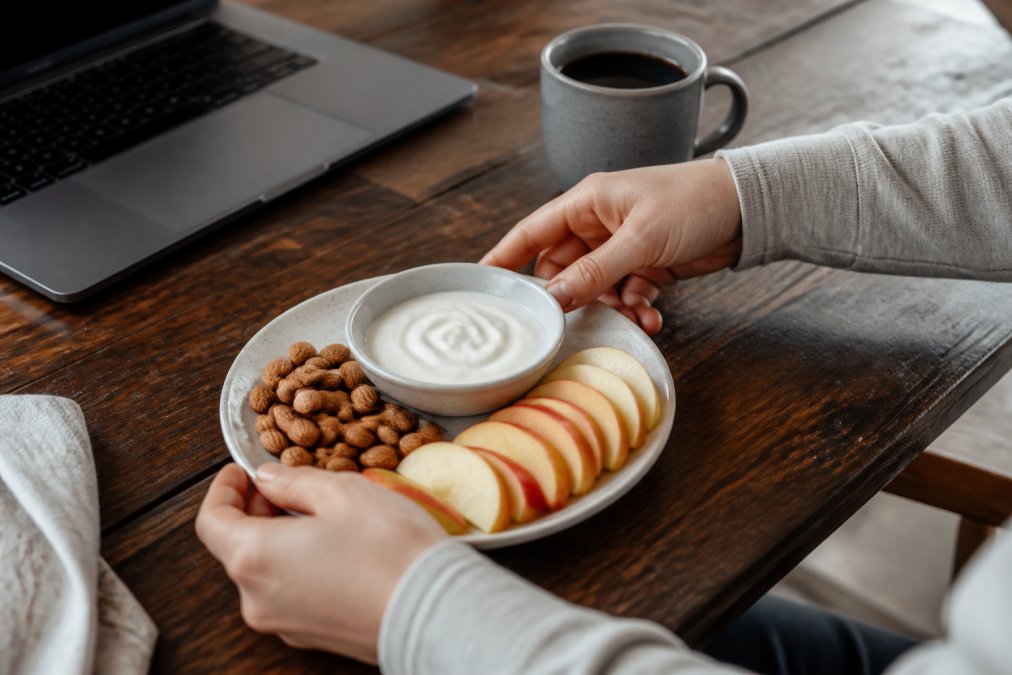
Five combinations that work, with the numbers behind them:
- Apple slices with almond butter, one medium apple (about 4 grams fiber) plus 1 tablespoon almond butter (about 3.5 grams protein, 9 grams fat). The fat and fiber slow the apple's fructose, keeping the glycemic load low.
- Greek yogurt with berries and walnuts, 5 ounces plain Greek yogurt (about 15 grams protein) plus a half-cup berries (4 grams fiber) plus 1 tablespoon walnuts. The highest-protein option here, and the best choice after a workout.
- Hummus with carrot and cucumber sticks, a quarter-cup hummus (about 5 grams protein, 4 grams fiber) plus a cup of raw vegetables. The chickpea base supplies fiber and protein in one dip.
- Hard-boiled eggs with whole-grain crackers, two eggs (12 grams protein) plus 4-5 whole-grain crackers. The eggs carry the protein load; the crackers supply a small, slow starch.
- Cottage cheese with sunflower seeds, a half-cup low-fat cottage cheese (about 12 grams protein) plus 1 tablespoon sunflower seeds. High protein, low glycemic impact, and one of the most filling options per calorie.
Timing the Snack to the Dip, Not the Clock
When you eat a snack matters as much as what is in it. The mid-afternoon slump is not caused by the clock, it is the gap since lunch combined with the natural circadian dip in alertness most people experience in the early afternoon. A snack eaten at the first sign of that dip, rather than an hour after it, does more to hold focus.
Reading the Label on "Healthy" Snacks
Many products marketed as energy or protein snacks are closer to candy than food. Check the added sugars line first: the Dietary Guidelines for Americans recommend keeping added sugars under 10 percent of daily calories, roughly 50 grams on a 2,000-calorie diet, and a single "healthy" granola bar can carry 12-15 grams. Then check protein and fiber: fewer than 5 grams of protein and 2 grams of fiber means it will not hold you, whatever the front of the package claims.
Meal Timing and Metabolic Flexibility for Steady Energy
Meal timing influences energy as much as composition. Metabolic flexibility is the body's ability to switch between burning glucose and burning fat for fuel, and it improves when you leave longer gaps between eating occasions.
A Sample Day of Eating for Sustained Energy
Here is one template. Adjust portions to your body weight and training schedule.
| Meal | Example | Why It Works |
|---|---|---|
| Breakfast | Rolled oats, Greek yogurt, blueberries, walnuts | Fiber plus protein plus fat |
| Mid-morning | Apple with almond butter | Low GL, high satiety |
| Lunch | Grilled salmon, quinoa, roasted vegetables | Omega-3s, complex carbs, magnesium |
| Afternoon | Hummus with vegetables, hard-boiled egg | Prevents the 3 p.m. dip |
| Dinner | Lentil curry with brown rice and spinach | Fiber-rich, iron and magnesium |
| Evening | Matcha or decaf, if desired | Caffeine without late disruption |
Coffee vs. Food: How Caffeine Fits Into Sustained Energy
One last note on the question we get most: will this taste bitter if you're used to energy drinks? A medium or dark-medium roast brewed at the right ratio reads smooth and slightly sweet, especially with cocoa and caramel notes in something like our Cowboy Blend. Bitterness usually comes from over-extraction or stale beans, not coffee itself.


Frequently Asked Questions
What foods give you sustainable energy?
Foods that provide sustained energy levels combine complex carbohydrates, fiber, lean protein, and healthy fats. Oats, sweet potatoes, brown rice, and whole grains deliver slow-release glucose. Pair them with eggs, Greek yogurt, salmon, or nuts to slow digestion further. Fiber-rich vegetables and magnesium sources like spinach and almonds support energy metabolism. The goal is blood sugar stability, not a quick spike, so your body draws on fuel steadily for hours instead of crashing 90 minutes after eating.
What are 5 foods that fight fatigue?
Five foods that fight fatigue: oatmeal (complex carbohydrates for energy plus fiber), salmon (omega-3 fatty acids and lean protein), spinach (iron and magnesium), Greek yogurt (protein and probiotics for digestive health), and bananas (potassium, vitamin C, and natural sugars paired with fiber). Each supports blood sugar stability or energy metabolism differently. Rotate them across meals rather than relying on one, since micronutrients like iron and magnesium work together to prevent the afternoon slump.
How does coffee compare to food for sustained energy?
Coffee and food work on different systems. Caffeine blocks adenosine, the compound that builds sleep pressure, so it delays fatigue rather than fueling cells. Food supplies glucose, micronutrients, and amino acids your body converts into usable energy. Coffee alone can mask hunger and lead to an energy crash when it wears off. Pairing a balanced meal with coffee, or choosing a smooth, low-acid brew, gives you alertness without the jitters that high-sugar energy drinks cause.
What should I eat for long-lasting energy before a workout or gaming session?
Eat 60 to 90 minutes before: a complex carbohydrate base like oats or sweet potato, a lean protein source such as eggs or Greek yogurt, and a small amount of healthy fat. This combination slows glucose release and keeps blood sugar stable through a long session. Add hydration with electrolytes if you sweat heavily. Avoid refined sugars right before activity, since the insulin spike will drop your energy mid-session. A cup of fresh coffee 30 minutes prior can sharpen focus without a crash.