


Table of Contents
- How Coffee and Green Tea Differ for Athletic Energy
- Caffeine Timing for Athletes: When to Drink Coffee or Tea
- L-Theanine and Caffeine Synergy: Smoother Focus, Fewer Jitters
- Sustained Energy vs the Spike: Endurance, Fat Oxidation, and Recovery
- Coffee vs Energy Drinks for Performance: What the Comparison Misses
- Matching the Right Brew to Your Sport and Goals
- Frequently Asked Questions
Last Updated: October 1, 2026
How Coffee and Green Tea Differ for Athletic Energy
Coffee and green tea both deliver caffeine, but they are not interchangeable for athletic energy. A standard 8-ounce cup of coffee contains roughly 95 mg of caffeine, while the same volume of green tea delivers about 25 to 30 mg. That gap shapes everything: dose timing, jitter risk, and how long the lift lasts.
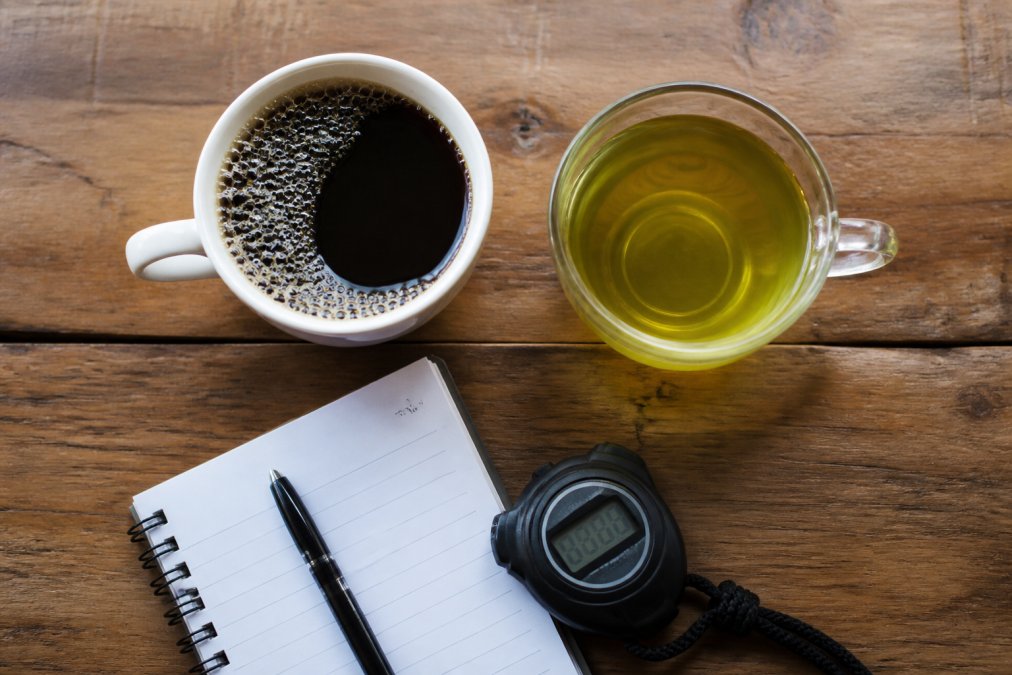
Caffeine Content: 95 mg vs 25-30 mg Per Cup
The caffeine dose is the first decision point. Coffee's higher concentration makes it the more practical ergogenic aid when you need a meaningful performance effect. Green tea's lower dose suits lighter, all-day alertness rather than a pre-workout hit.
L-Theanine and Catechins: What Green Tea Brings
Green tea's advantage is not caffeine volume, it is the compounds riding alongside it. L-theanine is an amino acid that promotes calm alertness, and catechins are polyphenols with antioxidant capacity. Together they smooth out caffeine's edge.
Caffeine Timing for Athletes: When to Drink Coffee or Tea
Caffeine timing for athletes comes down to matching peak blood levels to your performance window. Caffeine typically peaks in the bloodstream 30 to 60 minutes after drinking, so a cup 45 minutes before training or competition lands the effect when you need it.
The 3 to 6 mg Per kg Dosing Window
Sports nutrition guidance commonly cites 3 to 6 mg of caffeine per kilogram of body weight as the effective range for performance. For a 70 kg athlete, that is roughly 210 to 420 mg, or two to four cups of coffee.
Half-Life, Sleep, and Evening Training
Caffeine's half-life averages about 5 hours in most adults, meaning half of what you drank is still circulating five hours later. Evening athletes who train at 7 p.m. and sleep at 11 p.m. are still under caffeine's influence at bedtime.
L-Theanine and Caffeine Synergy: Smoother Focus, Fewer Jitters
L-theanine and caffeine synergy is the reason tea feels different from coffee even at matched caffeine doses. But the effect is dose-dependent, and most articles gloss over the ratio that actually matters.
The Ratio That Drives the Effect
Research on the caffeine-to-L-theanine combination commonly uses a ratio of roughly 1:1 to 2:1 (L-theanine to caffeine), with typical study doses landing around 100 to 200 mg of L-theanine paired with 50 to 150 mg of caffeine. That is the range where the calming-but-alert effect tends to show up in cognitive testing.
What L-Theanine Actually Does
L-theanine is an amino acid found almost exclusively in tea leaves (and a related compound in certain mushrooms). It crosses the blood-brain barrier and appears to increase alpha brain wave activity, the pattern associated with relaxed but wakeful states. It does not sedate, it modulates.
- Reduced jitteriness at the same caffeine dose
- Steadier reaction time rather than a sharp peak-and-drop
- Less perceived anxiety before competition
- Softer crash two to four hours after dosing
How to Stack Them Yourself
If you want the synergy without drinking six cups of tea, the practical approach is:
- Coffee for the caffeine dose, dial in your mg/kg target first (see the dosing section above).
- Add L-theanine separately, a 100 to 200 mg capsule taken with your coffee lands you in the studied ratio range.
- Or use matcha, matcha contains more L-theanine than steeped green tea because you consume the whole leaf, but you still need a large serving to approach research-level doses.
Sustained Energy vs the Spike: Endurance, Fat Oxidation, and Recovery
The sustained energy question is where coffee and tea diverge most in practice, and where most comparisons stop short. Coffee delivers a sharper spike and a correspondingly sharper drop. Green tea's lower dose and L-theanine content produce a gentler curve. But the real story for athletes is what happens after the workout, not during it.

The Mechanism Behind the Curve
Caffeine's ergogenic effect works through adenosine receptor antagonism. Adenosine is a neurotransmitter that builds up during the day and promotes sleepiness; caffeine blocks its binding, which is why you feel more alert. The effect peaks in the bloodstream 30 to 60 minutes after ingestion and then decays according to caffeine's half-life, roughly 5 hours in most adults, though it ranges from 3 to 7 hours depending on genetics, liver enzyme activity (CYP1A2), medications, and pregnancy.
- A 200 mg dose at 4 p.m. leaves roughly 100 mg circulating at 9 p.m.
- A 200 mg dose at 6 p.m. leaves roughly 100 mg circulating at 11 p.m., right at bedtime for many athletes.
Fat Oxidation and Glycogen Sparing, What the Evidence Supports
Caffeine supports endurance through two main pathways:
- Reduced perceived effort, the adenosine blockade lowers the subjective sense of how hard you are working, which lets you hold a given pace longer.
- Increased fat oxidation, caffeine mobilizes free fatty acids and shifts substrate use slightly toward fat, sparing muscle glycogen for later in the effort.
The fat-oxidation effect is real but modest, and it is most relevant for longer, lower-intensity sessions where fat is already a meaningful fuel source. For short, high-intensity efforts, glycogen is the dominant fuel and the fat-oxidation angle matters less than the perceived-effort effect.
The Recovery Angle Competitors Miss
Sleep is where the caffeine decision gets expensive. Deep sleep (slow-wave sleep) and REM sleep are when growth hormone release, muscle repair, and memory consolidation happen. Caffeine's half-life means an afternoon or evening dose can still be active during those stages, and research on sleep architecture consistently shows that caffeine consumed within about 6 hours of bedtime reduces total sleep time and disrupts sleep quality, even when the athlete does not notice it.
| Factor | Coffee | Green Tea |
|---|---|---|
| Caffeine per 8 oz | ~95 mg | 25-30 mg |
| L-theanine | Minimal | Present (5-20 mg) |
| Onset feel | Sharp spike | Gentle rise |
| Best for | Pre-event, power | All-day, recovery |
| Jitter risk | Higher | Lower |
| Sleep impact | Stronger | Milder |
| Half-life | ~5 hours | ~5 hours (lower dose) |
| Cutoff before bed | 8-10 hours | 4-6 hours |
Coffee vs Energy Drinks for Performance: What the Comparison Misses
Coffee vs energy drinks for performance is not a close contest once you read the label. A typical energy drink pairs caffeine with added sugar and a long ingredient list. Coffee delivers caffeine and little else.
Matching the Right Brew to Your Sport and Goals
- Power and sprint events: coffee, 45 minutes out, in the 3 to 6 mg/kg range
- Endurance sessions: coffee at a moderate dose, or green tea for longer events where jitters hurt pacing
- Gaming and cognitive work: green tea or matcha for sustained concentration across hours
- Evening training: green tea, to protect sleep architecture
- Recovery days: green tea for gentle alertness without overstimulation
the American College of Sports Medicine position on caffeine and performance
Frequently Asked Questions
Is green tea more energizing than coffee?
Green tea has less caffeine (about 25-30 mg per cup) than coffee (about 95 mg per 8 oz), so its immediate energy hit is smaller. But green tea also contains L-theanine, which smooths alertness and reduces jitters. For a quick lift before a short workout, coffee wins. For a slower, steadier rise during light activity, green tea can feel more comfortable. Your body weight, caffeine sensitivity, and training intensity decide which one actually works better for you.
Is coffee or tea better before a workout?
Coffee is the stronger ergogenic aid for most athletes because of its higher caffeine dose, which supports endurance, alertness, and fat oxidation. It works best taken 30-60 minutes before training at roughly 3 to 6 mg per kg of body weight. Green tea suits lighter sessions, hot-weather training, or anyone who gets jittery from coffee. If you want the L-theanine and caffeine synergy, a green tea alongside a smaller coffee is a practical middle ground.
Does green tea spike cortisol like coffee?
Both coffee and green tea can raise cortisol, especially when caffeine is consumed on an empty stomach or in large doses. Green tea's lower caffeine content and its L-theanine may soften that response, so the spike tends to be smaller and shorter. Coffee's larger caffeine load produces a more noticeable cortisol rise in sensitive people. If you train early, eating something small first helps blunt the cortisol response from either drink.
How do the antioxidants in coffee and green tea support athletic recovery?
Coffee delivers chlorogenic acids and other polyphenols, while green tea is rich in catechins like EGCG. Both show antioxidant capacity that may help manage oxidative stress from hard training. Green tea's catechins are often linked to post-exercise recovery support, and coffee's polyphenols may support metabolic rate and glycogen sparing. Neither replaces protein, sleep, or hydration, but each adds a small recovery benefit when built into a balanced routine.
Can coffee provide the same steady energy as green tea?
Coffee can feel steadier when you keep the dose moderate (around 95-200 mg) and pair it with L-theanine or a small meal. Green tea's natural L-theanine gives it a built-in smoothness that many people prefer. The trade-off is total caffeine: green tea rarely delivers enough for long endurance events, while coffee can be dosed precisely. Choosing a fresh-roasted medium blend, like a Breakfast Blend + at $25.99, helps you control the dose.
Coffee or tea, the goal is the same: steady energy that shows up when you need it and steps aside when you do not. Ed In Your Head roasts fresh for every order, with zero added sugar and no jitters or sugar crash, so your fuel matches your effort. Choose the Breakfast Blend + or Max Caf Blend for a higher caffeine push, or the Matcha and Moroccan Mint when you want a smoother, sustained lift. FIND YOUR FUEL and brew the cup that fits your sport.